Earlier this month, Borges and Me had its world premiere at the 2026 Edinburgh International Film Festival, bringing Marc Turtletaub’s journey through Scotland to an audience in the country where so much of its story takes place. Adapted from Jay Parini’s memoir, the film follows a young Parini, played by Fionn Whitehead, as an unexpected road trip with blind Argentinian writer Jorge Luis Borges, played by Luis Gnecco, takes the pair from St Andrews through the Highlands and islands of Scotland.
For CultureCues, it became one of the highlights of EIFF. There is plenty to admire in Turtletaub’s film, from the Scottish landscapes to the friendship that develops between two people who begin their journey as near-strangers, but at the centre of it is Luis Gnecco’s extraordinary performance as Borges. His version of the writer is mischievous, philosophical, endlessly curious and remarkably kind, with a warmth that seems to invite almost everyone he encounters to reveal something of themselves.
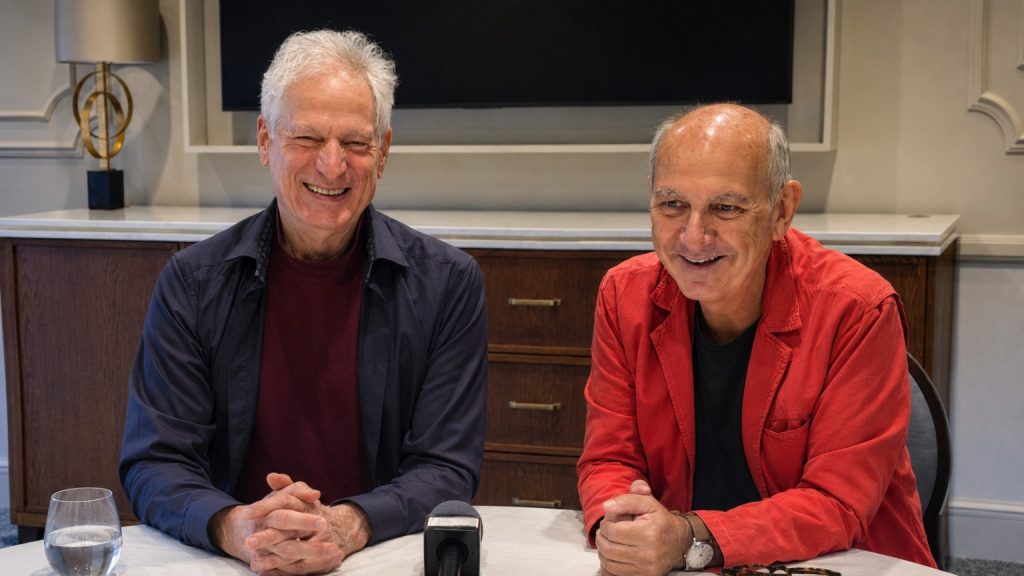
While at EIFF, I sat down with Gnecco and Turtletaub to talk about bringing the film to Scotland for its world premiere, finding the human being behind one of literature’s great figures, seeing familiar Scottish landscapes through different eyes and the collaboration that shaped this version of Borges.
Edinburgh Was ‘The Only Place It Could Be’
For a film so closely connected to Scotland, there was little question about where Borges and Me should first meet an audience. I asked Turtletaub how it felt to bring the film to Edinburgh for its world premiere after making so much of it across the country.
CultureCues: “With the film taking Jay and Borges on this journey across Scotland, how did it feel to have the world premiere here in Edinburgh?”
Marc Turtletaub: “It was the only place it could be. It’s a Scottish film, shot with a Scottish crew, with primarily Scottish actors, one Chilean, but primarily a Scottish cast and crew. So it just felt right to be here and to open it here. It’s so important to me to see how a Scottish audience would respond to it, and to have such a lovely response last night was really rewarding.”
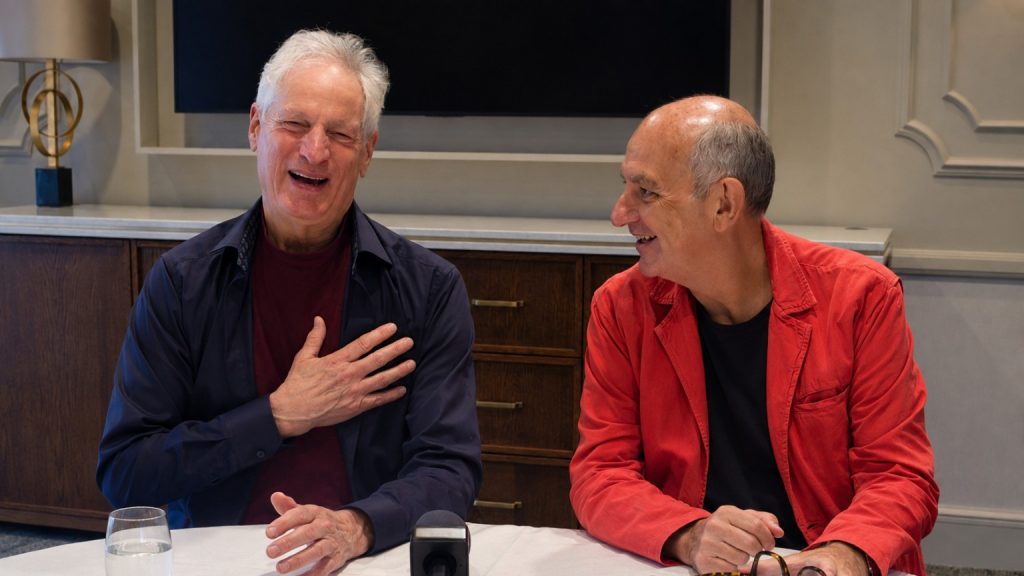
Having been in that audience, the affection for the film was easy to feel, particularly in the laughter that followed Borges throughout the journey. For Gnecco, hearing those reactions came with some relief. Performing the Argentinian writer in English, while finding the particular humour of the character in a language that is not his own, had left him wondering how audiences would respond.
“In my case, because I have to speak English and with an accent and everything, I was concerned if people were going to understand that and understand the kind of humour of the character,” he explained. “I was so surprised yesterday that you discover that the audience laughs at the right place, and sometimes not at the place you thought that they could laugh.” He added that it reminded him of performing live. “It was the same as being in a theatre play. You’re on the stage and the audience laughs in some parts and keeps silence in other parts. For me it was a big surprise.”
That humour is a huge part of why his Borges works. He may be one of the most celebrated writers of the twentieth century, but the film never treats him as a monument. He sings in the car, teases Jay, talks to strangers, asks endless questions and seems fascinated by almost everything around him.
‘You’ve Got to Represent a Human Being’
That curiosity runs throughout Gnecco’s performance. Borges moves through Scotland with a sense of wonder despite being unable to see it himself, relying on Jay to describe the landscapes, people and places around them. I asked Gnecco how he found his way into a figure with such an enormous literary legacy.
CultureCues: “Borges has so much humour and curiosity, and he seems to go through the whole journey with this sense of wonder. How did you tap into that while also taking on the challenge of playing such an important literary figure?”
Luis Gnecco: “A big, big challenge, because the question is: how do I do it? You have the character, and how do you go into it? How do you dig into it? The answer is always the human side. I mean, the true side of the character. Because sometimes we know the character. You read the book, you see the pictures, you see him or her in an interview, but they’re always in front of a camera or in front of an audience. They’re not themselves, in a way. So the question is, how would he be in intimacy? I mean, in intimate moments. The guy talks, the guy breathes, the guy keeps silence, the guy looks. And that, for me as an actor, is the way to go into a character.”
It is exactly that human side that makes Gnecco’s performance so affecting. When speaking to him, I mentioned how much emotion he manages to communicate through Borges’ face and voice, particularly in the scenes where he asks Jay to become his eyes. As Jay describes what he can see, Gnecco listens in a way that makes it feel as though Borges is experiencing the landscape through him.
There is a gentleness in the way Borges responds to the people they meet. When a priest confides his uncertainty about his faith, Borges does not attempt to solve it. He listens, speaks with kindness and leaves him with something to consider. Later, when Jay needs somebody to stay beside him, Borges does that too. For Gnecco, portraying that humanity mattered far more than assembling an imitation from biographical details.
“You can become an expert,” he said. “But finally you’ve got to represent a human being. And the human being, for me as an actor, is the challenge. If you connect an audience with a human being, the work is done.”
He was also quick to emphasise that his performance is only one part of everything that eventually reaches the screen. “There’s music, there’s photography, there’s design, there’s sound, a lot of things. You’re just a part of it,” he said. “And if you put the truth into a character, if there is a truth and you look like a human being, you’re doing your part in a good way.”
Seeing Scotland ‘Through a Foreigner’s Eyes’
Long before filming began, Turtletaub had already travelled the route himself. I had heard that before he even had the rights to make Borges and Me, he got into a car and followed the journey through Scotland, so I asked whether there had been a particular place along the way where he realised he had to make the film.
CultureCues: “Before you even had the rights to the film, you got into a car and travelled the route through Scotland yourself. Was there a particular location or moment on that trip where you thought, ‘I have to make this movie’?”
Marc Turtletaub: “Honestly, Nikki, I knew before I left. Before that, I knew before I left that I had to make it. I read the book and I’ve been in Scotland many times, and I love this country. I’d like to say I have Scottish blood, but I don’t, but I have it in my heart.”
Turtletaub explained that what particularly interested him was the chance to show Scotland from the perspective of people encountering it from elsewhere. “I knew this was a picture of Scotland from a foreigner’s eyes that people would see,” he said. “I think if you live in Scotland, you maybe take a little bit for granted, but if you come from America or from Chile, you see it with different eyes.”

Watching the film as someone from Scotland, that observation rang particularly true. I told Turtletaub that while I obviously know how beautiful the country is, there were moments watching Borges and Me when I found myself looking at familiar landscapes with that same sense of discovery.
Turtletaub experienced something similar while travelling north. “There were many places that just touched me deeply,” he said, singling out Orkney and describing its landscape as “very, very stark”. He also recalled visiting Glencoe, despite the film ultimately not shooting there, and beginning to imagine scenes before there were actors standing in them.
“I could see actual scenes taking place,” he said. “I said, ‘Oh, you know, Ailith could stand here and her hair could blow in the wind.’ And then, of course, when we get to the movie, we have Freya and she stands there and her hair blows in the wind. So that’s part of the joy of filmmaking.”
Turtletaub was also quick to redirect praise for the way Scotland looks and feels on screen towards cinematographer Chris Norr, while highlighting the importance of Volker Bertelmann’s score. “Chris’ cinematography and Volker Bertelmann, who did the music, are incredibly important in the movie,” he said.
‘There’s a Truthfulness in the Warmth’
One of the qualities that stood out most in Gnecco’s performance was Borges’ kindness. He opens himself up to people, often giving them permission to do the same. With our time almost up, I asked Gnecco and Turtletaub how they worked together on set to find that quality in the character.
CultureCues: “Borges has such a kindness to him, and he really opens up to people and allows other people to open up to him. How did you both approach bringing that warmth into the character?”
Turtletaub was keen to answer first, and his response began not with a directing technique but with Gnecco himself. Recalling a comment attributed to director Sydney Pollack that “90% of it is casting”, he explained that watching Gnecco’s performances and then getting to know him made something immediately clear.
“That’s kind of who he is, and you can’t fake it,” Turtletaub said. “If somebody has a warmth and, you know, you meet somebody, you can tell by their face, by their smile, by their openness, and that’s who this guy is. And so there’s a warmth there that comes through in the movie. Of course he’s playing a character. Of course the character is different than Luis is in real life. But there’s a truthfulness in the warmth that’s beautiful.”
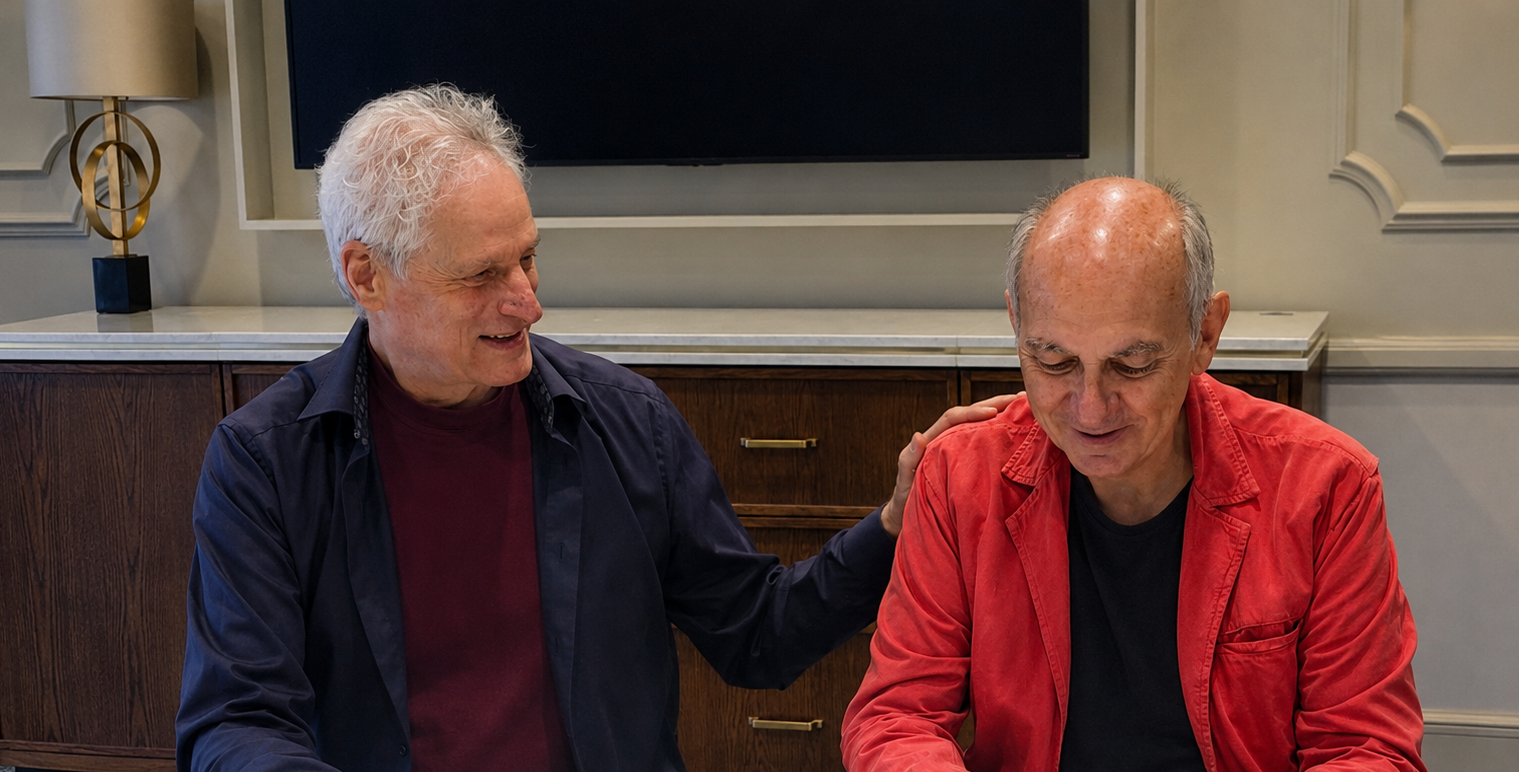
Gnecco, sitting beside him, returned the praise to his director. He described the warmth as something that ran through the entire production. “I’ve never been, really, I’ve never been in such a movie where you feel the set with warmth,” Gnecco said. “And that’s your work, because I invited my daughter to the set, a couple of friends, and they could easily feel that.”
For Gnecco, the warmth Turtletaub created on set found its way into the character. “Filming is a very pyramidal thing, you know. Here’s the director, and if he fills everything with an energy, people begin to share that energy. I think I assumed that energy as well, and finally this version of Borges probably is because this guy is directing it. Because probably with another kind of direction, the character would have been different.”
It was a lovely way for the conversation to end, with the pair repeatedly passing the credit back and forth, before Turtletaub added with a smile, “You can tell we kind of like each other.”
“I know,” I laughed. “It just sounds like a perfect collaboration.”
That warmth between them was easy to see during our conversation, and it is just as easy to feel in Borges and Me. For all its interest in literature, philosophy, memory and storytelling, some of its most memorable moments are much simpler: somebody listening, somebody laughing and somebody choosing to stay.

For CultureCues, Borges and Me was one of the highlights of EIFF 2026 and earned a five-star review, which you can read in full here. Speaking with Gnecco and Turtletaub only gave us more appreciation for the care behind the film and the warmth at its centre. We also sat down with Fionn Whitehead and Freya Mavor to talk about Jay and Ailith, fleeting connections and Scotland as the film’s “beating heart”, which you can read here.

Nikki Murray is a UK-based writer, screenwriter and founder & editor of CultureCues, covering film, television, music and pop culture. Her work focuses on storytelling and the moments shaping modern entertainment.