There are films you admire, and then there are films you are not quite ready to leave behind when they end. Borges and Me was firmly the latter for me. I watched Marc Turtletaub’s wonderful film at its world premiere at the Edinburgh International Film Festival, and by the end of its journey through the Scottish Highlands and islands, I had completely fallen for it.
Please note: This review contains spoilers for Borges and Me.
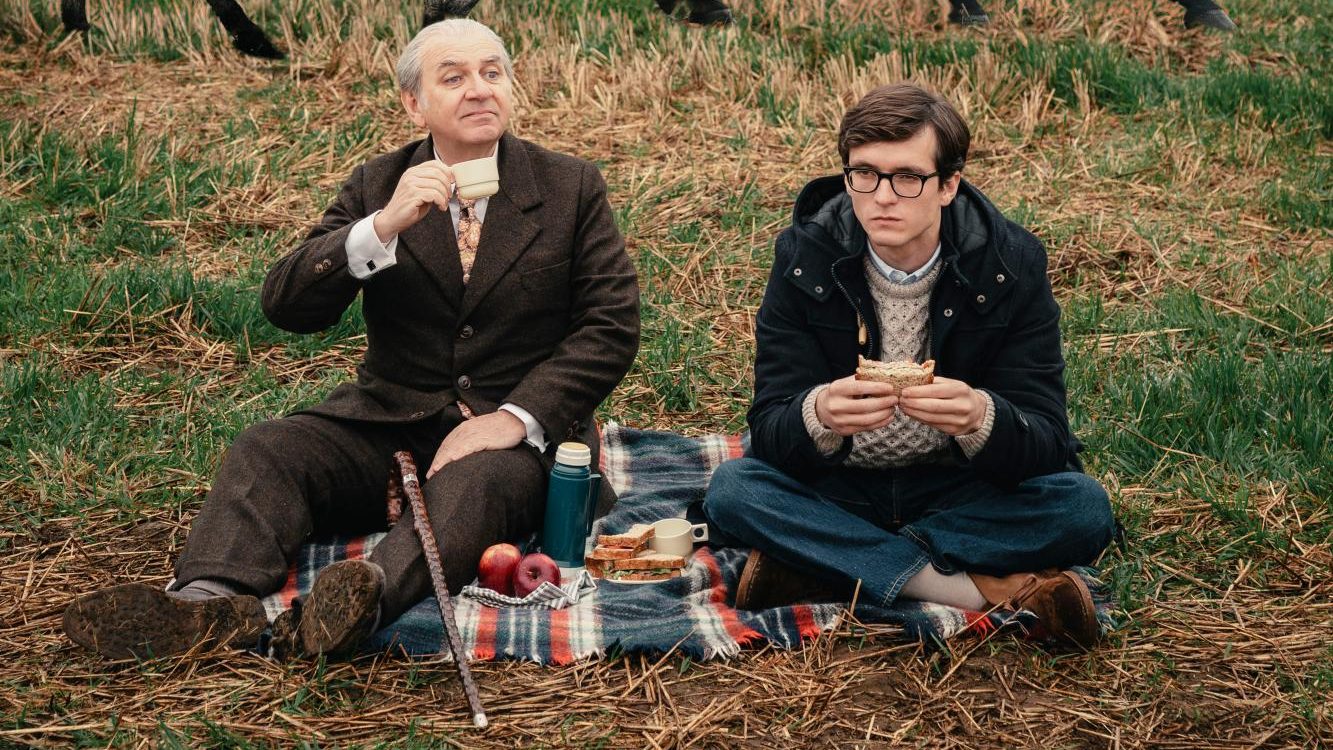
Adapted from Jay Parini’s memoir, the film takes us back to 1971, when a young Parini, played by Fionn Whitehead, unexpectedly finds himself driving blind Argentinian writer Jorge Luis Borges across Scotland. Jay is studying at St Andrews and plans to travel north to meet poet George Mackay Brown for his PhD, but those plans change when Borges, played wonderfully by Luis Gnecco, decides to come along.
An Unlikely Journey Through Scotland
Borges assures Jay that he will be a “silent companion” on the journey. He is, unsurprisingly, anything but. That dynamic is where so much of the film’s warmth and humour comes from. Jay is reserved, slightly awkward and keeps much of himself closed off, with Whitehead playing that guardedness beautifully and leaving us unsure at first what is keeping him at such a distance. Borges, by contrast, seems incapable of moving through the world without talking to it. He asks questions, tells stories, sings in the car and speaks to strangers as though he has known them for years.
Gnecco is extraordinary in the role. His Borges is mischievous, curious, philosophical and incredibly kind, with a way of speaking to people that almost immediately encourages them to reveal something about themselves. One of the loveliest examples comes during an encounter with a priest struggling with uncertainty in his faith. Borges does not dismiss that uncertainty or try to talk him out of it. Instead, he listens, gently reminds him of the good he is already doing and helps him see that doubt does not erase the value of the life he has chosen. It says so much about Borges and the way he seems to leave people feeling a little lighter than he found them.
That generosity runs through the character. “I believe in everything, my dear boy. That is the secret of my life,” he tells Jay, and Gnecco gives lines like that such sincerity that they never feel overly sentimental. It is an incredibly expressive performance too. Borges cannot see, but Gnecco communicates so much through his face, the smallest movements around his eyes and the rhythm of his voice.
He is also very funny. The visit to Dunfermline’s Carnegie Library may be one of the film’s best scenes, as Borges promptly starts licking a book before explaining that “some books need to be tasted”. It is absurd, perfectly delivered and somehow tells you everything you need to know about him.
Whitehead has the quieter role, but Jay’s emotional journey becomes increasingly important throughout the film. He carries guilt surrounding his brother Billy, who enlisted to fight in Vietnam after Jay had pushed him to do something with his life. Jay listens to cassette recordings Billy sends from the war, and there is a heaviness to those moments that gradually begins to make more sense as the story goes on. Jay spends much of the film wondering whether he will ever feel things as deeply as Borges seems to, yet that is perhaps because he has become so practised at holding his own emotions at a distance. Borges understands that before Jay does.
Seeing the World Through Borges
Their relationship is beautifully reciprocal. Jay becomes Borges’ eyes, guiding him, helping him dress, getting him into bed and quite literally looking after him physically. Borges even jokes that he would make a good nurse. Emotionally, however, Borges is often the one looking after Jay.
That idea comes through beautifully in the repeated question: “What do you see?” Early in the journey, Borges asks Jay to describe the landscape around Aviemore and the Cairngorms. Later, it changes to “what do we see?” It is a small shift, but it says so much about the friendship growing between them. Jay is no longer just describing Scotland for Borges; they are experiencing it together.
The Scottish landscape is stunning throughout. This is a gorgeous film to look at, whether the pair are travelling through the Highlands, standing beside lochs or making their way towards Orkney. One sequence on Loch Ness is particularly striking. Borges insists on going out onto the water in search of Nessie, because naturally he does, and what begins as another wonderfully eccentric adventure suddenly becomes genuinely tense when they end up in the water, after what may be a glimpse of the monster. A shot looking upwards through the loch towards the light above them is one of the most beautiful images in the film.
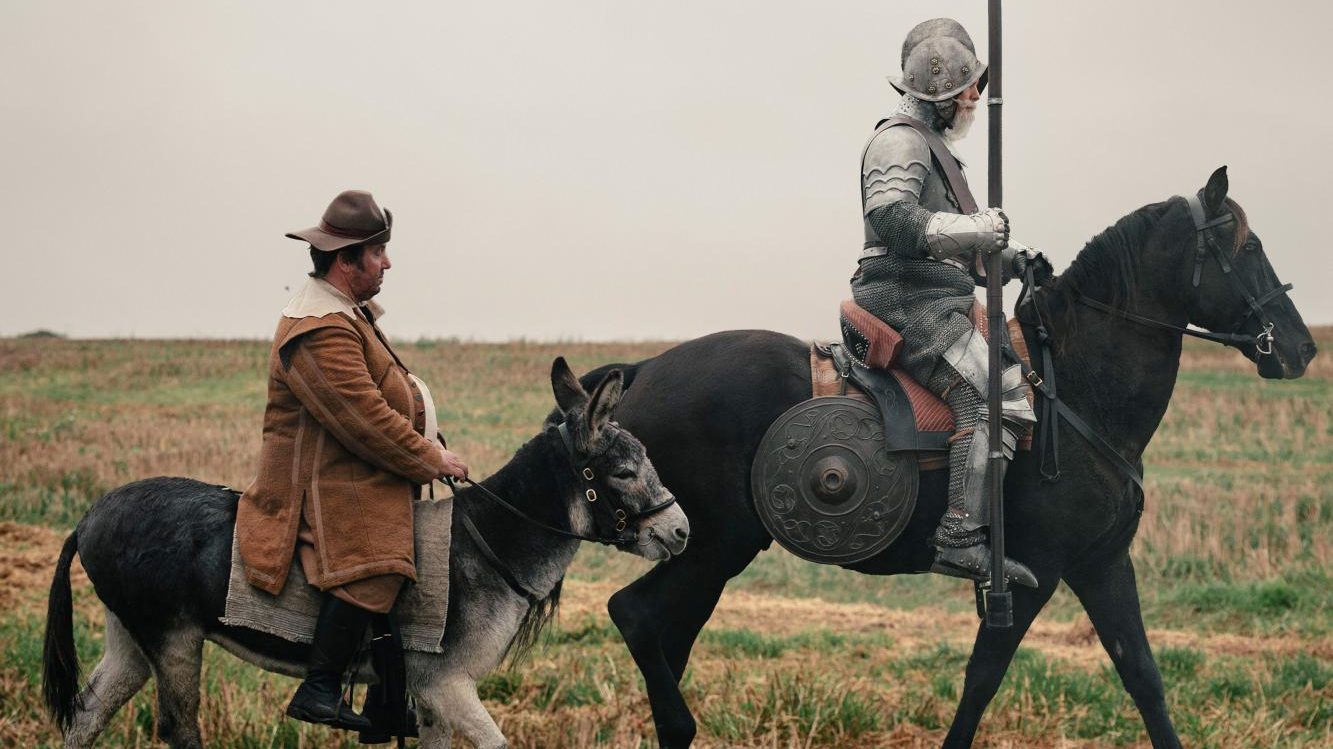
Reality and imagination blur elsewhere too, including a sequence around the Battle of Culloden where the past appears to rise up around Borges and Jay. Soldiers, kilts and bagpipes turn history into something almost tangible, fitting perfectly with a film fascinated by stories and the way they shape the world around us.
Freya Mavor brings another lovely energy to the film as Ailith, who Jay meets during the journey. Their connection is immediate. The older Jay’s narration remembers that first moment with a simple, almost awed, “there she was”, as though Borges had somehow conjured her into existence. From there, Ailith draws Jay out of himself, giving Whitehead room to show a lighter, more open side of him. Ailith loves writing and poetry herself, and Mavor gives her an easy warmth that works beautifully against Jay’s more reserved nature. Their trip north together is sweet and playful, with Ailith encouraging him to become more adventurous and Jay gradually letting himself enjoy where life has unexpectedly taken him.
There is also a wonderful musical moment when Ailith performs with her guitar. Mavor has a beautiful voice, but what makes the scene work is watching the people around her. Jay is completely enthralled, and Borges seems to disappear into the music himself. Again, Gnecco barely needs words.
The middle section does lose a little momentum when Borges temporarily slips out of focus as Jay and Ailith’s relationship develops, particularly because Gnecco’s presence is such a huge part of what makes the film special. Yet the romance remains important to Jay’s broader awakening, and Whitehead and Mavor have such natural chemistry that their scenes together are some of the film’s sweetest and most playful.
The People Who Stay With Us
Later, after the car breaks down, Jay sends Borges ahead in a taxi and the pair say what feels like a final goodbye. That night, Borges returns, telling Jay they have not had a proper ending. It is here that the film reveals what Jay has been carrying since the beginning. Billy has already been killed in Vietnam, and a new cassette from him has arrived, recorded before his death. Suddenly, Jay’s distance and quietness make much more sense, as the grief and guilt he has kept buried finally come to the surface.
What follows is one of the film’s most moving scenes. Jay has been drinking and listening to the tape, and the grief he has kept contained finally comes pouring out. Borges stays with him, comforts him, kisses the side of his head and holds him as he cries. For a film filled with philosophical conversations and literary references, one of its most powerful moments is simply one person refusing to leave another alone.
That is what Borges and Me understands so beautifully. For all its interest in poetry, myth, memory and storytelling, this is ultimately a film about companionship. Two people meet almost accidentally, share a relatively brief journey and change each other anyway.
For CultureCues, Borges and Me was one of our favourite films at EIFF. It is funny, tender and visually stunning, with Scotland captured so beautifully that there were moments we wanted to step straight into the screen. Fionn Whitehead and Freya Mavor are excellent, but Luis Gnecco gives a truly special performance as Borges, finding so much humour, kindness and quiet sadness in him.
The final revelation that Jay and Borges never saw each other again after that trip could easily have tipped into sentimentality, but instead it makes everything before it mean even more. The same is true of Ailith, another connection that only lasts for a short time but leaves its mark. Marc Turtletaub captures beautifully how some people can pass through our lives only briefly and still change us in ways that remain long after they are gone. Borges left Scotland, but Jay says he remained with him every day of his life. After spending two hours in their company, you understand exactly why. A beautiful film about the people who briefly travel alongside us, the connections that shape us and the stories we eventually have to write for ourselves.
CultureCues Rating: ★★★★★ (5/5)
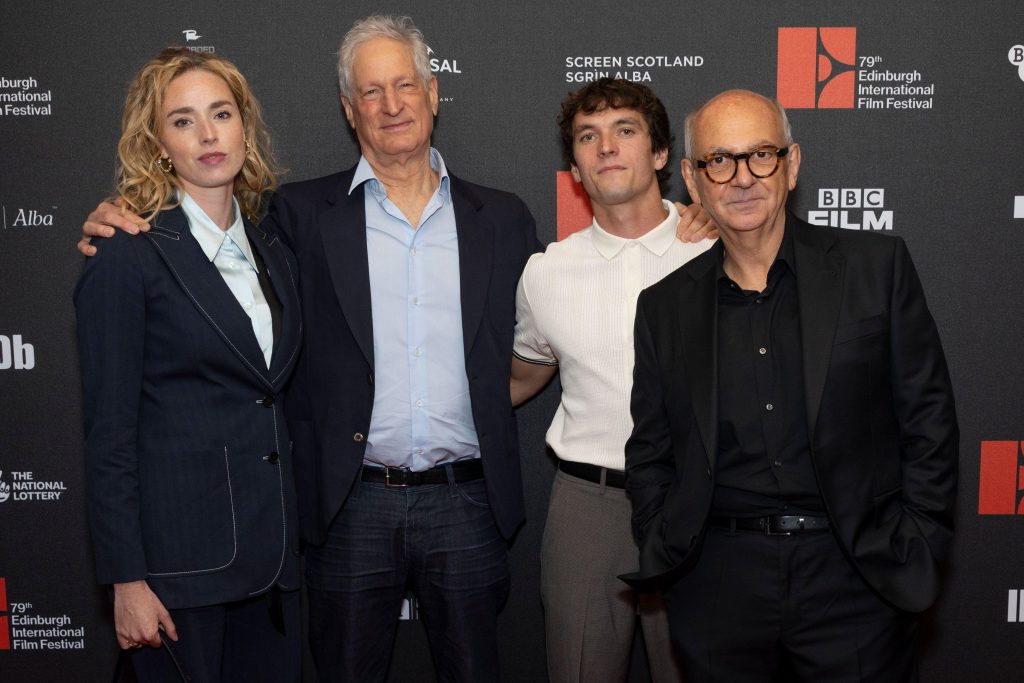
Borges and Me had its world premiere at the Edinburgh International Film Festival on 15 August 2026. Keep an eye on CultureCues for our EIFF interviews with the team behind the film, coming soon.

Nikki Murray is a UK-based writer, screenwriter and founder & editor of CultureCues, covering film, television, music and pop culture. Her work focuses on storytelling and the moments shaping modern entertainment.