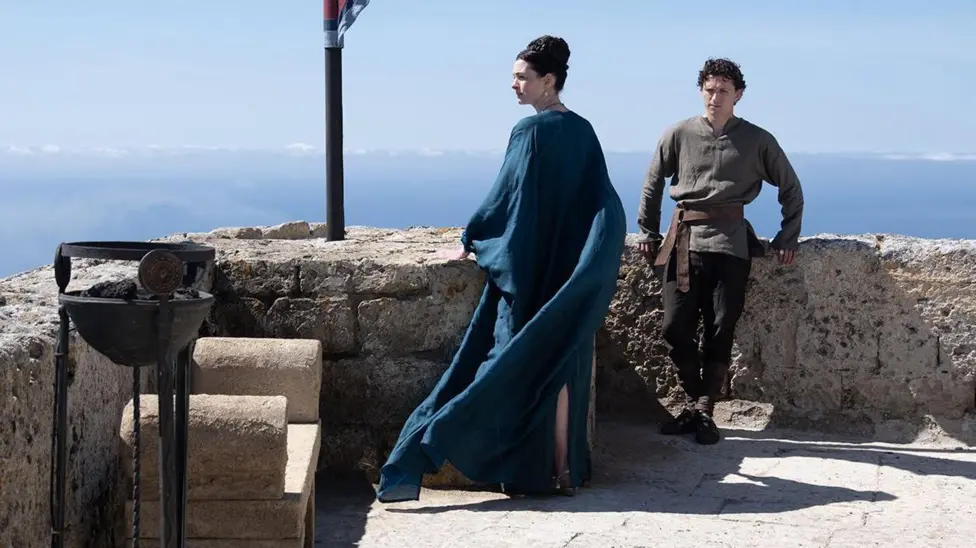
Christopher Nolan’s The Odyssey was filmed across five countries, but some of its most striking locations are much closer to home. Scotland’s Moray Firth coast became part of Odysseus’ journey, with castle ruins, pine woodland and windswept beaches bringing Homer’s mythological world to the screen.
The film was shot over 91 days across Scotland, Greece, Italy, Iceland and Morocco, with Nolan taking the cast and crew onto real beaches, mountains and caves rather than relying heavily on studio recreations. Matt Damon leads the film as Odysseus, alongside Tom Holland as Telemachus, Anne Hathaway as Penelope and a large supporting cast that includes Zendaya, Robert Pattinson and Samantha Morton.
While Scotland was only one part of the international production, the Moray coast plays an important role in the film’s world. Findlater Castle, Sunnyside Beach and Culbin Forest were among the locations used, with filming also reported around Burghead and Portsoy.
Findlater Castle Became Circe’s Remote Home
One of the most recognisable Scottish locations in The Odyssey is Findlater Castle, which was used for scenes connected to Circe, played by Samantha Morton. In Homer’s story, Circe is a powerful sorceress living on the island of Aeaea. She initially transforms members of Odysseus’ crew into pigs before eventually helping him continue his journey home.
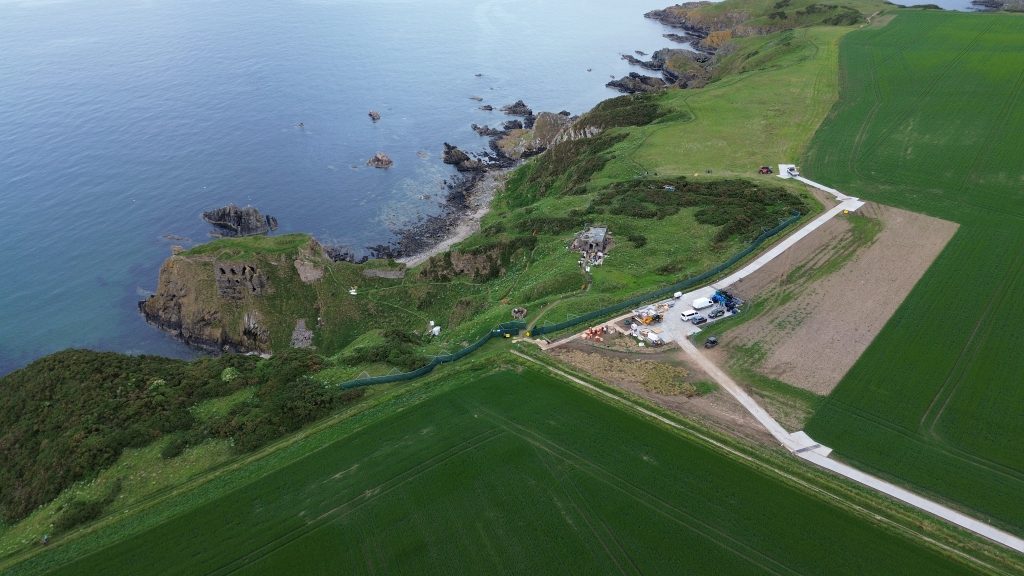
The remains of Findlater Castle sit on a cliff around 50 feet above the Moray Firth, giving the location the isolated and imposing appearance needed for Circe’s home. Once associated with the Earls of Findlater and Seafield, the ruined medieval fortress can be reached from the nearby village of Sandend and viewed from the surrounding coastal path.
Visitors should not attempt to enter the ruins themselves, as the castle is a protected archaeological site and sits in a dangerous cliffside position. A nearby grassy viewing area offers a safer look across to the remains. Sunnyside Beach, which sits below the castle, was also used during filming. The beach can be reached by foot and offers views back towards the cliff where Circe’s home was created.
Culbin Forest Hosted the Laestrygonians
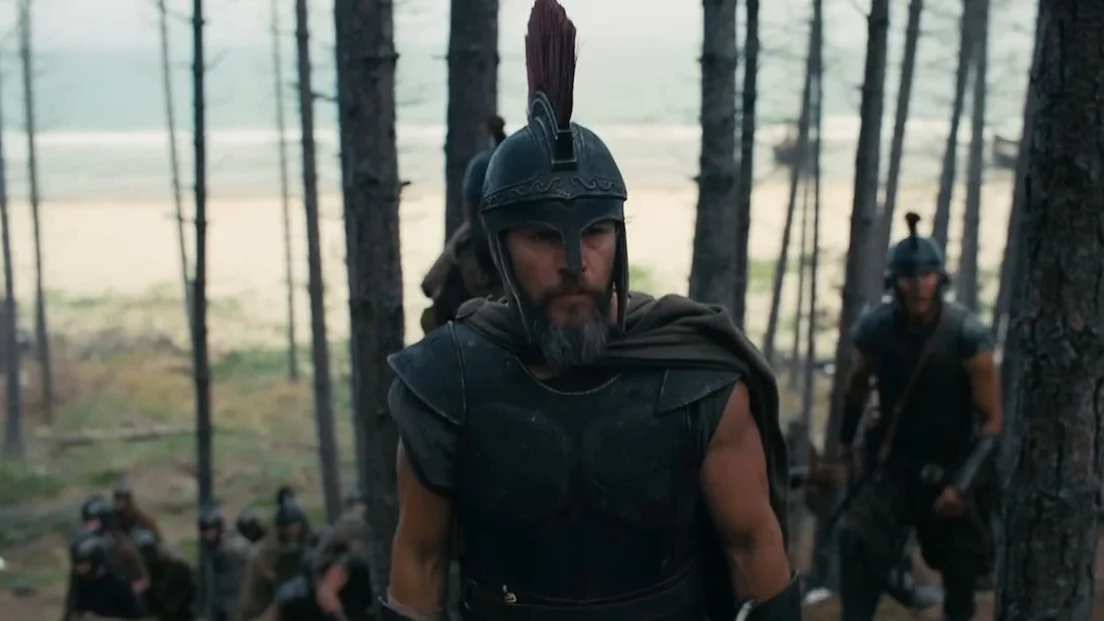
Culbin Forest, near the Moray Firth coast, was used for Odysseus’ encounter with the Laestrygonians. In Homer’s poem, the Laestrygonians are a race of giants who attack Odysseus and his fleet, destroying all but one of his ships. For Nolan’s adaptation, the dense pine woodland of Culbin provided the setting for this dangerous stage of the journey.
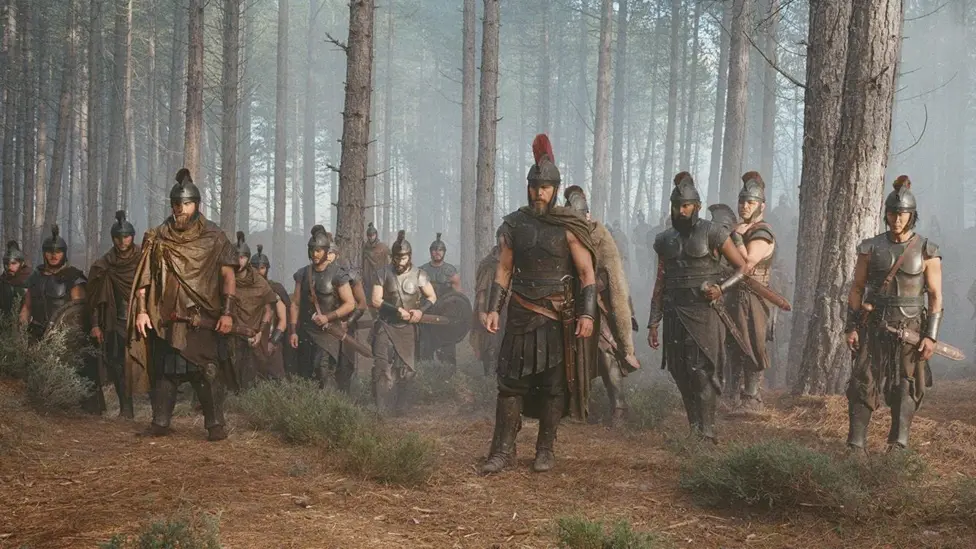
The forest stretches between Nairn and Findhorn and is known for its network of trails, sand dunes and coastal views. It is a noticeably different landscape from Findlater Castle, allowing the Scottish portion of the film to cover several parts of Odysseus’ myth without leaving the Moray coast.
Matt Damon and Tom Holland were also reportedly seen filming around Burghead before travelling by boat towards Culbin. The coastal village stands on the site of what is believed to have been one of Scotland’s largest Pictish forts, adding another layer of real history to a film already drawing heavily from the ancient world.
Sunnyside Beach, Portsoy and the Moray Coast
Further filming took place along the wider Moray Firth coastline, including Sunnyside Beach and the historic harbour village of Portsoy. Sunnyside Beach lies between Sandend and Findlater Castle and can only be reached on foot. Its open shoreline and surrounding cliffs make it well suited to Nolan’s version of a journey shaped by rough seas, remote islands and unpredictable weather.
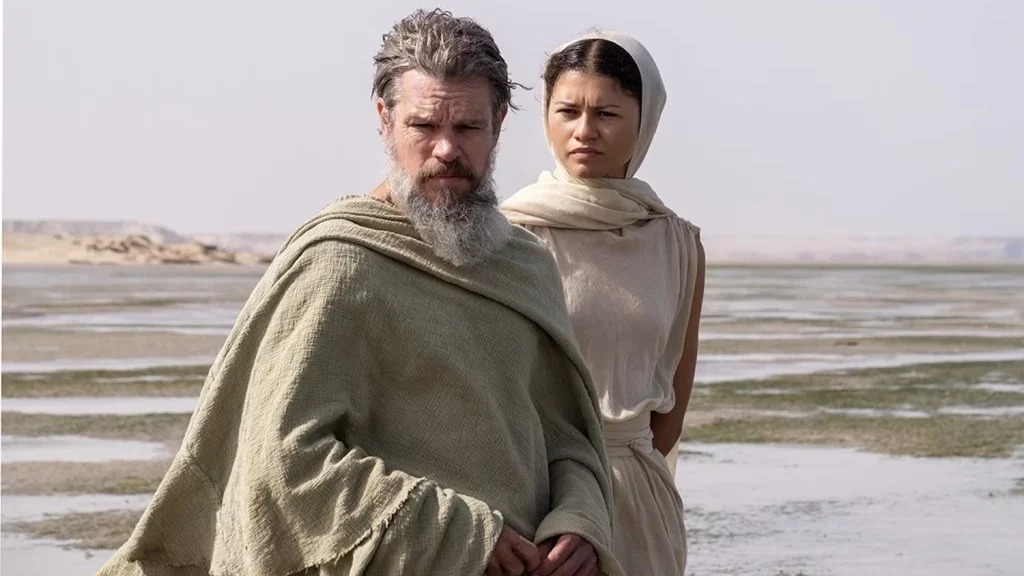
Portsoy, further east along the coast, is known for its 17th-century harbour and traditional stone buildings. Although details of exactly how the location appears in the finished film have been kept limited, it formed part of the wider Scottish shoot.
The production first attracted attention in the area when the Viking ship Draken Harald Hårfagre was spotted at Inverness in June 2025. The vessel was used during filming and helped reveal just how extensively Nolan planned to recreate Odysseus’ sea voyage using practical locations and full-scale ships.
Where Was Ithaca Filmed?
Although Ithaca is a real Greek island, Nolan did not use it as the main location for Odysseus’ home in the film. Instead, Ithaca was recreated on Favignana, an island off the western coast of Sicily. The production used Castello di Santa Caterina, a ruined fortress sitting at the top of the island’s highest hill.
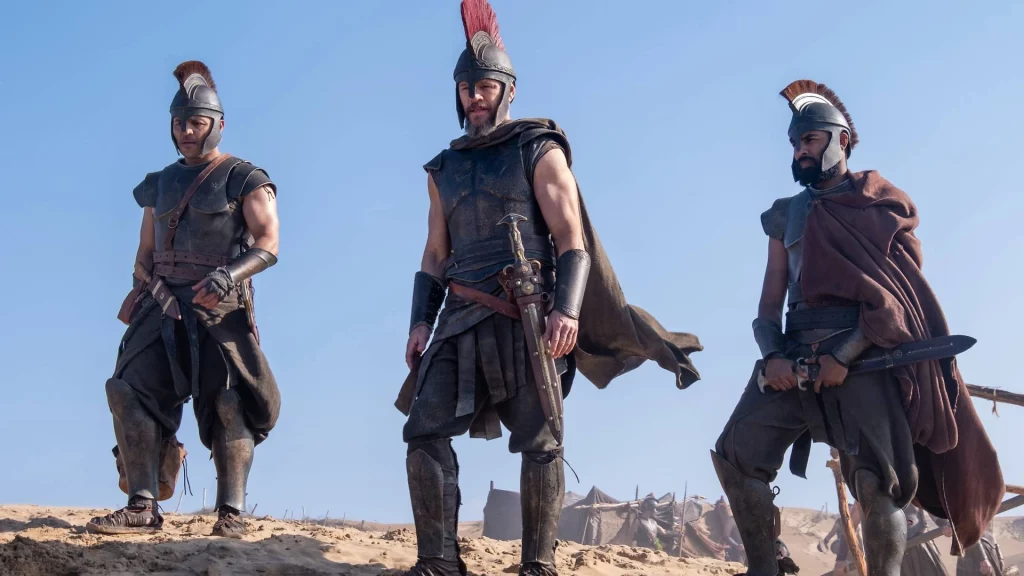
Reaching the castle proved difficult for the cast and crew. Nolan reportedly considered building a new access road before deciding against it, leaving those physically able to make the journey facing a 45-minute uphill walk each day for around two weeks. Additional filming in Italy took place across the Aeolian Islands, including Lipari, Vulcano and Basiluzzo. Malta was also used during the production.
Where Was Troy Filmed?
The ancient city of Troy was recreated in Morocco, with Aït Benhaddou providing its walls and distinctive mud-brick buildings. The historic fortified village has previously appeared in productions including Gladiator, The Mummy and Lawrence of Arabia. Its scale and preserved architecture made it a natural choice for Nolan’s version of the city at the centre of the Trojan War.
Other Moroccan locations included Marrakech, Tahanaoute, El Haouz, Ouarzazate and Essaouira. The beach at Essaouira was used for a sequence showing soldiers pulling the Trojan horse towards the city.
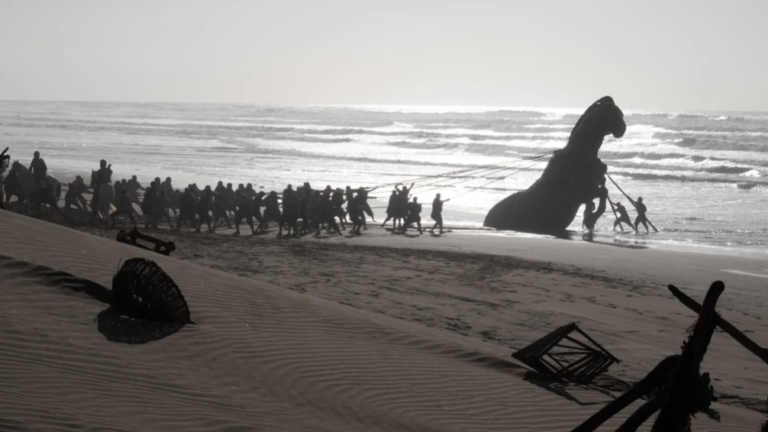
Damon described arriving in Morocco for his first day of filming to find thousands already assembled for the scene. Nolan is known for using real performers and practical sets, and the production reportedly recreated the scale of the Trojan army without filling the frame with digital crowds.
Where Was the Underworld Filmed?
Iceland was used to represent the underworld visited by Odysseus during his journey. In the story, Odysseus travels there to seek guidance from the blind prophet Tiresias, played in the film by James Remar. Locations reportedly included caves at Hjörleifshöfði mountain, the Snæfellsnes peninsula, the Markarfljót river and the harbour at Landeyjahöfn.
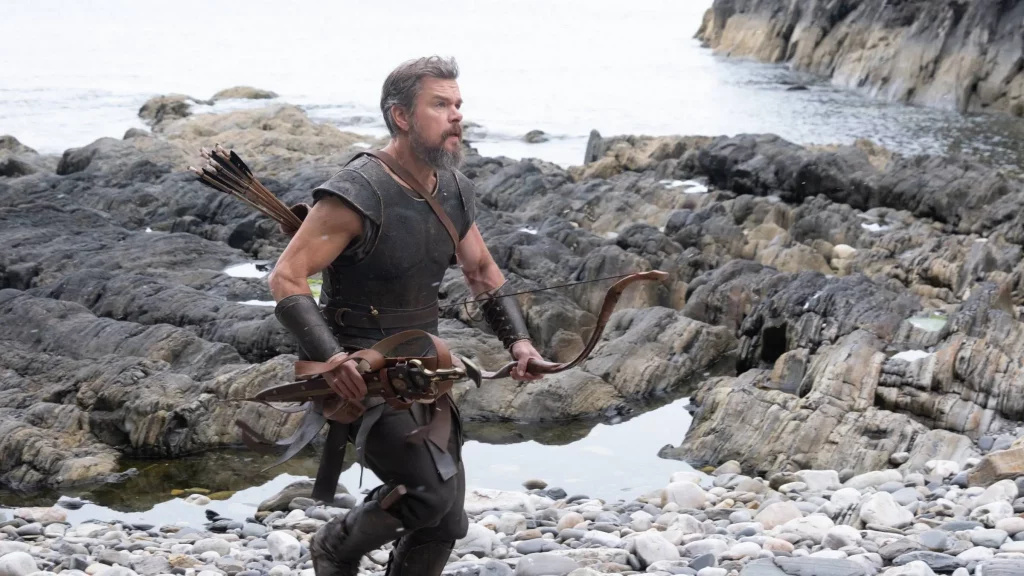
The dark volcanic landscapes and caves offered a very different atmosphere from the beaches of Greece and Morocco, helping distinguish the underworld from the other stages of Odysseus’ voyage.
Where Was the Cyclops Cave Filmed?
The confrontation with the Cyclops Polyphemus was filmed at Nestor’s Cave in Greece. Located near Voidokilia Beach, the cave became one of the production’s most difficult locations. Damon recalled thousands of bees gathered around its entrance, while around 40 sheep were brought inside for the sequence.
Nolan said filming in a real cave created an oppressive atmosphere that would have been difficult to reproduce on a set. Once the entrance was blocked for the scene, the cast were left working in darkness alongside the animals. Other Greek filming locations included Methoni Castle, Acrocorinth and Almyrolaka Beach.
The Difficulties Behind the 91-Day Shoot
Nolan has described making The Odyssey as an enormous physical undertaking, with the production moving between five countries in only 91 filming days. The cast worked on open water, inside caves and across remote landscapes, often in difficult weather. Damon said the shoot felt closer to an expedition and noted that Nolan remained outside with the actors and crew throughout the cold and wet conditions.
Some scenes were particularly intense. Damon has spoken about being waterboarded during filming, while the Cyclops sequence involved bees, darkness and dozens of sheep inside a real cave.
The scale of the production reflects the story. Odysseus spends ten years trying to return home after the Trojan War, encountering monsters, gods and dangerous lands. Nolan’s decision to film across real coastlines and ancient structures gives that journey a physical scale that would be difficult to create entirely in a studio.
For CultureCues, it was brilliant to see the Moray coast woven into The Odyssey. Findlater Castle already looks like it belongs in a myth, while Culbin Forest gives the Laestrygonians an appropriately unsettling home. The locations throughout the film are stunning, but there is something especially exciting about seeing the north-east of Scotland given such a prominent place in a production of this scale. Nolan could have filmed almost anywhere, so the familiar cliffs, beaches and forests were a real highlight.
The Odyssey arrived in cinemas on 17 July 2026.

Nikki Murray is a UK-based writer, screenwriter and founder & editor of CultureCues, covering film, television, music and pop culture. Her work focuses on storytelling and the moments shaping modern entertainment.