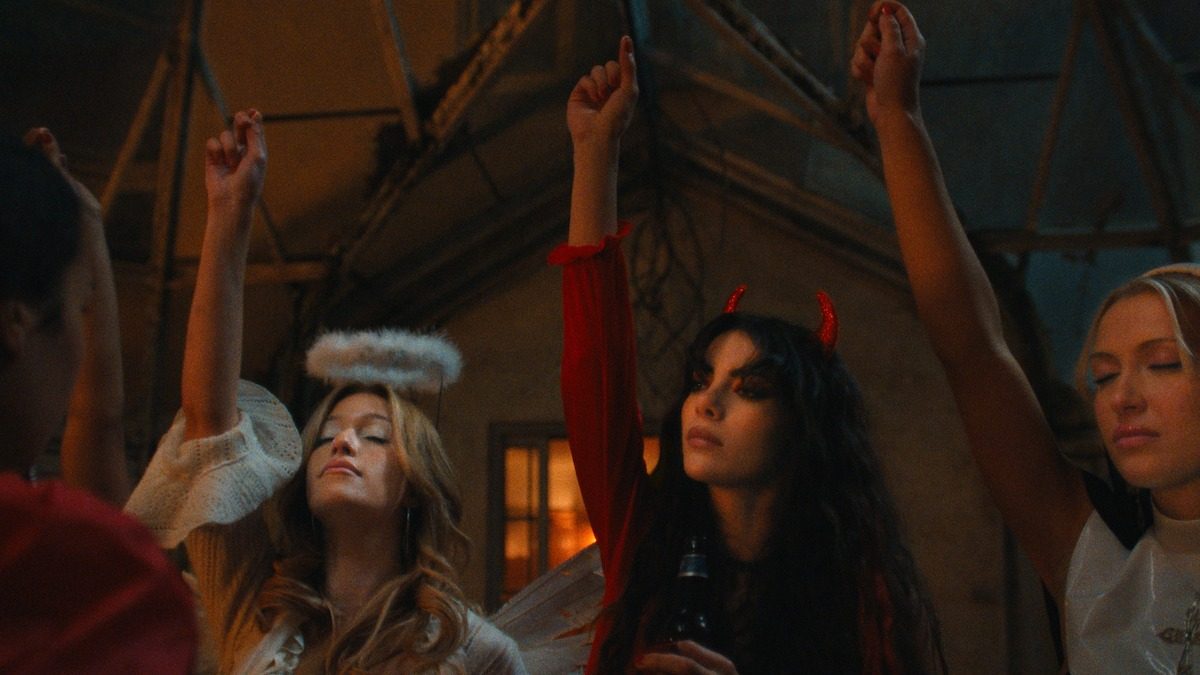
Netflix’s The Body takes us back to 2004, when velour tracksuits, flip phones and questionable fashion choices ruled the world. Add a Catholic high school, a competitive dance team, some complicated teenage relationships and a Satanic ritual gone horribly wrong, and you’ve got one of the most entertaining teen dramas Netflix has delivered in a while.
Created by Quinn Shephard, the eight-part series follows the Lions, a popular dance troupe at a Catholic school, whose Halloween celebrations take a disturbing turn when an initiation ritual leaves new recruit Grace Franklin (Sofia Wylie) in a coma. The girls agree to keep the events of that night a secret, but rumours soon spread throughout the school. With members of the team experiencing strange visions and seizures, fears of demonic possession begin to grow, raising questions about what really happened at the party.
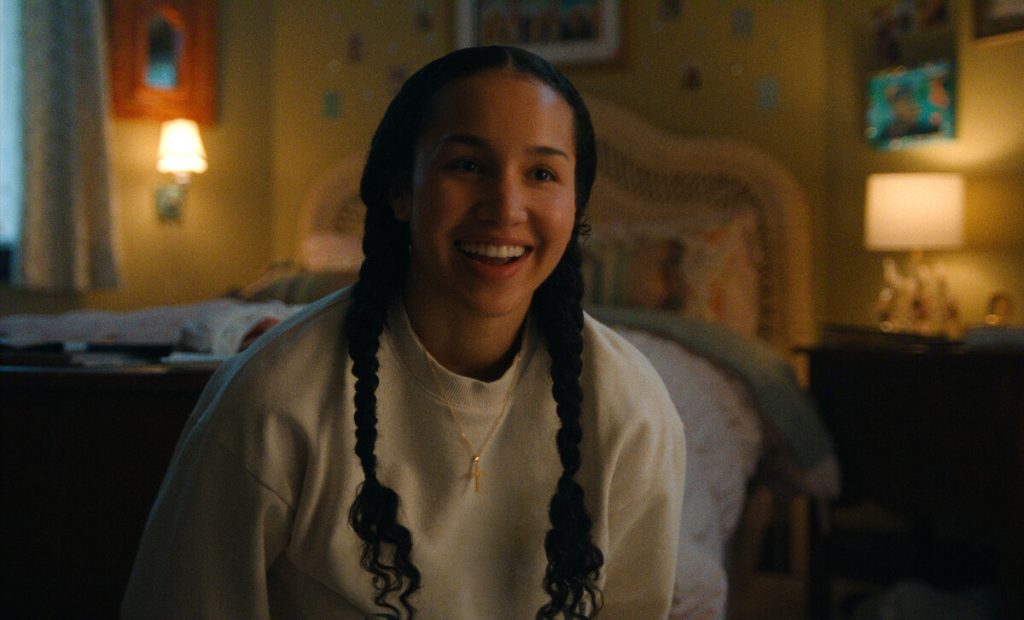
I’ll admit, The Body took a little time to win me over. The opening two episodes were enjoyable enough, and I liked the premise, but I wasn’t completely convinced it would become a favourite. However, as the story developed and the characters became tangled in their own lies, I found myself getting invested. By the final few episodes, I was completely hooked, and the finale left me hoping Netflix gives us a second season.
The Lions, complicated friendships and a standout cast
One of the biggest strengths of The Body is its cast, especially the young actors playing the Lions. Kristina Bogic leads the group as Anya, the popular dance captain trying to maintain control of her friendships, relationship and reputation, while Sara Boustany plays her best friend and fellow captain Elise. The two have been inseparable for years, but there’s an obvious attraction between them that neither has properly addressed. Well, Elise certainly knows how she feels. Anya, on the other hand, seems determined to convince herself that there’s nothing going on.
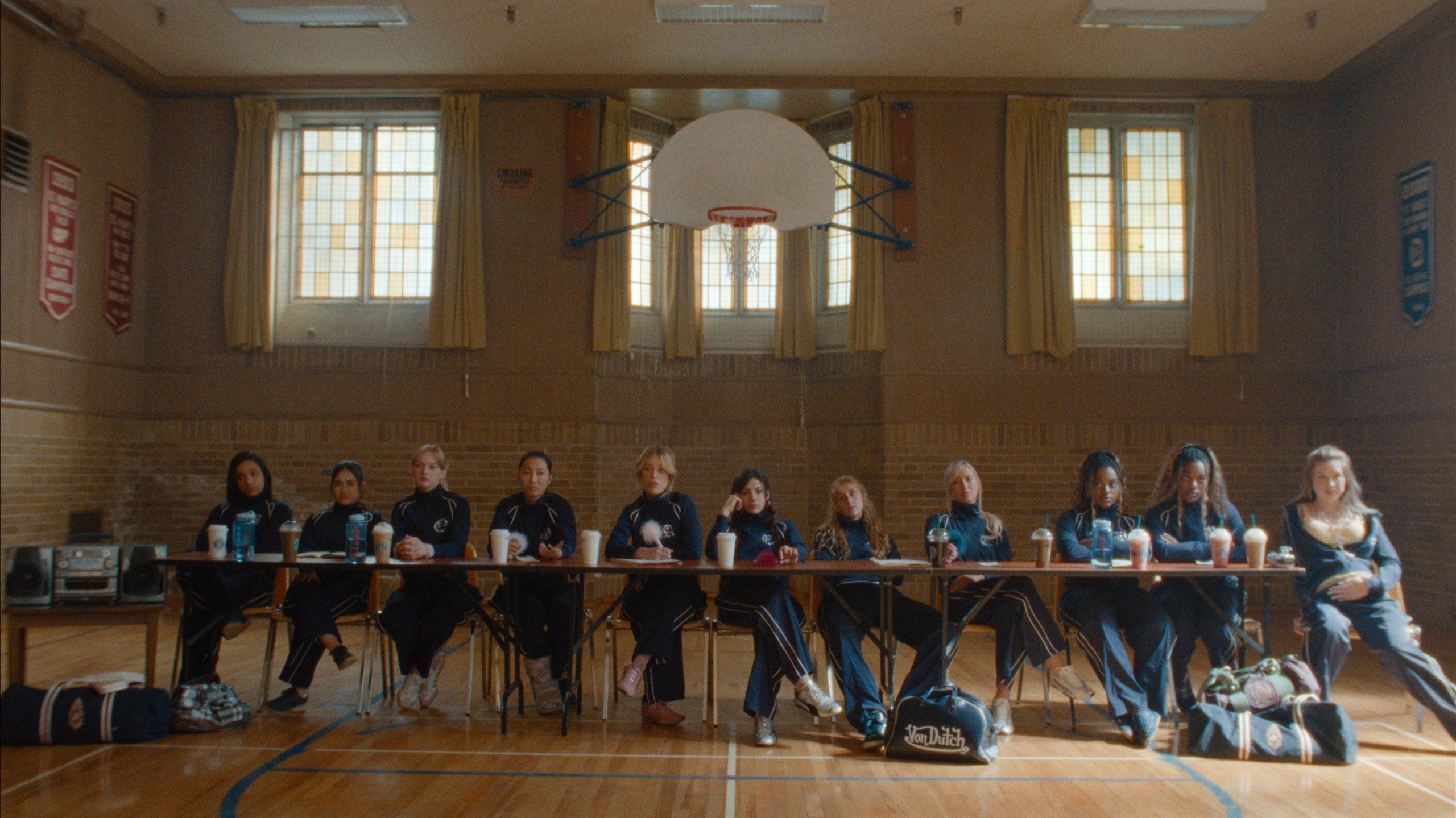
Bogic is excellent as Anya, who could easily have been written as another stereotypical popular girl. She’s confident, sometimes selfish and makes some truly questionable decisions, but there’s also a vulnerable side to her that becomes clearer as the series progresses. She’s terrified of losing control of her life, and her relationship with Elise is a huge part of that. Bogic handles those conflicting emotions well, making Anya a character you can sympathise with even when you’re frustrated by her choices.
And can we talk about Elise for a moment? Because what a character. I’ll admit she irritated me a little at first, but by the end, she was easily my favourite. Boustany is fantastic in the role, giving Elise a brilliant mix of confidence, vulnerability and humour, and her frustration with the people around her is often completely justified. She’s funny, wonderfully sarcastic and difficult not to root for, with some of the best dialogue in the series. Also, yes, I may have developed a slight girl crush along the way…
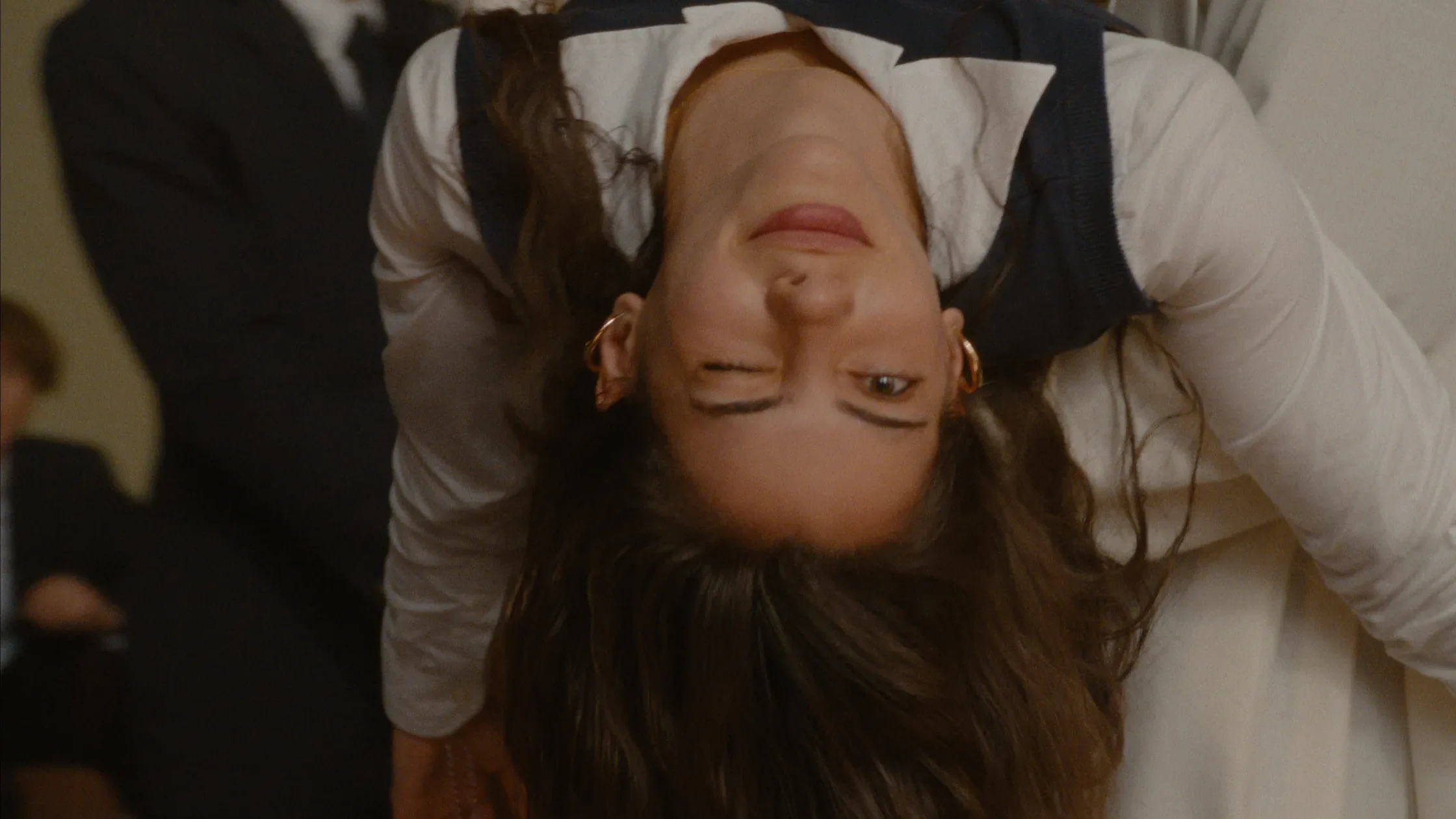
For me, Anya and Elise’s relationship was one of the best parts of The Body. Their chemistry is fantastic, and I loved watching their friendship develop as they struggled with feelings that had clearly been there for some time. Elise is comfortable with her sexuality and knows what she wants, while Anya is still trying to understand her attraction to women, complicated further by the fact that she has a boyfriend and attends a Catholic school. Their scenes together are often funny, romantic and frustrating in equal measure, and there were definitely moments when I wanted to grab Anya by the shoulders and tell her to get a grip.
It’s also refreshing to see a teen drama give this much attention to a sapphic relationship, especially one set in the early 2000s. The series doesn’t shy away from the homophobia and religious expectations of the time, showing how difficult it could be for young people to explore their sexuality without feeling ashamed or afraid of being judged. Anya and Elise’s storyline gives the show some of its strongest emotional moments, and their relationship was easily the one I cared about most.
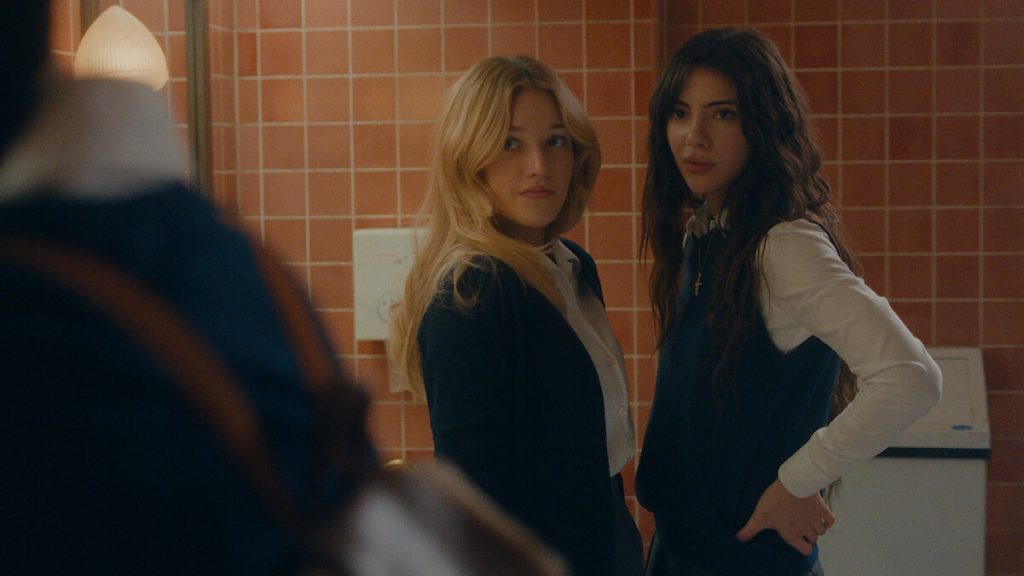
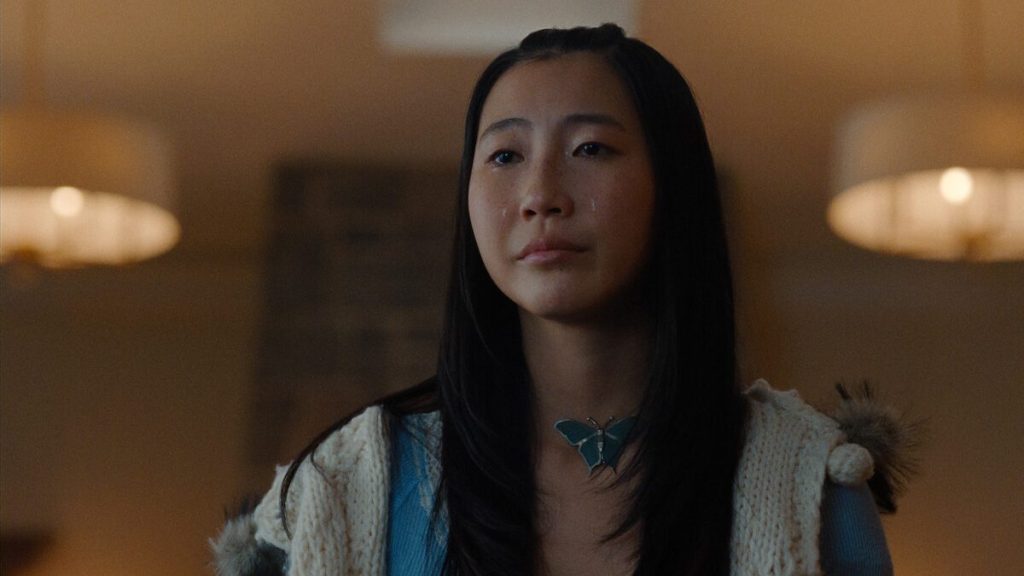
The rest of the Lions are great fun too, with some of the show’s funniest moments coming from the girls’ conversations and sarcastic remarks. Maddie (Shirley Chen), whose injury initially opens up a place on the team for Grace and later Lisbeth, is another entertaining character, although I did feel sorry for her later on, especially with the way Lisbeth treats her. Poor Maddie! Twins Bailey and Brit, played by Kyra and Phallon Pierce, are hilarious. I especially loved their matching outfits and the way they play off each other. The group has some brilliant dialogue throughout, with their gossip, arguments and constant teasing bringing plenty of humour to the series.
Religious guilt, teenage secrets and one very creepy character
Then there’s Lisbeth, played by Geena Meszaros. Oh, Lisbeth. I genuinely cannot remember the last time a television character frustrated me quite as much. Having grown up in a cult-like religious environment with her mother and brother Leo (Jackson Kelly), she’s desperate to fit in with the Lions, and following the Halloween party, she finds a way to manipulate herself into Anya’s friendship group. Her behaviour becomes more disturbing as the series progresses, with her obsession with Grace, strange visions and recurring snake imagery adding to the mystery surrounding what’s happening at the school.
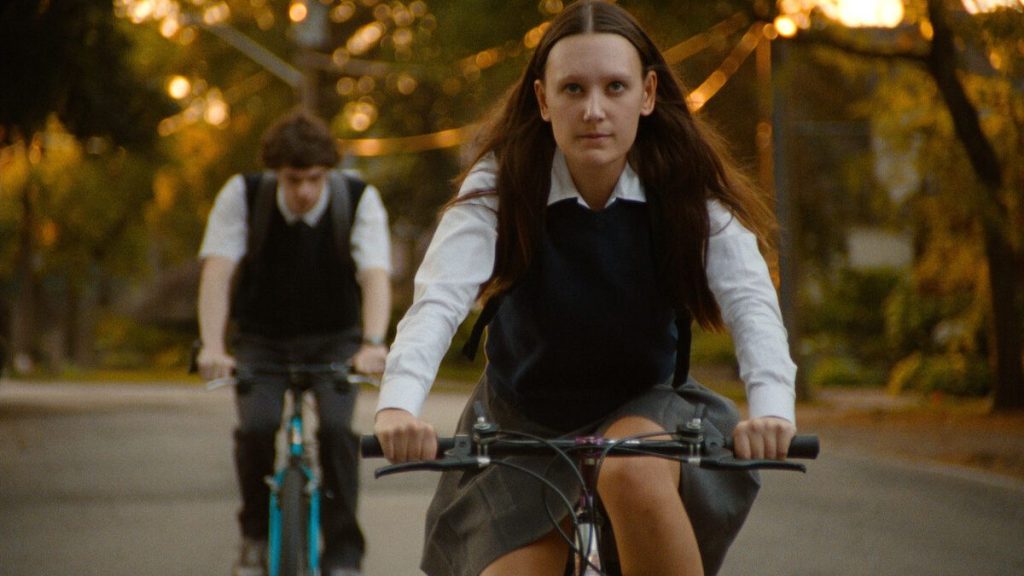
Meszaros is excellent in the role, making Lisbeth genuinely creepy through her expressions, mannerisms and the way she manipulates those around her. Her upbringing helps explain some of her behaviour, but it didn’t make me like her any better. By the final episodes, I couldn’t stand the character, which probably tells you everything you need to know about how well she’s played. She annoyed the hell out of me, pun very much intended.
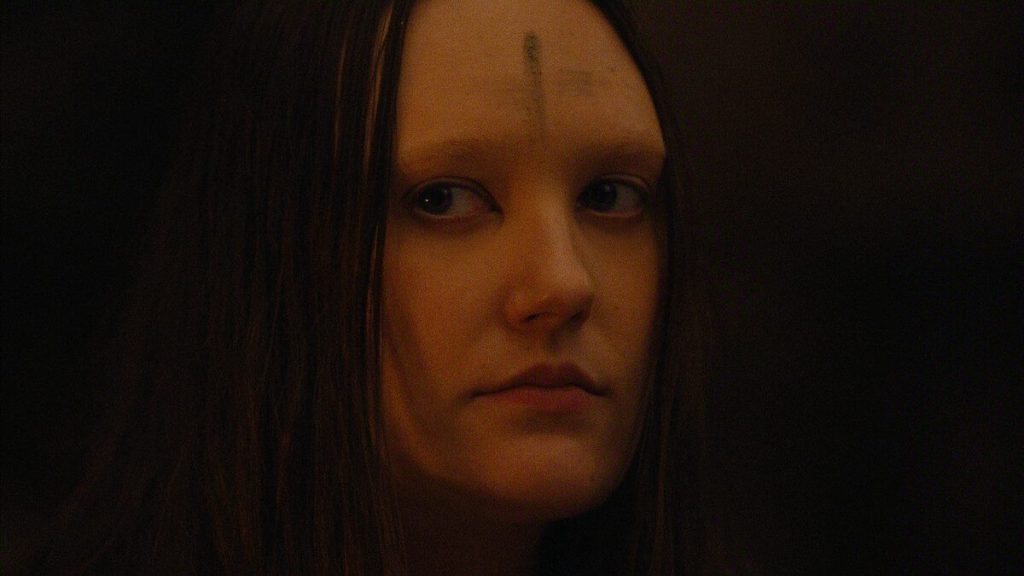
Beyond the teenage rivalries, The Body explores religion, guilt and how easily fear can influence a group of people. As Grace remains in a coma, the Lions begin to experience symptoms that spread through the school, with their visions and strange behaviour raising questions about possession, mass hysteria and the power of suggestion. The religious imagery is used throughout, from crucifixes and prayers to snakes and disturbing visions, giving the series an eerie atmosphere even during its more ordinary school scenes.
The girls are growing up in an environment where their behaviour is constantly judged, and the consequences of the Halloween party show how vulnerable they are to guilt and manipulation. What makes the story interesting is how differently each character responds to the situation, whether they’re trying to protect themselves, make sense of what’s happening or use the fear surrounding Grace to their advantage. Some of these ideas could have been explored further, but the mixture of religious horror and teenage drama works surprisingly well.
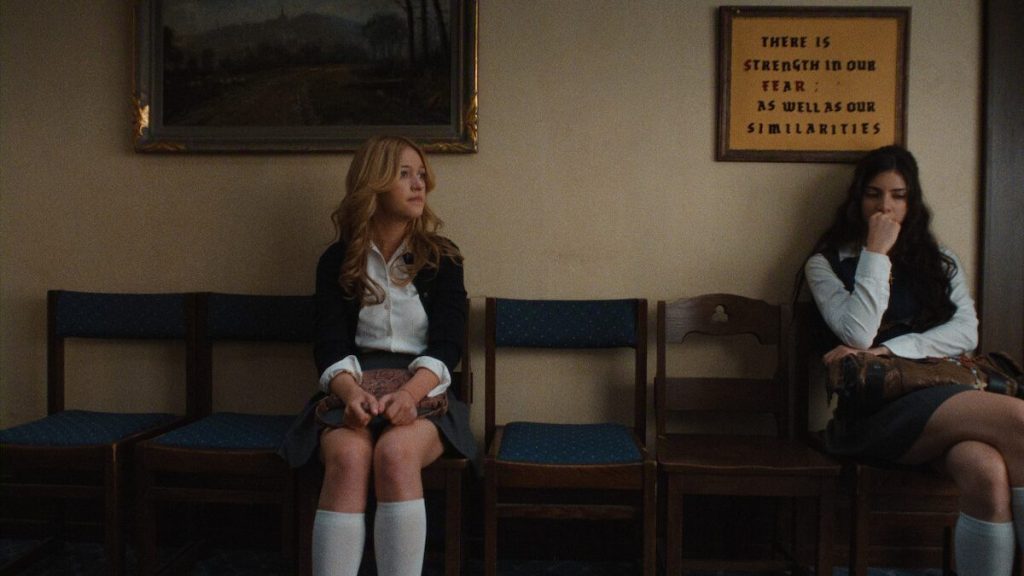
The pacing is probably my biggest criticism. Eight episodes feels slightly excessive for the story being told, especially during the opening stretch, when the plot takes a while to establish its direction. There are also moments when the characters’ decisions become frustrating, although that is perhaps inevitable when dealing with a group of teenagers who seem determined to make their lives as complicated as possible. Fortunately, the later episodes pick up, with the tension, revelations and performances making the final stretch addictive.
Y2K nostalgia and a series worth sticking with
Of course, the 2004 setting is another huge part of the appeal. From the Juicy Couture-inspired tracksuits and tiny handbags to the hairstyles, low-rise jeans and early mobile phones, The Body fully embraces the fashion and pop culture of the era. There’s something wonderfully nostalgic about revisiting the early noughties, even if some of those trends are probably better left in the past. The soundtrack is another highlight, featuring music from artists including Kelly Clarkson, Ciara and Sean Paul, which fits perfectly with the setting. Honestly, I’d happily watch another eight episodes just for the outfits.
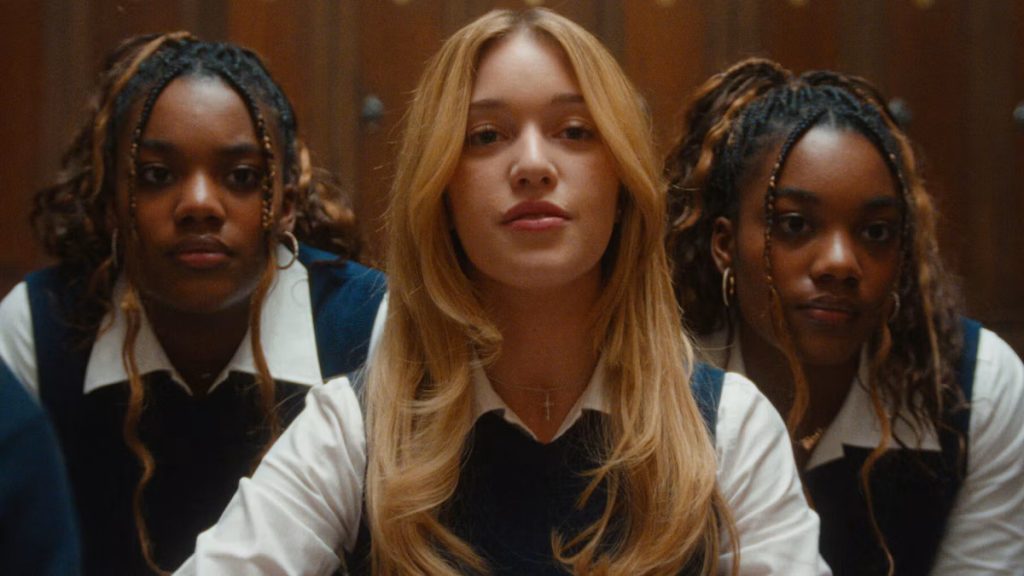
There’s also something enjoyable about seeing a teen drama set before smartphones and social media became such a huge part of everyday life. The girls still manage to spread rumours, keep secrets and cause endless problems for one another, just with flip phones and instant messaging instead. The early 2000s setting also gives The Body a similar appeal to films like Mean Girls, Bring It On and Jennifer’s Body, while allowing it to explore sexuality, religion and female friendships through its own story.
For CultureCues, The Body was a really pleasant surprise. I went from being unsure after the first couple of episodes to absolutely loving it by the end, and Anya and Elise’s relationship was easily my favourite part of the series. Sara Boustany and Kristina Bogic are both fantastic, the supporting cast are great fun, and there’s so much to enjoy in the humour, Y2K fashion and the ridiculous situations these girls find themselves in. It isn’t perfect, and I would have liked the story to move a little faster in places, but I had such a good time watching it. Now, Netflix, can we please have a second season? There are still so many questions left unanswered, and I’m definitely not ready to say goodbye to these girls.
CultureCues Rating: ★★★★☆ (4/5)
The Body is available to stream on Netflix now

Nikki Murray is a UK-based writer, screenwriter and founder & editor of CultureCues, covering film, television, music and pop culture. Her work focuses on storytelling and the moments shaping modern entertainment.