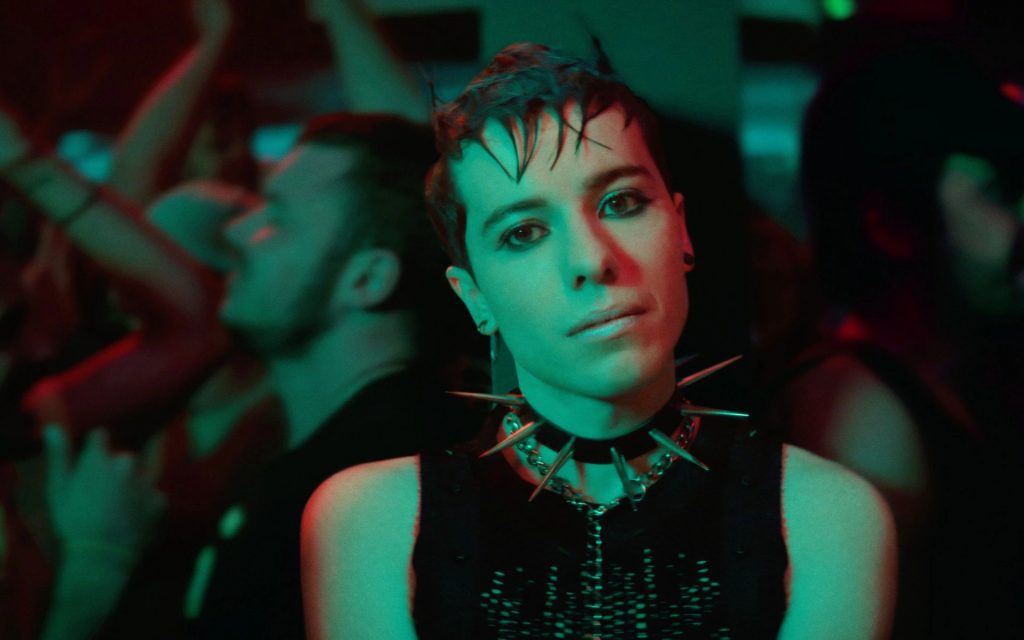
Some shows entertain, some make you emotional, and then there are the ones that really get under your skin. What It Feels Like for a Girl is firmly in that last category.
Adapted from her own memoir, What It Feels Like for a Girl, the show was created and written by Paris Lees, and directed by Brian Welsh, Ng Choon Ping and Marie Kristiansen. This BBC drama is bold, messy, funny, and at times genuinely difficult to watch. In other words, it feels real. Set in the early 2000s, it drops us into a world of cheap nights out, complicated friendships and small-town frustration, capturing the era without ever turning it into nostalgia for the sake of it.
A chaotic, complicated lead you can’t look away from
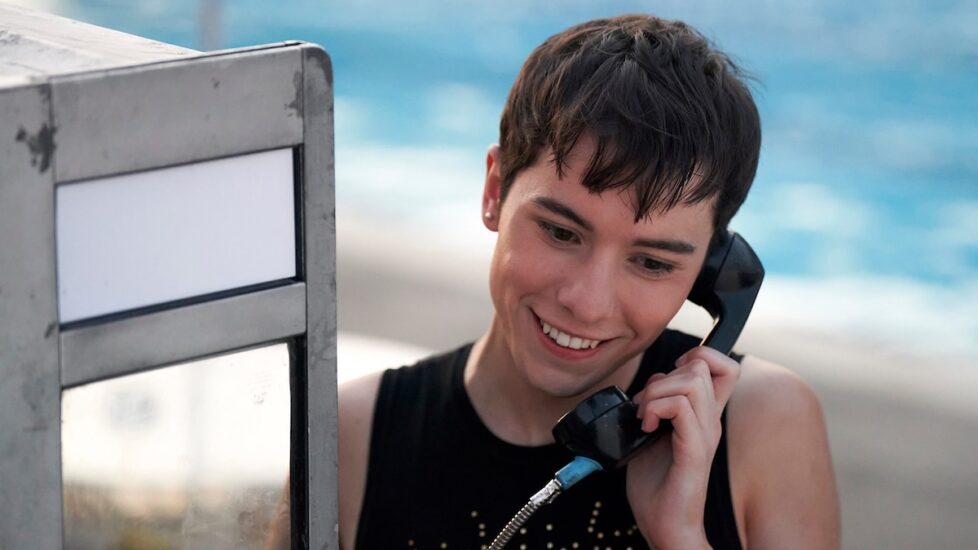
At the centre is Byron, played by Ellis Howard, delivering a performance that feels honest, raw and completely believable. At fifteen, Byron is already navigating a tough reality. Bullied, misunderstood, and stuck in a strained home life with a father who doesn’t accept them, they’re desperate for something more than life in Hucknall. When they find a new world in queer nightlife, everything changes.
What follows is not a neat coming-of-age story. It’s messy, often difficult, and shaped by choices that don’t always feel right, but do feel real. Byron drifts into sex work, gets pulled into complicated relationships, and pushes boundaries in ways that are both understandable and worrying. The show never tries to soften that or make Byron easy to root for at every turn. They can be selfish, impulsive, and frustrating at times. But that’s exactly why it works. It allows Byron to exist as a full person, not a symbol.
Queer life beyond stereotypes
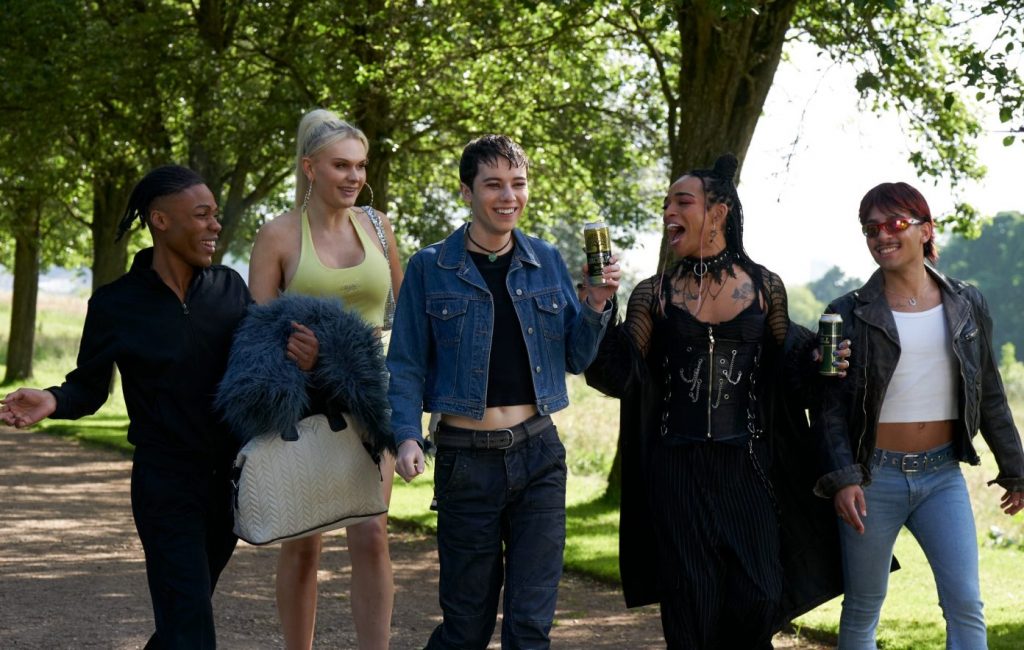
The friendships around Byron are just as important as their own journey, and the show takes its time to show how complicated those dynamics can be. Sasha (played by Hannah Jones) is one of the most layered characters in the series. From the start, her dynamic with Byron feels tense. They’re constantly at each other, and at times it goes too far. Sasha often comes across as confrontational and guarded, someone who needs to stay one step ahead. But underneath that is insecurity, jealousy, and a need to feel chosen. It often feels like she and Byron are in competition with each other. As the series goes on, though, that edge begins to soften, and by the end, they reach a genuine understanding and form a real friendship. You start to see how much they mirror each other, and why that connection was always there, even when they were at odds.
Lady Die, played brilliantly by Laquarn Lewis, brings something completely different. She’s confident, magnetic, and often the emotional centre of the group, even in the quieter moments. There’s a warmth to her that draws Byron in early on, and that connection feels important. But the show doesn’t idealise her. When Byron lets her down at a crucial moment, leaving her when she needed support most, the shift between them lands hard. It creates a real distance between them for a long time. It’s only later, after Byron takes responsibility, that there’s a sense of repair, and their bond finds its way back. It’s a reminder that even the strongest people still need care, and that trust, once broken, takes time to rebuild.
Around them, the wider group feels real. Messy, loyal, sometimes toxic, but never flat. These are friendships built on survival as much as connection.
Love, control and blurred lines
As Byron becomes more immersed in this world, they also start stepping into situations that feel exciting on the surface but carry a real sense of risk underneath. That plays out most clearly in their relationships with Max (Calam Lynch) and Liam (Jake Dunn).
Max is a complicated one. His feelings seem genuine, he’s gentle with Byron, and in those early moments, it doesn’t feel like he’s trying to hurt him. Byron is aware, on some level, that he might be taking advantage, but leans into it anyway. They both say they love each other, and for a while, you almost believe in it too. But the show never lets it sit comfortably. Max is twenty, Byron is fifteen, and that imbalance is always there, even when it’s easy to overlook. The fact Max entered sex work at thirteen adds another layer to it, shaping how he understands relationships and boundaries. It makes it more complicated, not less. And it’s only later, when they meet again, that it really hits differently. With a bit more distance, it’s harder to ignore what it actually was, and the age gap feels far more uncomfortable than it did at the time. You get the sense Byron sees it more clearly by then too
Liam, on the other hand, is far more openly unsettling. There’s an unpredictability to him from the start. He pulls Byron in, then keeps them off balance, and it quickly becomes clear that control is the real driver behind his actions. You never fully know where you stand with him, and that tension builds into something genuinely uncomfortable. Where Max blurs lines, Liam crosses them entirely. Together, those relationships show how easily Byron gets pulled into situations that feel exciting or validating on the surface, but carry real consequences underneath.
Family, and all the mess that comes with it
Where the show really hits hardest is in Byron’s family relationships. Byron’s dad, Steve, played by Michael Socha, is a harsh, hard, typical northern bloke, and clearly struggling to accept who Byron is. Through flashbacks, we see that Byron tried to tell him from a young age that they were a girl, but it was always shut down or ignored. There’s a sense that he does care, he’s the one who raised Byron after their mum left, but he just can’t accept that his ‘son’ isn’t who he expected him to be. Byron’s mum (Laura Haddock) is more complicated. She gets things wrong, a lot. She can be hurtful, dismissive, and at times hard to understand. But there are moments where you see her trying, even if she doesn’t know how to do it properly. That push and pull between rejection and care feels very real, and it gives their relationship a weight that carries through the whole series.
Then there’s Byron’s gran, “Mamas”, played by Hannah Walters, who brings something completely different. Warm, funny, and supportive, she becomes Byron’s safe space. Their scenes together are some of the most grounded in the show. Simple, but full of love. And that makes what happens later hit even harder.
Performances that carry everything
Ellis Howard is incredible. It’s a demanding role, and they handle every part of it with ease, from Byron’s confidence and humour to their lowest, most vulnerable moments. Nothing feels forced. Even in the tougher scenes, especially during Byron’s time in prison, where everything feels more isolating and stripped back, the performance still feels completely grounded. You can see the shift in Byron there, even if they’re not fully sure what comes next.
The wider cast are just as strong. Hannah Walters brings so much warmth as Byron’s gran, giving those quieter moments real weight, while the rest of the ensemble make the world feel full and lived-in. Across the board, it’s a cast that really understands the tone of the story.
CultureCues Standout Moment
There are a few moments that stay with you, but the emotional core of the series really lands towards the end. The loss of Byron’s gran is devastating, made even more powerful by how much she meant to them.
After everything Byron has been through, it’s the quieter moments that land the hardest. Their mum, who has struggled throughout to fully understand them, shows up in a way that feels genuine. She gives Byron their gran’s dress, altered so it fits them properly, a small but deeply thoughtful gesture. It’s not perfect, and she doesn’t suddenly have all the answers, but you can see how much she’s trying. More than anything, you can see the love there. That same care carries through when it’s revealed she was the one who made the call to help secure Byron’s interview for Brighton. Again, it’s subtle, but it matters. It all leads into Byron stepping into a new life in Brighton, introducing herself as Paris.
Final Verdict
What It Feels Like for a Girl is not always an easy watch, but it is a brilliant one. It’s honest, emotional, and at times uncomfortable in ways that feel necessary. A lot of that comes from the fact it’s rooted in Paris Lees’ real-life story. There’s a rawness to it that you can’t fake. It doesn’t feel polished or softened for the screen, and that’s exactly why it works. It’s bold, specific, and unapologetically real.
At a time when many queer stories are softened for wider audiences, this refuses to do that. It shows the mess, the mistakes, the joy, and the survival, all at once. And that’s what makes it feel important.
All episodes are available to stream now on BBC iPlayer.

Nikki Murray is a UK-based writer, screenwriter and founder & editor of CultureCues, covering film, television, music and pop culture. Her work focuses on storytelling and the moments shaping modern entertainment.