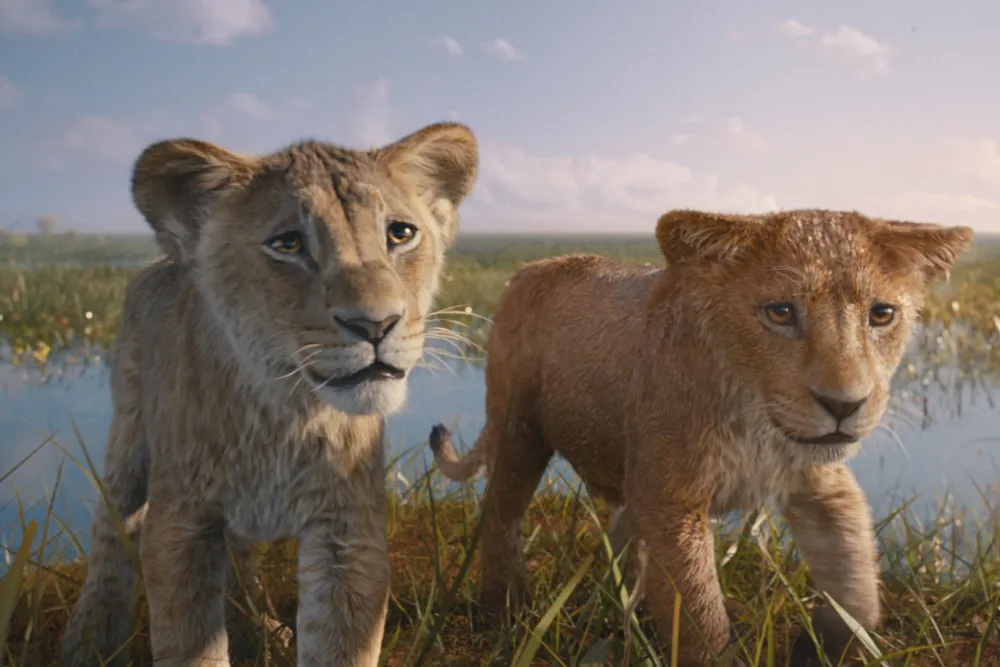
Few Disney properties carry the weight of The Lion King, and with Mufasa: The Lion King, the studio returns to one of its most beloved worlds, this time turning its focus to the origin story of a character audiences thought they already knew. Directed by Barry Jenkins, it’s an ambitious move, pairing a filmmaker known for intimate, character-driven storytelling with a large-scale, effects-heavy prequel that aims to expand the mythology rather than simply revisit it.
A familiar story told from a new angle
The film traces Mufasa’s journey from orphaned cub to future king, beginning with a dramatic separation from his parents and his unexpected arrival within a different pride. There, he forms a bond with Taka, a lion born into royalty, and what begins as a brotherhood gradually shifts into something more complicated as they grow and their paths begin to diverge. At its core, this is a story about identity, belonging, and the idea of what makes a leader. Mufasa is not born into power, but grows into it, shaped by experience rather than expectation. It’s a compelling premise, even if the execution sometimes leans on familiar beats and themes that echo the original film a little too closely.
A technical achievement that’s hard to ignore
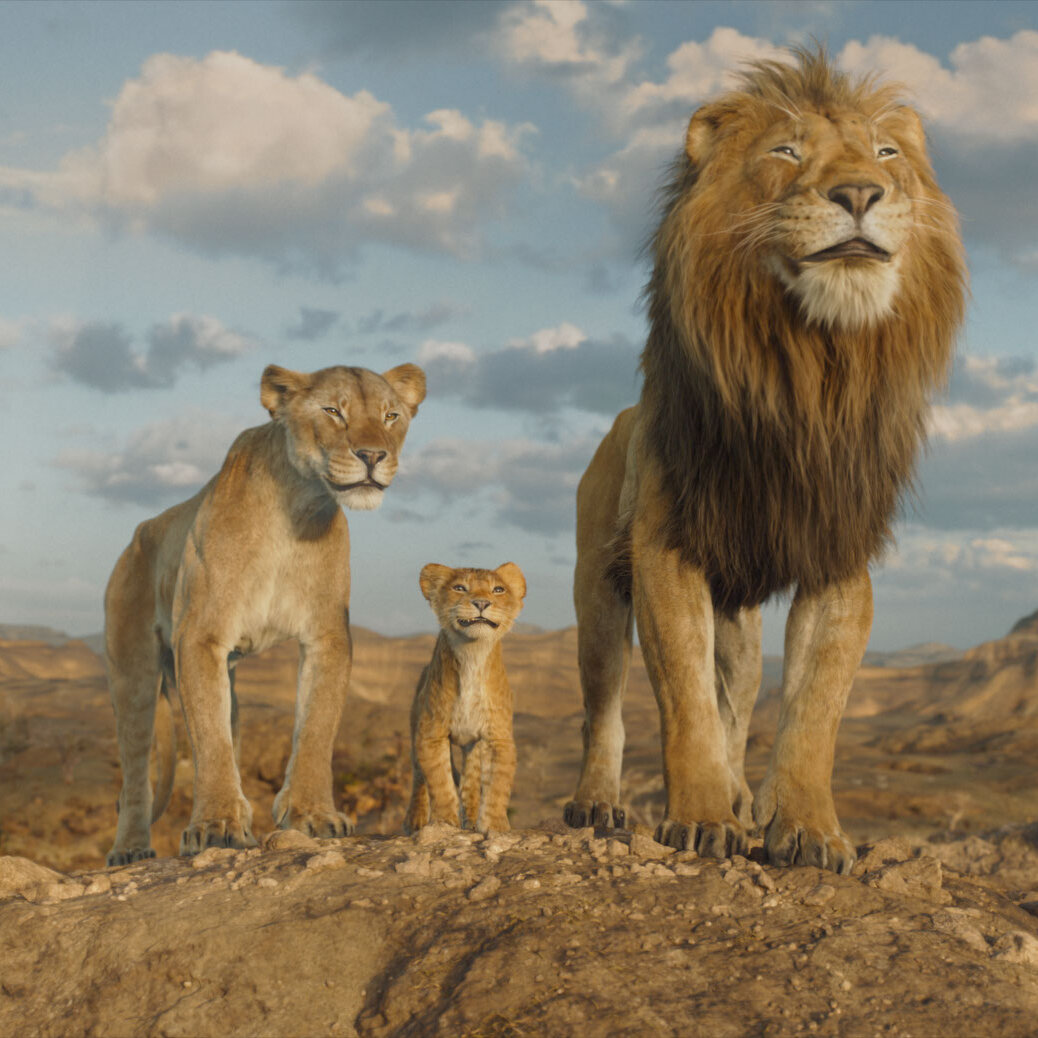
Visually, Mufasa: The Lion King is undeniably impressive. Building on the photorealistic style of the 2019 film, the level of detail here feels even more refined, from the texture of fur to the way light moves across water, ice, and landscape. There’s a sense of scale throughout that makes the world feel vast and immersive, particularly in the film’s larger set pieces. What stands out most is the increased expressiveness of the characters. Where the previous film sometimes felt limited by its realism, here there’s a greater attempt to bring emotion into the performances, particularly through the eyes and subtle movements. It doesn’t always fully escape that uncanny feeling, but it’s a noticeable step forward.
Performances and characters
Mufasa (Aaron Pierre) is presented here as more uncertain, more human in his instincts, and that shift works well in grounding the character. Pierre brings a quiet authority to the role, even in its earlier, more vulnerable stages. Taka (Kelvin Harrison Jr.) provides the emotional counterpoint, his arc shaped by insecurity and rivalry in a way that adds some tension to an otherwise familiar narrative. Their relationship is central to the film, even if it follows a path that feels largely predictable. Elsewhere, returning characters like Timon (Billy Eichner) and Pumbaa (Seth Rogen) attempt to bring humour into the story, though it doesn’t always land as effectively as it once did. New additions, including the imposing antagonist Kiros (Mads Mikkelsen), add some presence, even if they don’t quite reach the same level of memorability as the franchise’s earlier villains.
The music, this time from Lin-Manuel Miranda, brings a fresh energy to the film, with a mix of catchy, upbeat numbers and more emotional moments that tie into the story’s themes of identity and belonging. Not every track lands as strongly as the originals, but there are still a few that stand out, particularly I Always Wanted a Brother, which captures the bond between Mufasa and Taka.
A story that feels caught between two worlds
For all its visual ambition, the film’s biggest challenge lies in its storytelling. There are moments where it feels caught between wanting to be something new and leaning too heavily on what audiences already know. Themes of destiny, family, and power are revisited, but not always in a way that feels as fresh as they could. There are glimpses of something more thoughtful beneath the surface, particularly in how the film explores Mufasa as an outsider who earns his place rather than inheriting it, but those ideas don’t always feel fully developed. It’s engaging, certainly, but not quite as emotionally resonant as it aims to be.
The early sequence where Mufasa is separated from his parents during a violent flood is one of the film’s most striking moments. It’s visually intense and emotionally immediate, capturing both the scale of the world and the vulnerability of the character in a way that stays with you. It sets up everything that follows, not just in terms of plot, but in shaping who Mufasa becomes. In a film that sometimes struggles to balance spectacle with emotion, this is the moment where both come together most effectively.
CultureCues Final thoughts
Mufasa: The Lion King is a film that impresses on a technical level and remains consistently engaging, even if it doesn’t quite reach the emotional heights of the story it builds on. There’s clear ambition here, and plenty of moments where that ambition pays off, even if it doesn’t quite deliver on every level. It may not always leave the same lasting impact, but it looks incredible, sounds great, and adds meaningful context to a familiar story.
Mufasa: The Lion King was released in UK cinemas on 20 December 2024.

Nikki Murray is a UK-based writer, screenwriter and founder & editor of CultureCues, covering film, television, music and pop culture. Her work focuses on storytelling and the moments shaping modern entertainment.