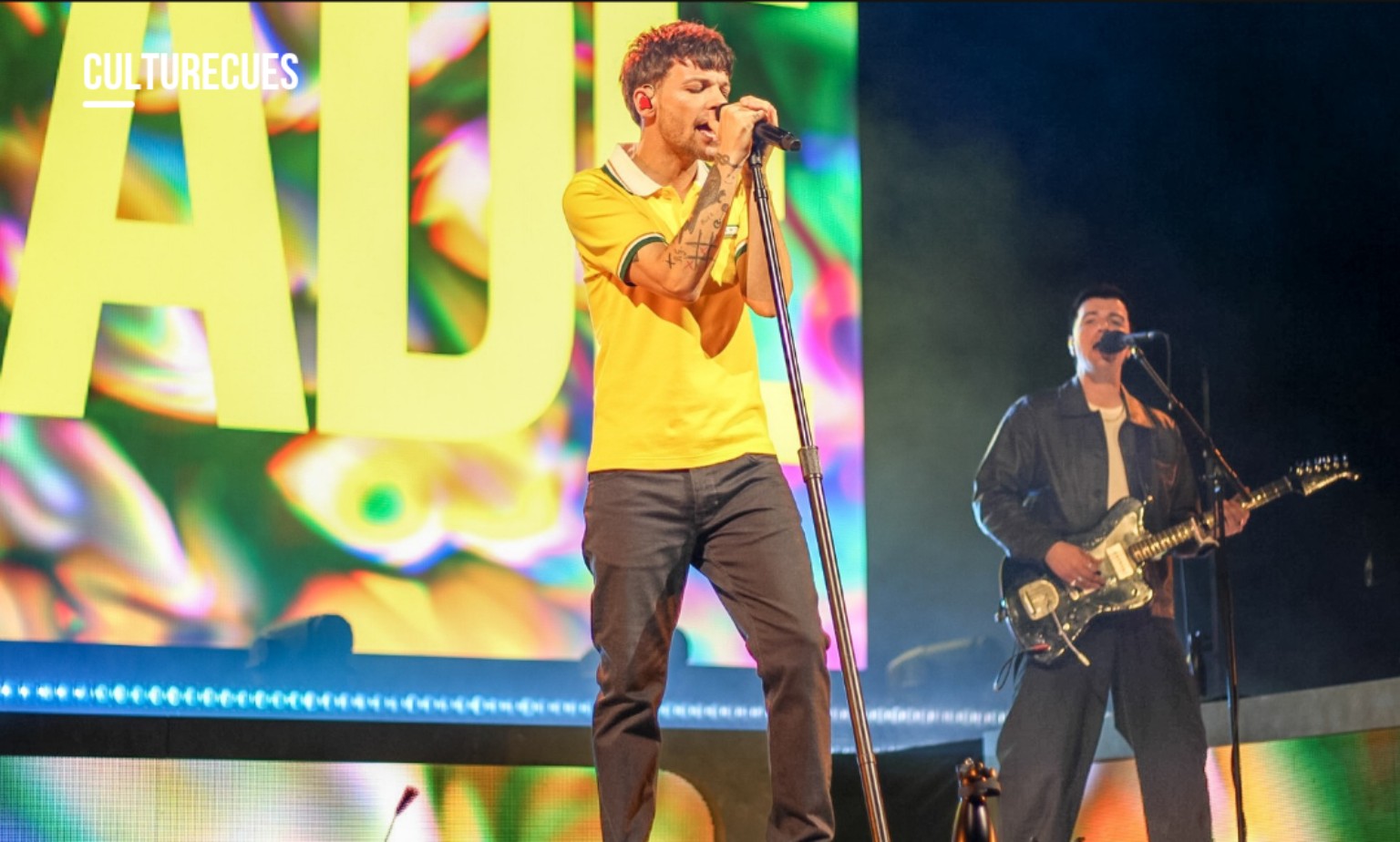
Across Manchester’s Co-op Live and Glasgow’s OVO Hydro, Louis Tomlinson’s How Did We Get Here? tour proved what has defined this UK and European run: his greatest live strength is not just the songs, the production or the arena scale. It is the community he has built with the fans who have never stopped showing up.
There are artists with fans, and then there is Louis Tomlinson with the Louies.
That may sound dramatic to anyone outside the world he has built, but spend one night inside a Louis Tomlinson crowd and it starts to make perfect sense. The queues form early. The signs are handmade. The flags are held high. There are fans comparing tour dates, swapping stories, handing out bracelets, organising projects and casually mentioning they have already followed him across half of Europe, because for many Louies, showing up for Louis in whatever way they can has become part of the culture. Whether it is one show or five, the feeling is the same.
At a Louis show, the audience does not just arrive, watch and leave. They come prepared to be part of it, whether that means learning the fan projects, holding up signs, screaming every lyric back at him or understanding that the night works because the energy goes both ways. Louis knows that too, and it is part of what gives his shows their real spark: the sense of an artist not just performing to his audience, but sharing the night with the people who have helped carry him here.
That relationship has become one of the defining features of his solo career. You can see it in the way the room moves with him, in the lyrics tattooed on arms, the signs raised at just the right moments and the fan projects that turn arenas into shared statements of love and support. You can see it too in those pauses between songs, when Louis looks out at the crowd as though he is still letting the scale of it sink in, before giving that feeling straight back.
Across Manchester’s Co-op Live on 24 April and Glasgow’s OVO Hydro on 27 April, his How Did We Get Here? World Tour made that connection feel bigger, louder and more visible than ever.
The live show is strong in every obvious way, with a packed setlist, a production that has clearly stepped up, a brilliant touring band and a new album that sounds built for rooms this size. Still, the real story is what happens between Louis and the people in front of him, because that is where these shows move beyond a standard arena gig and become something far more personal.


A solo career built on graft, gratitude and a fanbase that does not quit
Louis Tomlinson’s solo journey has always carried a sense of earned momentum. After One Direction went on hiatus, Louis did not step into an easy new chapter where everyone instantly understood who he was as a solo artist outside the band. He had to build it, slowly and often under the weight of other people’s assumptions, one show at a time.
Walls arrived in 2020, emotional and reflective, reaching Number 4 in the UK. Faith In The Future followed in 2022 and gave him his first UK Number 1 solo album, with a clearer, more confident guitar-led sound. Then came How Did I Get Here? in January 2026, his second UK Number 1 album and the record now sitting at the heart of this tour.
For some artists, those numbers would be the whole headline. With Louis, they are only part of it.
What has always stood out is how quickly he turns success back towards the fans. A Number 1 is never just his. A sold-out show is never just his. A tour moment, an award, a chart win, a room full of people screaming his lyrics back at him, all of it becomes a shared achievement. He says “we” often, and with Louis, the word never comes across as a neat bit of branding. It sounds genuine, because his solo career has always been built around that sense of shared loyalty.
That is why his live shows have such a strong emotional charge. The fans have not just followed his career from a distance, they have actively helped push it forward. Through streaming campaigns, vinyl sales, fan projects, travel, social media support and sheer stubborn loyalty, they have made themselves part of the story. Louis, to his credit, has never acted as though he got here alone.
Manchester was more than another arena date
Manchester was always going to feel special. This is the city tied to the beginning of Louis’ X Factor story, the place where the audition eventually led him into One Direction and changed the course of his life. More than fifteen years later, he walked onto the stage at Co-op Live as a solo artist, headlining one of the biggest indoor arenas in Europe under his own name. That matters.
Yes, Louis has played stadiums before, both with One Direction and since. Yes, he has known levels of fame most artists will never come close to. But there is a different kind of power in watching him command a room like that with his own catalogue, his own band and a fanbase that has stayed with him through every reinvention, frustration and victory.
From the floor, the size of the room was ridiculous. Turning around mid-show and seeing the whole arena lit up, packed from the standing crowd to the people in seats, it was difficult not to feel proud. With Co-op Live sold out at around 23,500 fans, Manchester did not just feel big. It felt like a statement. That is the thing with Louis. His success has a strange way of making the fans feel involved, as though every huge room is a collective “look how far we’ve come” moment. Fittingly, those words appeared across fan signs too, capturing exactly what so many in the room seemed to be feeling: look how far he has come, and look how far they have come with him.
Louis seemed to understand the significance of it too. “It’s a special show tonight, but I always knew it was gonna be,” he told the crowd. “Thank you for bringing the vibes.” Later, visibly taking in the scale of the arena, he looked out at the room and said: “Look at this f***ing room. Rooms like this just blow my mind, every single time. Look at what we’ve created.”
That “we” is important. It runs through the whole Louis Tomlinson live experience, from the way fans organise projects before the lights go down to the way he stops, listens and lets the crowd carry a song back to him. During the acoustic version of “Defenceless”, he paused to hear the arena sing, hand over his heart, and for a few seconds it became one of those rare moments where Louis could feel it, the crowd could feel it, and everyone seemed to be taking it in together.
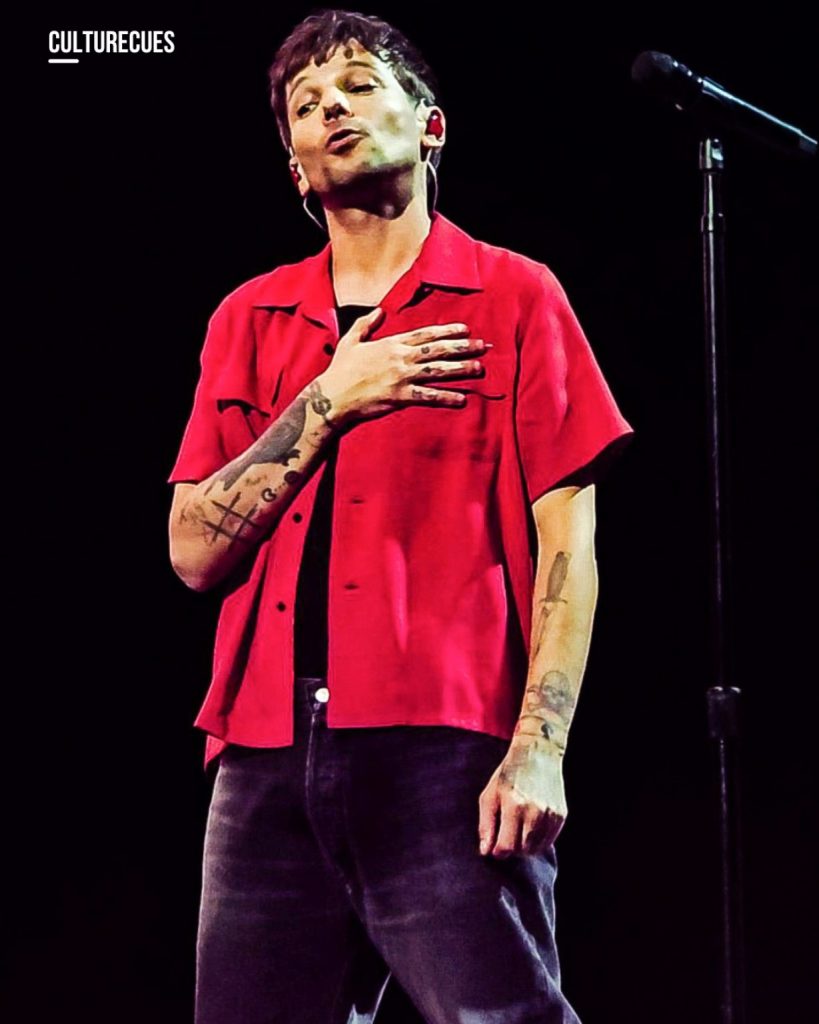
“I’ve said it before but it’s so f***ing important you guys understand, this is the kind of fan base where every single person makes such a big difference to me, my life, my career. Look at this! You did this. Thank you, thank you, thank you.”
By the time “Silver Tongues” arrived, the lyric “there’s nowhere else that I would rather be” hit with extra force. In Manchester, it seemed to sum up the whole feeling of the night: nobody in that room would have chosen to be anywhere else. And honestly, you could feel every bit of it.
The setlist works because the fans have lived with these songs
The How Did We Get Here? setlist is built around Louis’ solo identity, and that is important. There is nostalgia in the room, of course, because there always will be, but this tour is not leaning on the past to do the heavy lifting. It is a celebration of where Louis is now.
Opening with “Lemonade”, the lead single from How Did I Get Here?, gives the night an immediate rush. It is bright, confident and instantly alive on stage, with the crowd jumping in from the first beat. By the end, yellow confetti cannons explode from the front and back of the arena, covering the room in a burst of colour. And yes, I was still finding bits of it in my clothes days later. “On Fire” keeps the energy moving before “Written All Over Your Face” brings one of those fan reactions that feels almost physical. The song already had bite on record, but live, with Michael Blackwell’s guitar powering through it, it becomes a proper arena moment.
The first section of the show moves through “Out Of My System”, “Bigger Than Me” and “Saturdays”, which remains one of the most quietly powerful songs in Louis’ catalogue. For many fans, that track is personal. The lyric “my heart might be broken, but I won’t be broken down” has become a kind of promise, one that plenty of people have carried through difficult periods of their lives and still hold onto now. Hearing an arena sing it back does something to the room.
It turns individual pain into a shared release.
What also comes through clearly is how well Louis’ voice suits this era. He sounds most at home when the songs are loud, guitar-led and a little rough around the edges, but the quieter moments prove just as important. He does not try to over-polish the emotion. He lets the feeling sit in his voice, and that honesty is exactly why so many of these lyrics land as deeply as they do.
One of the night’s most emotional moments comes with “Dark To Light”. Widely understood by many fans as a song shaped by grief and connected to Liam Payne, his former One Direction bandmate and friend, it is performed with real vulnerability. Louis lets his guard down here. There are tears in his eyes, but he does not look away from the feeling or try to hide it from the crowd. He lets the room see him in that rawness. It says a lot about the connection he has built with his fans that he can stand there so open in his grief and know the crowd will hold that space with him.
“Broken Bones” follows, before the acoustic “Defenceless”, performed with Isaac Anderson, brings another kind of closeness. It is already one of Louis’ most beautiful songs, but stripped back like this, it takes on a new kind of tenderness. Louis’ voice and Isaac’s harmonies sit together beautifully, letting the emotion of the song come through without overworking it. Even in a room as large as Co-op Live, it somehow feels intimate. That is partly down to the song, partly down to the performance, and partly down to the way Louis’ fans know how to listen when the moment asks for it. They can scream louder than anyone. They can also fall completely still.
The Louies are part of the production now
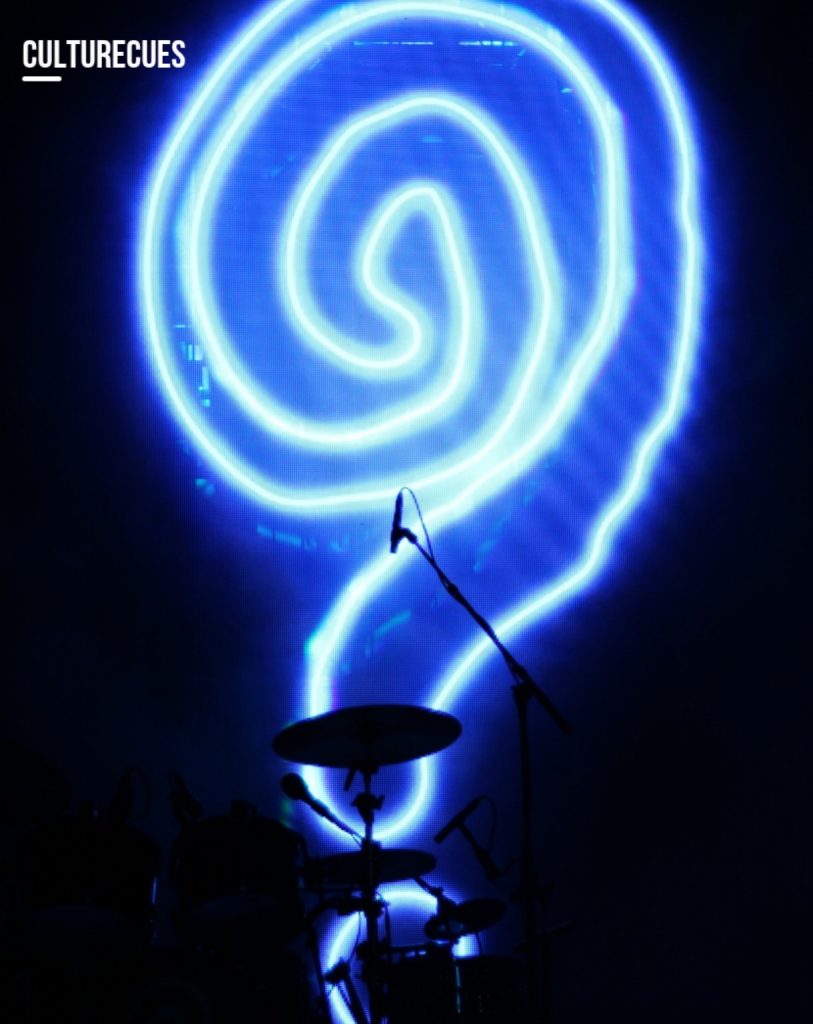
One of the most striking things about Louis’ live shows is how much the fans shape the visual identity of the night. The official production has levelled up hugely on this tour, with lasers, smoke jets, confetti cannons, punchy screen design, incredible lighting and a question mark-shaped stage that ties neatly into the How Did We Get Here? era. The whole show feels bigger than previous tours, with more confidence in its scale, movement and overall ambition.


The LED screens behind the stage are huge and constantly shifting, moving through bold abstract designs that give the show a brighter, more expansive feel without overwhelming the performance. Swirls of pink, green, blue and yellow bleed into each other, while other moments move into deeper reds or cooler blue and white lighting, depending on the mood of the song. It all suits this era perfectly: colourful, confident and built for rooms this size.
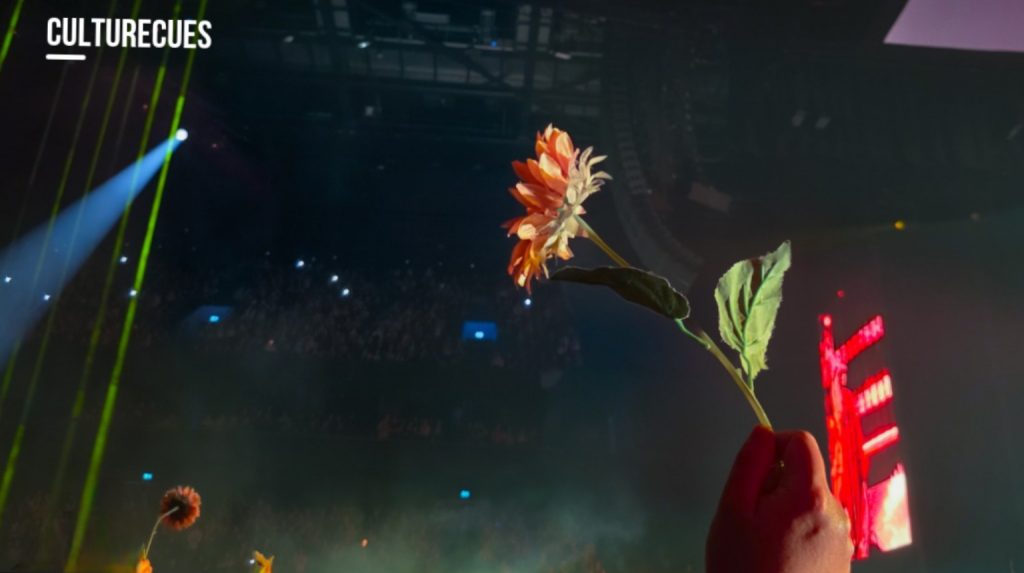
But some of the most memorable moments still come from the crowd. During “Lazy”, fans in Manchester held up giant “LA LA LA” letters for the chorus, turning the song into a playful exchange between stage and floor. “Sunflowers” brought, well, you guessed it: sunflowers, flags and colour across the crowd. “Lucid” became one of the night’s clearest fan-project moments, with orange lights around the arena and signs reading “LOOK HOW FAR WE’VE COME.”
During “Kill My Mind”, phone torches moved up and down in time with the “kill my, kill my, kill my” section, creating the kind of arena-wide image that makes even the artist stop and take it in. I always find myself turning around at that point too, because seeing the whole room moving together feels like its own kind of magic.
In Glasgow, the “YOU ARE OUR SUN” project filled the Hydro with posters carrying those words, turning the arena into a huge, heartfelt show of love from a fanbase that has always known how to make a moment feel massive. These projects matter because Louis notices the effort behind them. He points out signs, smiles at the fans holding them, gives thumbs up, acknowledges the projects and folds those little moments into the show rather than treating them as background decoration. That is why fans keep doing it: because they know he sees the effort, feels the love behind it and never lets that care go unnoticed.
Louis’ shows feel like safe spaces because the crowd makes them that way
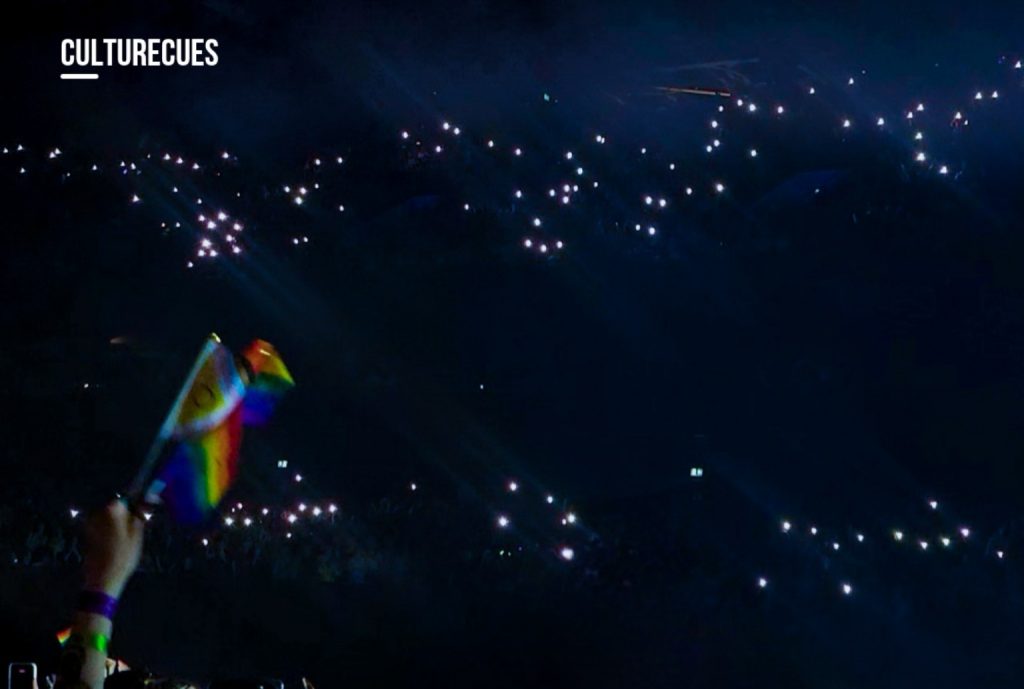
There is also something deeply inclusive about the atmosphere at Louis’ gigs. From the outside, people often reduce his fanbase to one easy stereotype, but being in the room tells a very different story. Louis’ crowd is far more mixed than some might assume: different ages, different backgrounds, different genders, different lives, all connected by the same feeling. Rainbow flags appear throughout the crowd. Fans look out for each other. Strangers become temporary best friends in queues, seats and standing sections, and sometimes those temporary friendships become lifelong ones, stretching across cities, countries and time zones.
That is part of what makes the space feel so special. It does not matter how old you are, where you have travelled from or how long you have been here. In that room, people feel allowed to be emotional, loud, silly, proud and completely themselves.
Louis has always had a fanbase with a strong queer following, and his shows reflect that. The flags are not hidden away. They are held high. For many fans, especially those who have grown up with him from the One Direction years into adulthood, these gigs are not just nights out. They are places of belonging, escapism and a rare chance to step away from real life for a while.
One of the loveliest details of the tour happened before fans even entered the venues. Outside the shows, fans began creating “How Did You Get Here?” chalk tallies, with travel options like walk, bus, plane, train and cycle marked out for others to add their own answers. The idea reportedly began in Hamburg, where Louis himself joined in by adding a mark for “tour bus”, a small moment that says a lot about the playful back-and-forth between him and the fanbase. From there, the trend continued across the tour, with fans adding where they had travelled from and turning the pavement into its own little map of the fandom: Scotland, Wales, Argentina, Spain, Italy, Brazil, Canada, the Netherlands, France, Mexico, Venezuela, China, India and more. It was playful, but it also said something real. Louis’ fans travel, gather, build community and quite literally leave their mark.
“I need you, you need me. And I f***ing love that.”
That kind of community cannot be manufactured by clever tour branding. It comes from years of trust between artist and audience, and from the culture fans have built around him. Louis often says that he needs the fans and the fans need him. At these shows, that does not come across as a throwaway line or something said just to please the room. It feels true, because it is.
The band help turn the songs into arena moments
The connection between Louis and the fans may be the heart of the tour, but the band deserve real credit for giving the show its drive. Michael Blackwell on lead guitar and vocals, Isaac Anderson on guitar and vocals, Matt Dinnadge on bass and vocals, Zak Craner on keys, and Joe Clegg on drums and musical direction give the set a proper live-band identity. They are not tucked away behind him. They are part of the world of the show. What comes through, especially up close, is how much Louis clearly enjoys being on that stage with them. There is a genuine warmth between him and the band that is visible from the floor, and it gives Louis the freedom to be so present with his fans. The band are the foundation that lets everything else happen.
That is especially true of Blackwell and Anderson, both incredible musicians, singers and songwriters in their own right, who bring their own presence to the stage while still serving the show around Louis. Blackwell’s guitar work is a highlight throughout. When he gets a solo, he absolutely shreds, making those moments feel genuinely electric without ever pulling focus for the sake of it. In fact, there are moments when fans are so locked on Louis that he has to point them back towards Michael, as if to say: no, seriously, watch this.
That matters because Louis’ solo music thrives when it feels physical. “Written All Over Your Face”, “Out Of My System”, “Kill My Mind”, “Silver Tongues” and “Palaces” all hit harder live, powered by driving drums, heavy guitar lines and the full-band energy that makes these songs feel built for arenas. The stripped-back sections work just as well, with the musicianship becoming softer and more spacious, giving songs like “Defenceless” and “The Answer” room to breathe.
Manchester had “No Control”, and the arena collectively forgot how to behave.
Manchester’s biggest eruption came late in the night with “No Control”. Fans had been chanting for it all evening. Louis teased that he was not playing it, fully aware of the anticipation he was building, before giving the crowd exactly what they wanted anyway and the room lost it.
The reaction was absurd. Proper protect-your-ears screaming. For long-time fans, “No Control” is not just a One Direction song. It is part of fan history. It is tied to campaigns, nostalgia, teenage obsession, group chats, Tumblr-era devotion, late-night voting missions and the kind of collective memory that makes thousands of adults suddenly regress in the best possible way.
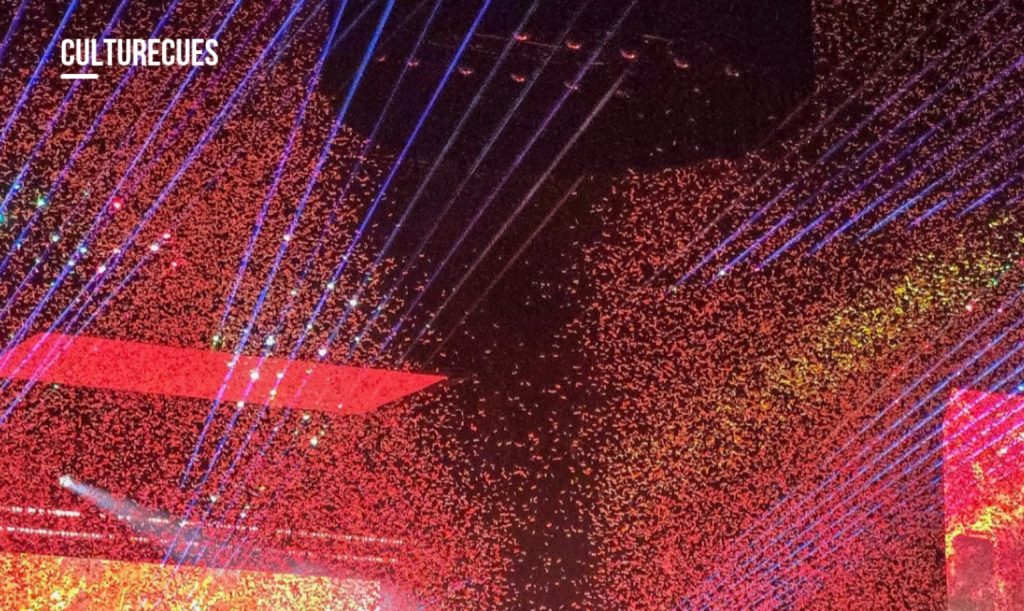
Hearing Louis bring it back in Manchester felt like a reward for the fans who had been begging for it all night. It was a reminder of where so many first found him, while also giving newer fans who love the song a chance to celebrate that part of his history too. Crucially, it did not pull focus from the solo show around it. If anything, it made the full journey feel even clearer. The night still ended with “Palaces”, one of the strongest songs from How Did I Get Here? and a perfect closing number for this era. Big, bright and full of release, it sent the room out on Louis’ present rather than his past, with one final burst of red confetti filling the arena for good measure.
Glasgow from the photo pit felt like a full-circle moment
Glasgow was personally special in a different way. The OVO Hydro was packed, and I was there in the photo pit for CultureCues, photographing Louis professionally from right at the stage. As someone who has supported him since The X Factor days, through One Direction, Walls, Faith In The Future and now How Did I Get Here?, that was a slightly surreal experience.
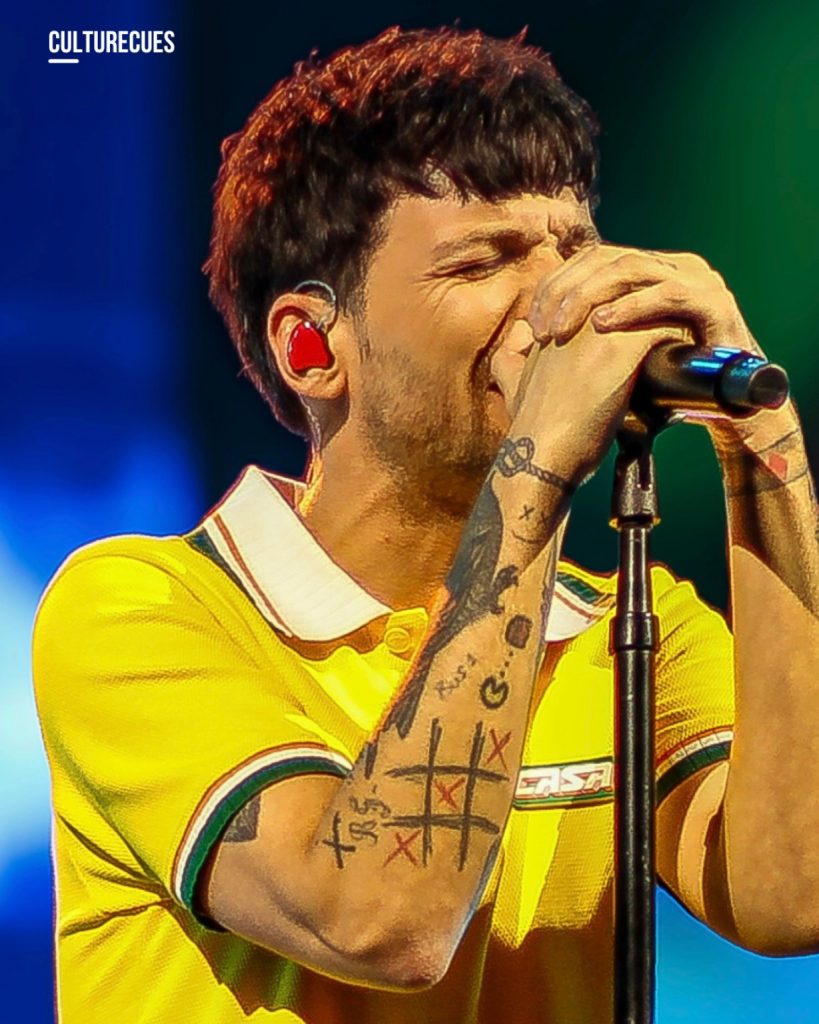
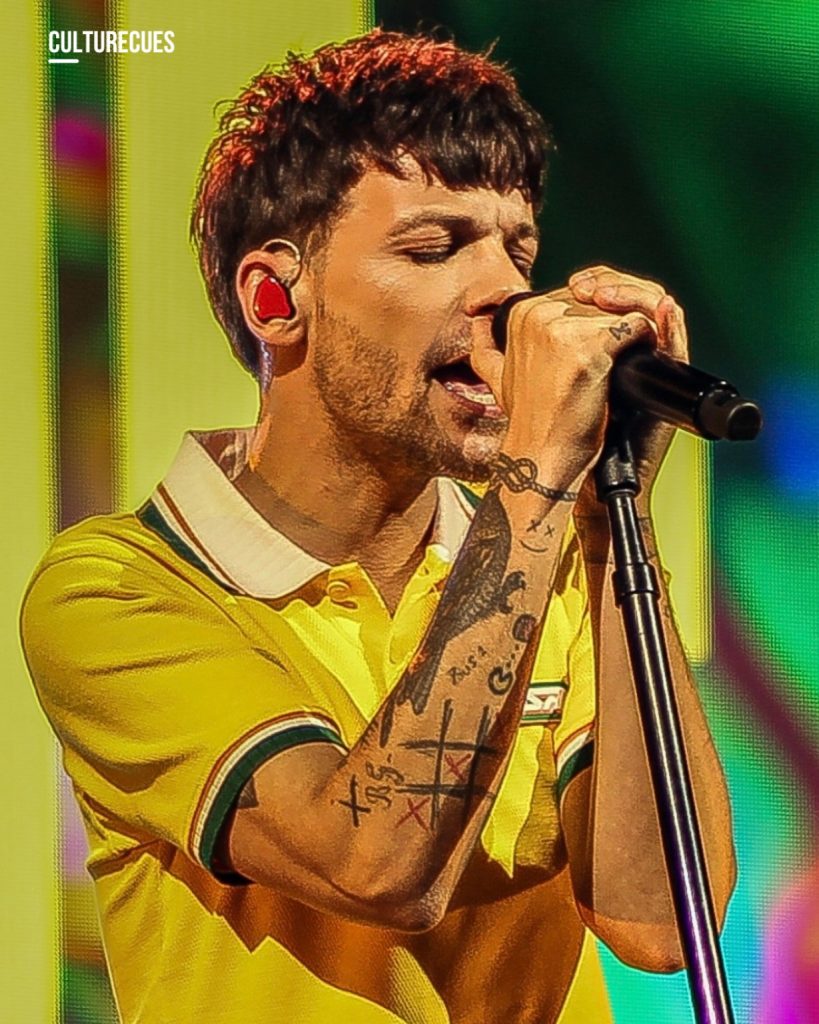
Professionalism was maintained, obviously. Mostly. There may have been a small internal malfunction when Louis smiled and pointed in my direction, but that is between me, my camera and whatever higher power protects fangirls in press spaces.
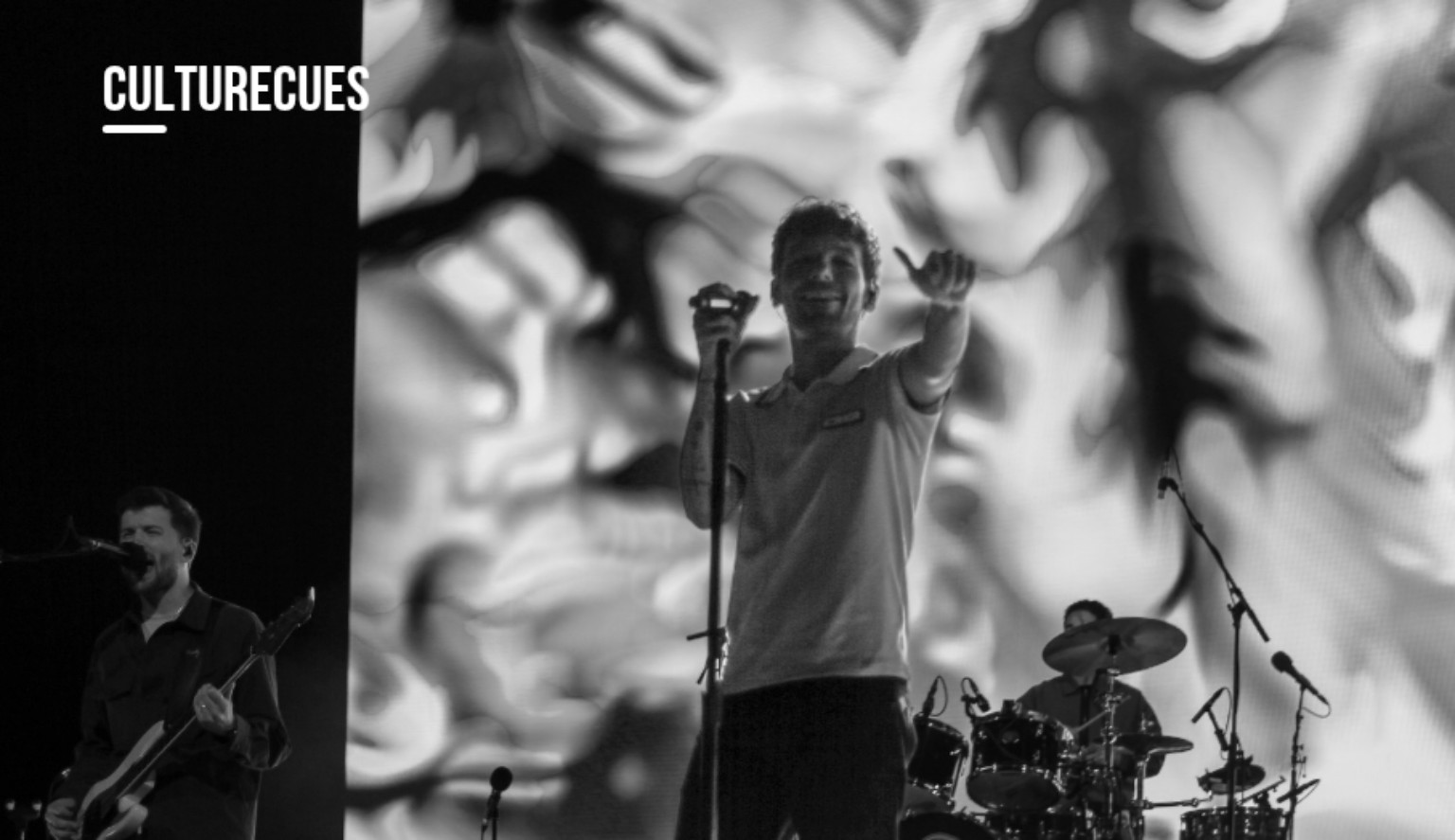
What struck me most up close was how present he is. Louis is constantly watching the crowd. He is not just performing at people. He is taking them in. The signs, the flags, the faces at barricade, the reactions from the seats, the pit, all of it seems to feed back into the way he performs.
Near the end of the show, when he comes down towards the barricade, that relationship becomes almost physical. Fans reach for him, hold onto him, sing with him, and he leans right into that excitement with complete trust, making the whole exchange feel safe. There are not many artists who can make an arena feel that personal from the very front to the very back. Louis can.
A tour that proves why this fanbase is different
The phrase “dedicated fanbase” gets thrown around a lot in music, but Louis’ fans are operating on a different level. There are fans who attended show after show across Europe and the UK, travelling between cities, booking hotels, queuing for hours and doing the whole thing again the next day. For some, this tour was not a one-night event. It was a chapter of their lives.
That might seem excessive from the outside, but inside the fandom it makes emotional sense. Louis shows feel different depending on where you are. At barricade, the show becomes intense, immediate and almost surreal, with every look, point and smile feeling magnified. The back of the pit gives you room to dance and take in the scale of the crowd, while seats offer the full view of the fan projects, the lights and the arena moving as one. Every night has its own mood, its own jokes, its own signs and its own tiny moments that only the people in that room will fully understand.
That is why fans keep coming back. Louis makes the shows feel specific, leaving space for the crowd to shape the night even within a full-scale arena production, and that is rare.
CultureCues Standout Moment
The standout moment is not one song, although “No Control” in Manchester made a very convincing case for itself. The real standout is the way Louis looks at his fans. He looks at the room with gratitude, amusement, disbelief and pride. He looks at the fan projects as though he understands the hours behind them. He looks at the barricade as though he recognises familiar faces. He looks at the full arena as though every person in it has helped put him there.
That is the emotional centre of the How Did We Get Here? tour.
The production is bigger. The songs are stronger. The confidence is obvious. But the thing that makes the show feel so powerful is still the same thing that has carried Louis through his solo career: the bond between him and the people who refuse to let him be underestimated.
Final thoughts
The How Did We Get Here? World Tour is Louis Tomlinson’s strongest live era so far, but its real success lies in how clearly it understands the audience in front of it.
While this review is rooted in Manchester and Glasgow, the wider UK & Ireland run told the same story on an even bigger scale. Across Manchester, Birmingham, Glasgow, Leeds, Dublin, Brighton and London, Louis brought How Did We Get Here? to some of the biggest rooms on this run, closing the UK, Ireland and European leg with a sold-out night at The O2 in London in front of around 20,000 fans. Through the clips, photos and fan reaction that poured out of other shows, the message felt clear: this tour has not just grown in size, but in confidence and connection.
These shows are built around a rare kind of mutual loyalty. Louis gives the fans his gratitude, his humour, his vulnerability and his trust. The fans give him their voices, their time, their creativity and a level of devotion that most artists would dream of having for one album cycle, never mind more than a decade. These shows proved that Louis Tomlinson is not simply surviving as a solo artist after one of the biggest bands in the world. He is thriving on his own terms, with a catalogue that now fills arenas and a fanbase that turns every show into a collective celebration.
So, how did we get here?
Through the songs, yes. Through the albums, the tours, the Number 1s and the confetti-covered finales. But mostly through loyalty. Through fans who kept showing up, and an artist who never forgot to thank them for it, every step of the way.
Louis Tomlinson’s live shows are not just concerts. They are proof of what happens when an artist and his fans grow up together, fight for each other, and somehow make an arena feel like home.
The UK and European arena run of Louis Tomlinson’s How Did We Get Here? World Tour may have wrapped, but the era is far from over. Louis continues with a Mexico City date on 16 May, before returning to the UK for BBC Radio 1’s Big Weekend in Sunderland on 23 May. From there, the tour heads across North America throughout June and into July. The spaces may keep getting bigger, but at the centre of it all, the connection still feels personal.


Correction: An earlier version of this article incorrectly stated that the “How Did You Get Here?” chalk tallies were created by Louis and his team. The idea was fan-led. The article has been updated to reflect this.

Nikki Murray is a UK-based writer, screenwriter and founder & editor of CultureCues, covering film, television, music and pop culture. Her work focuses on storytelling and the moments shaping modern entertainment.