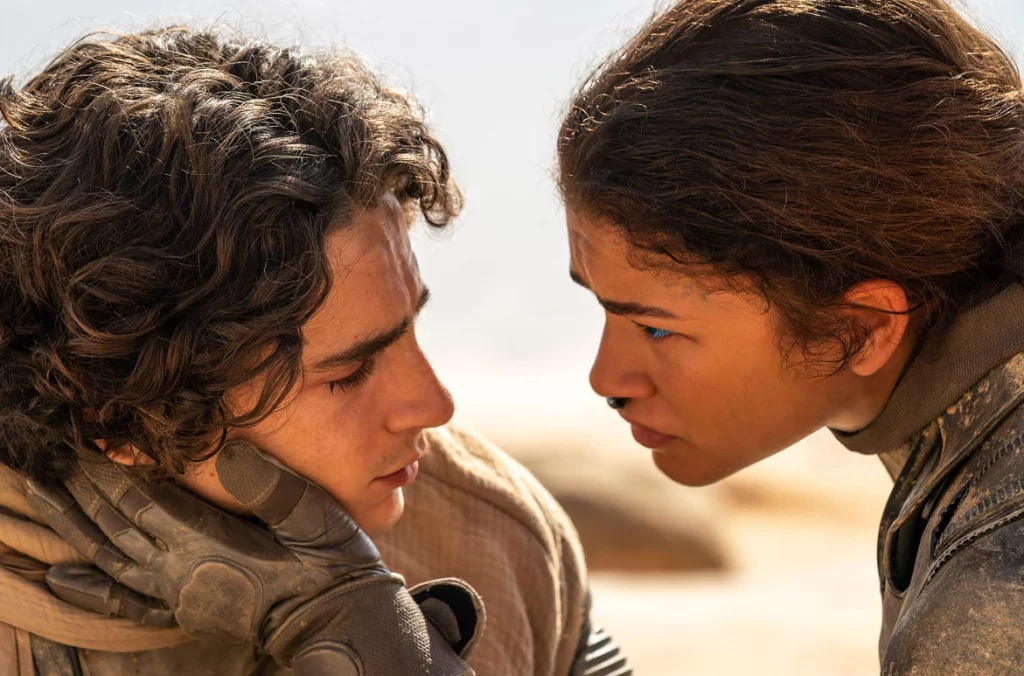
After the scale and ambition of Dune: Part One, expectations for the second chapter were always going to be high. Delayed from its original release due to industry strikes, Dune: Part Two arrived with even more anticipation behind it, and somehow, it manages to deliver on it. This isn’t a typical sequel. It feels like the second half of a much larger story, one that completes what Denis Villeneuve set out to do in the first film, and then pushes it even further.
A story that finally opens up
Picking up directly after the events of the first film, Dune: Part Two follows Paul Atreides (Timothée Chalamet) as he joins forces with the Fremen, learning their ways while seeking revenge against those who destroyed his family. Alongside him is Chani (Zendaya), whose presence becomes increasingly important as both a partner and a voice of reason within a story that constantly questions power and belief. What stands out this time is how much richer the narrative feels. Where the first film focused heavily on world-building, this chapter allows the story to expand, diving deeper into politics, religion, and the idea of destiny. It asks uncomfortable questions about leadership and control, particularly around whether Paul is truly a saviour, or something far more complicated.
A spectacle that never loses focus
On a technical level, the film is remarkable. Every frame feels carefully constructed, from the vast desert landscapes of Arrakis to the stark, almost surreal visuals of the Harkonnen world. The contrast between these environments gives the film a distinct visual identity that never feels repetitive. The scale is undeniably massive, but it never feels empty. The action sequences are intense and often overwhelming in the best way, with battles that feel chaotic and visceral rather than overly polished. The long-awaited presence of the sandworms is used to full effect here, delivering moments that genuinely feel cinematic in the truest sense.
Hans Zimmer’s score once again plays a huge role, adding weight and tension throughout, while the sound design makes every moment feel immersive, particularly in the film’s larger set pieces.
Performances that carry the weight
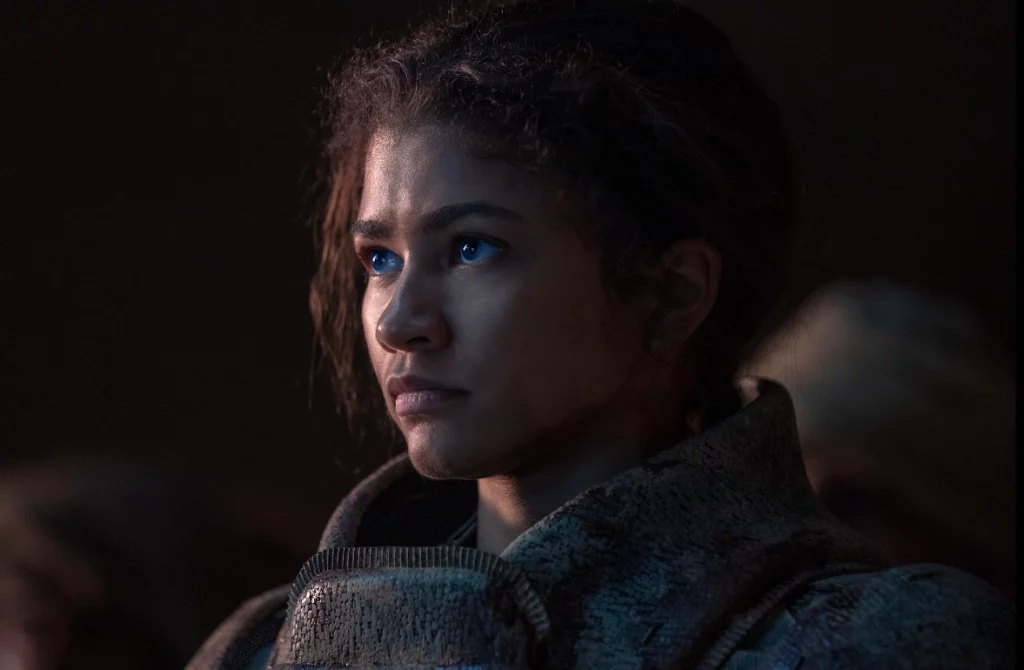
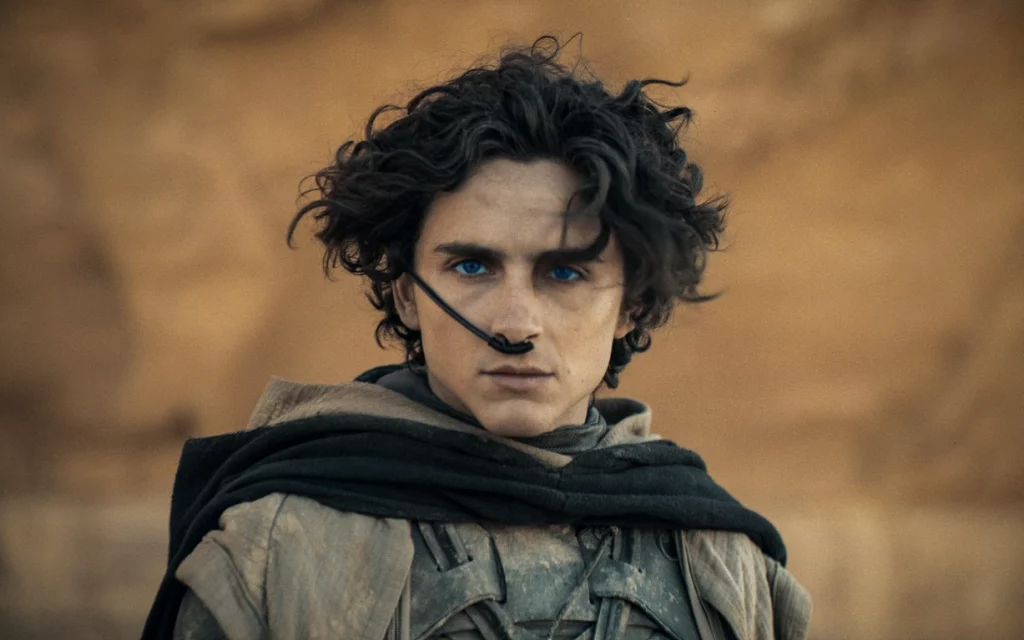
Timothée Chalamet steps into a more complex version of Paul this time around. There’s a noticeable shift in his performance, moving away from the uncertainty of the first film into something more controlled, and at times, unsettling. It’s not always about being likeable, and that’s what makes it interesting. Zendaya is given far more to do here, bringing a grounded perspective to the story through Chani. She challenges Paul’s role within the Fremen, and that tension adds an important layer to the film’s exploration of power.
Rebecca Ferguson continues to be quietly compelling as Lady Jessica, while Javier Bardem brings a surprising sense of humour to Stilgar without undermining the character’s belief in Paul. Austin Butler’s introduction as Feyd-Rautha adds a new kind of threat, his performance sharp and unpredictable in a way that contrasts with the more measured tone of the rest of the film.
More than just a hero’s journey
What makes Dune: Part Two stand out is that it doesn’t present its story as a straightforward rise to power. There’s a constant sense of unease running through it, a suggestion that what looks like victory might not be as simple as it seems. The film leans into that ambiguity, particularly in its final moments, leaving you questioning what comes next rather than offering a clean resolution. It’s a bold choice, but one that fits the story Villeneuve is telling.
CultureCues Standout Moment
The first time Paul rides a sandworm is the moment where everything clicks into place. It’s been built up throughout both films, and when it finally happens, it feels as big as it should. But what makes it stand out isn’t just the scale, it’s what it represents. This is the moment Paul fully steps into the role others have placed on him, whether he truly wants it or not. It’s thrilling, visually stunning, and quietly unsettling all at once.
Final thoughts
Dune: Part Two is the kind of blockbuster that reminds you what cinema can be when it’s given the space to breathe. It’s ambitious without feeling overwhelming, thoughtful without losing its sense of spectacle, and confident in the story it wants to tell. It builds on everything that worked in the first film while adding depth, scale, and emotional weight. Whether or not you’re fully on board with where the story is heading, it’s hard not to be impressed by how it gets there.
This is what a modern epic should feel like.
Dune: Part Two was released in UK cinemas on 1 March 2024.

Nikki Murray is a UK-based writer, screenwriter and founder & editor of CultureCues, covering film, television, music and pop culture. Her work focuses on storytelling and the moments shaping modern entertainment.