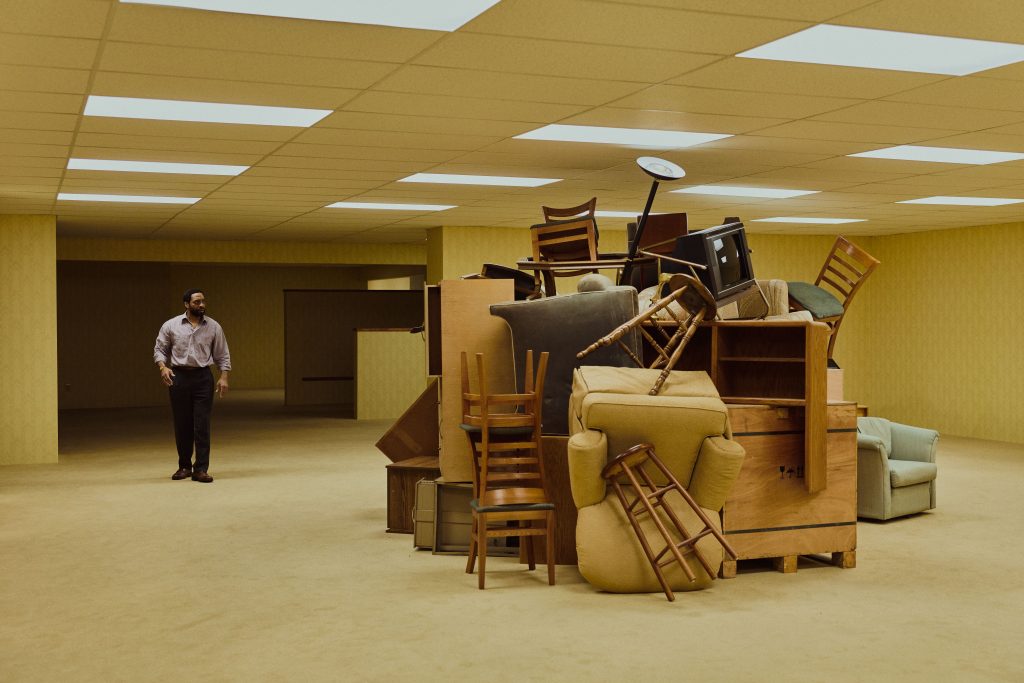
For years, the idea of the Backrooms existed largely as an internet obsession. A blurry image. A strange concept. Endless yellow rooms stretching into nowhere. What began as an online horror phenomenon has now become a full-scale A24 feature, and remarkably, it manages to retain much of the unsettling atmosphere that made people fall down the rabbit hole in the first place.
Directed by Kane Parsons, who first brought the concept to life through his hugely popular YouTube series while still a teenager, Backrooms feels unlike most mainstream horror films currently arriving in cinemas. It resists easy explanation, instead pulling audiences into the disorientation of the maze.
The film follows Clark (Chiwetel Ejiofor), a struggling furniture store owner whose life is quietly falling apart. Divorced, isolated and sleeping among the showroom displays of his failing business, he discovers a section of wall that leads somewhere impossible. On the other side lies an endless maze of fluorescent-lit rooms, corridors and spaces that seem familiar and wrong at exactly the same time. From there, Backrooms becomes a descent into something increasingly strange.
A Film Built on Atmosphere
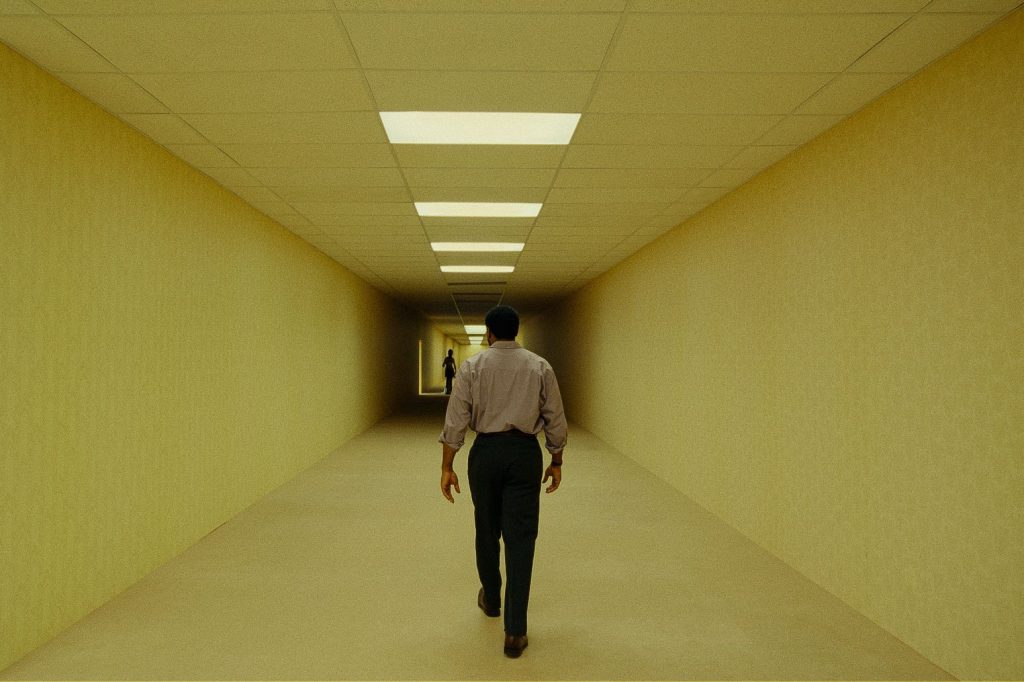
The greatest strength of Backrooms is its atmosphere. Parsons understands that the fear of the unknown is often more powerful than anything a monster can do. Much of the film’s tension comes from simply exploring these impossible spaces. Room leads to room. Corridor leads to corridor. Every corner feels as though it could reveal an answer or something far worse.
The production design deserves enormous credit here. The yellow-tinted lighting, endless carpets and uncanny architecture create environments that feel strangely recognisable despite existing completely outside reality. It is the sort of imagery that lingers in your mind long after the credits roll. There are echoes of films such as The Shining, Eraserhead and Skinamarink, but Backrooms never feels like a collection of references. Instead, Parsons uses those influences as a foundation for something that carries its own identity.
Chiwetel Ejiofor Grounds the Madness
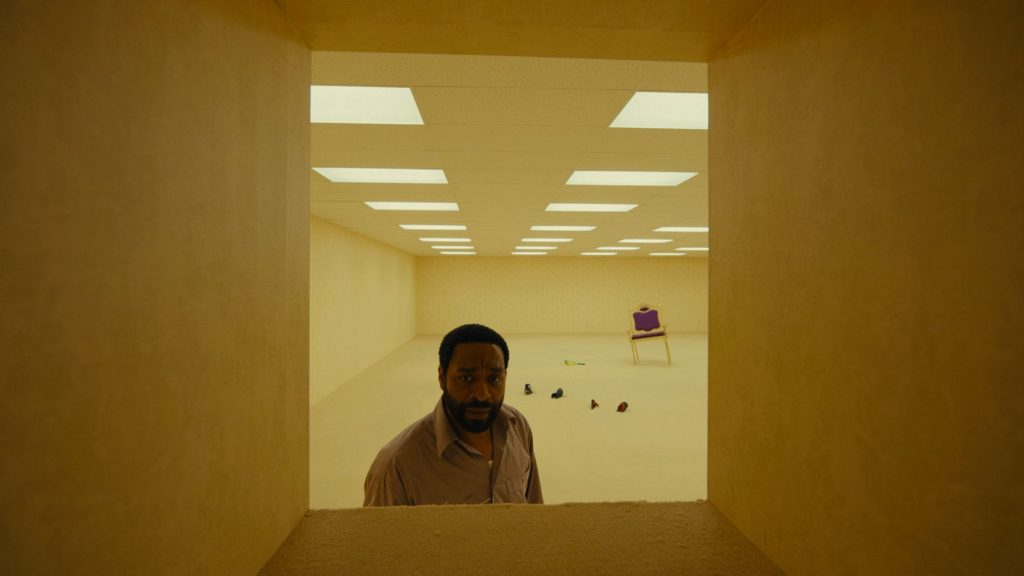
At the centre of all the surrealism is a terrific performance from Chiwetel Ejiofor. Clark could easily have become little more than a guide through the maze, but Ejiofor gives him enough sadness and frustration to keep him emotionally engaging. As Clark moves further into the Backrooms, his journey becomes a search for meaning in a life that has drifted off course.
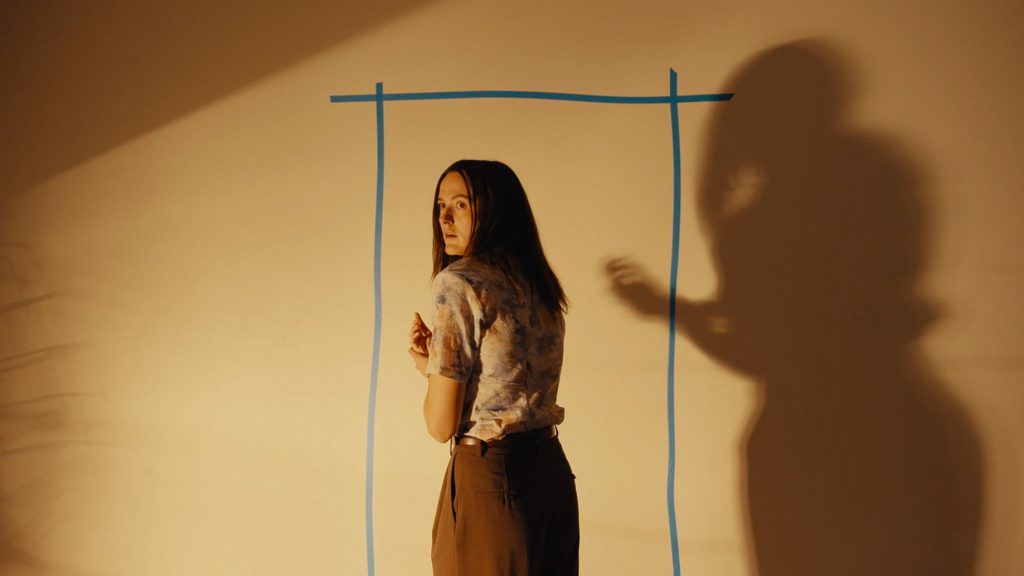
Renate Reinsve is equally effective as Mary, Clark’s therapist, who is drawn into the mystery herself. Together they provide enough emotional grounding to stop the film from disappearing completely into abstraction.
Not Every Door Leads Somewhere
The film’s willingness to leave questions unanswered will undoubtedly divide audiences. Viewers expecting a conventional horror story packed with clear explanations may find themselves frustrated. Backrooms operates largely through mood, suggestion and symbolism. Some of its ideas feel deliberately out of reach, while certain character arcs never receive quite the depth they seem to promise.
There are also moments in the final act where the film edges closer to traditional horror territory. While still effective, these sequences are arguably less interesting than the quieter stretches where Parsons simply lets the audience wander through the nightmare alongside his characters.
CultureCues Verdict
What makes Backrooms fascinating is not just that it works as a horror film. It is that it feels like a glimpse at where horror might be heading next. A concept born from internet folklore has become a genuinely ambitious studio release without losing its weirdness along the way. Kane Parsons proves himself far more than a viral success story, showing a remarkable confidence in visual storytelling and atmosphere for a filmmaker making his feature debut. You may not leave Backrooms with every answer. In truth, that is part of its appeal. The film understands that some of the scariest places are the ones we never fully understand.
CultureCues Rating: ★★★★☆ (4/5)

Nikki Murray is a UK-based writer, screenwriter and founder & editor of CultureCues, covering film, television, music and pop culture. Her work focuses on storytelling and the moments shaping modern entertainment.