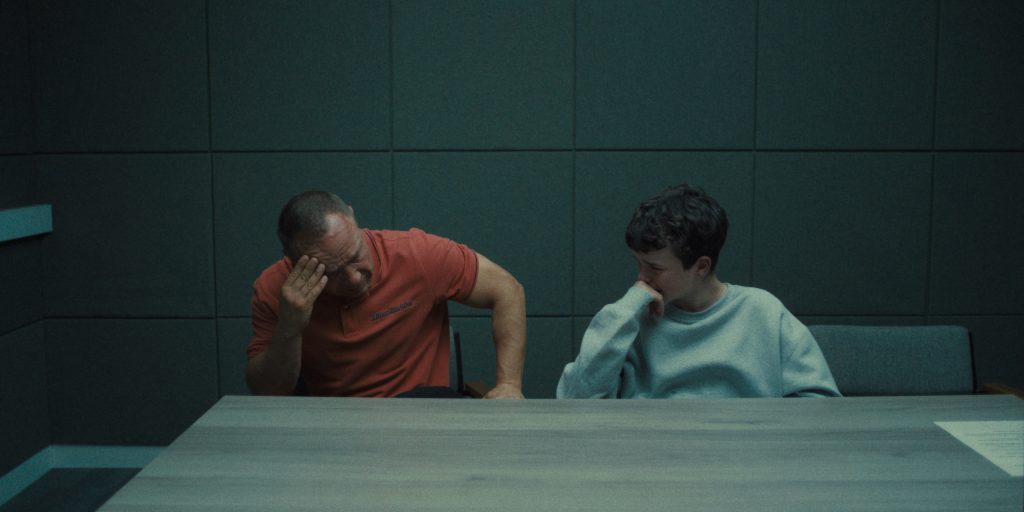
There are some dramas you watch, enjoy, and move on from. Then there are the ones that sit heavily in your chest long after the credits roll. Adolescence is very much the latter.
Created and written by Stephen Graham and Jack Thorne, and directed with astonishing control by Philip Barantini, this four-part Netflix drama opens with a door being kicked in and a family’s life being torn apart in seconds. Jamie Miller, a 13-year-old boy, is arrested for the murder of a girl from his school. From there, the series becomes an unflinching look at shock, shame, violence, masculinity and the systems that fail young people long before the police ever arrive. It is harrowing television, but never hollow. Every choice feels purposeful. Every moment lands.
The one-take format is more than a gimmick
Each episode is shot in one continuous take, a choice that could easily have felt flashy in lesser hands. Here, it does the opposite. It traps you in the moment. There is no relief, no escape hatch, no neat cut away from the pain of what is happening. The camera moves through police stations, school corridors, holding cells and family homes with a dreadful intimacy, forcing you to stay present with every silence, every outburst and every look that says more than dialogue ever could.
Barantini already proved with Boiling Point that he knows how to make this style work, but Adolescence uses it for something even more emotionally bruising. It gives the series the tension of a thriller and the emotional weight of a stage play, all while keeping everything feeling painfully real.
Steven Graham and Owen Cooper are exceptional
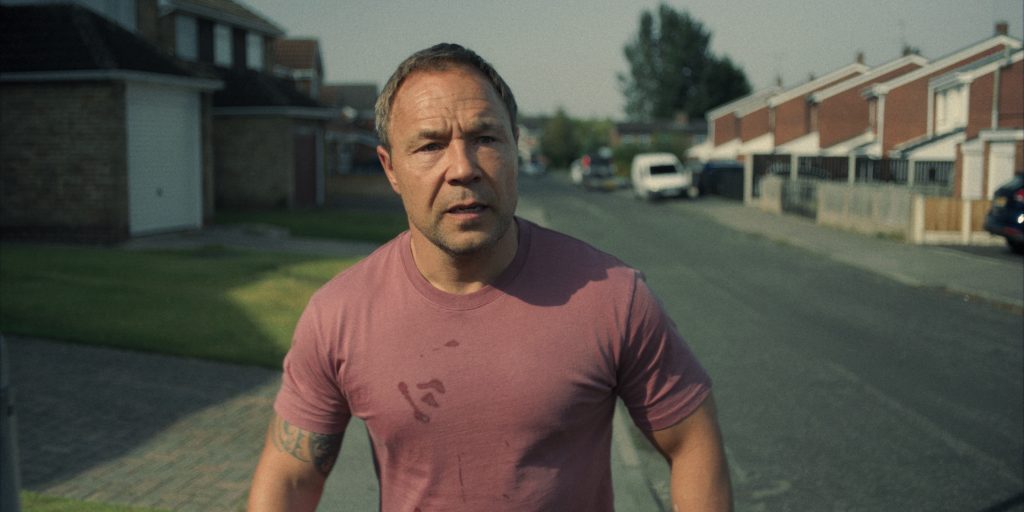
Stephen Graham has never exactly struggled when it comes to delivering emotional devastation, but this may be one of his finest performances yet. As Jamie’s father Eddie, he plays a man trying to hold himself together while everything inside him is collapsing. There is disbelief, anger, guilt and heartbreak all tangled up at once, and Graham captures every bit of it without ever overplaying a note. Christine Tremarco is equally strong as Jamie’s mother, carrying so much grief in the smallest expressions. Ashley Walters brings real depth to the investigating officer, making him far more than a standard detective figure. His own discomfort, confusion and quiet sadness add another layer to a story already packed with them.
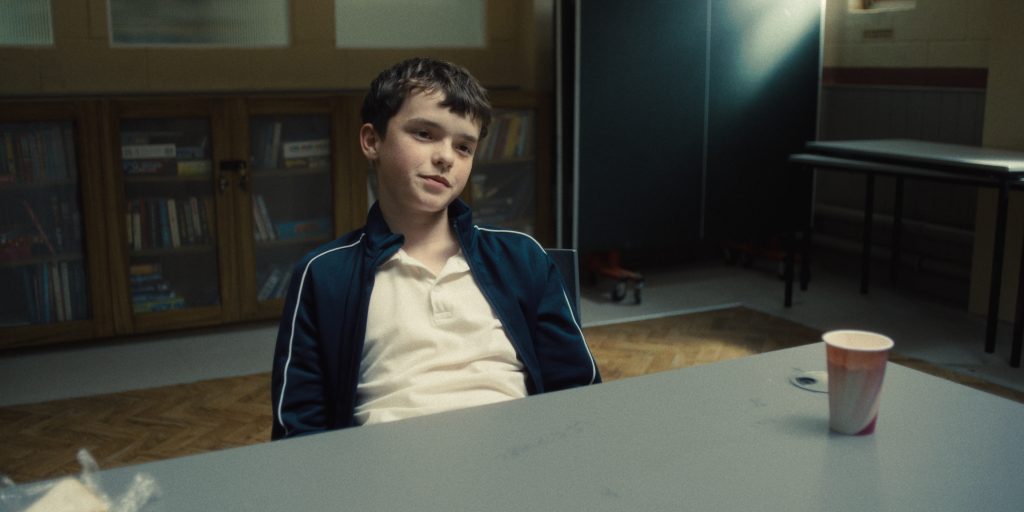
Then there is Owen Cooper, who is extraordinary. Jamie is not played as a monster, nor as some simple tragic innocent. Cooper gives him the volatility of teenage boyhood in all its contradictions. He can seem vulnerable, charming, funny, defensive and deeply unsettling within the same scene. It is an astonishing performance, especially for someone so young, and the series would not work without him being this good.
The kind of television people will be talking about for a long time
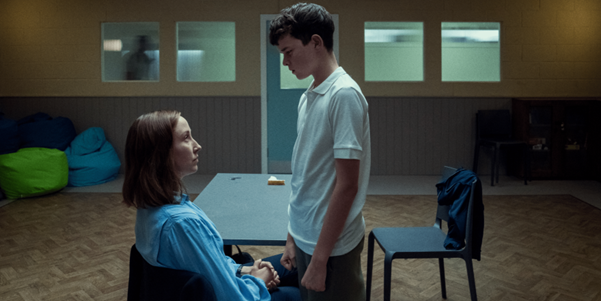
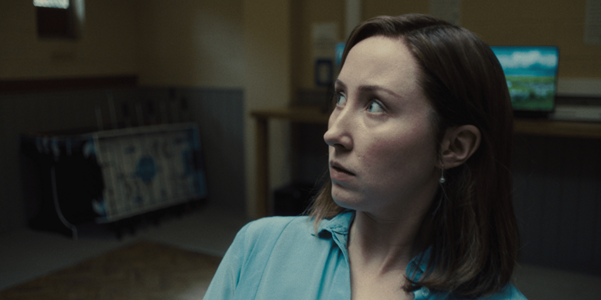
The series is excellent throughout, but episode three is on another level. It centres on Jamie’s meeting with a psychologist, played brilliantly by Erin Doherty, and becomes a tense, exhausting two-hander that strips away easy explanations. What unfolds is not just a battle of words but a chilling portrait of a boy who is still, in many ways, a child, while also being capable of something horrifying. It is one of the strongest episodes of television this year, full stop. Not because it shouts the loudest, but because it understands how disturbing it is to watch someone so young shift from soft to cruel, from funny to frightening, in a heartbeat. Doherty is superb, but Cooper is the one who leaves you shaken.
A series about violence, but also about what comes before it
What makes Adolescence so powerful is that it is not really interested in easy crime drama mechanics. This is not a whodunnit and it is not trying to be. The focus is on why this happened, what allowed it to happen, and what everyone around Jamie either missed or misunderstood.
The show digs into male rage, online misogyny, isolation, bullying and the warped messages boys are absorbing every day. Parents think their children are safe because they are at home, upstairs, on a screen. Teachers are overwhelmed. Police are reacting after the fact. Everyone is slightly behind the reality of what these teenagers are living through. That is where Adolescence becomes truly chilling. It does not present Jamie as some unknowable anomaly. It presents him as a boy shaped by a culture that is already here.
There is pain everywhere, but there is humanity too
For all its darkness, the series is never cruel for the sake of it. There are flashes of humour, awkwardness and tenderness that stop it from becoming emotionally numb. Those moments matter because they remind you these are not symbols or talking points. They are people. Parents trying to cope. Teenagers trying to make sense of themselves. Adults blundering their way through situations they no longer understand.
That balance is part of what makes the writing so strong. Jack Thorne and Stephen Graham never reduce the story to a lecture, even though it has plenty to say. The series is angry, yes, but also compassionate. It wants us to look harder, not just judge faster.
CultureCues Standout Moment
Episode three’s face-off between Jamie and the psychologist is the moment that lodges itself in your mind and refuses to leave. It is just two people in a room, talking, but it feels more gripping than most big-budget finales. The power keeps shifting. So does your understanding of Jamie. One minute he seems like a lost little boy, the next he is something far more frightening. It is an astonishing piece of writing and acting, and the kind of scene that reminds you television can still be genuinely electrifying.
Final Verdict
Adolescence is one of the most powerful dramas Netflix has released in a long time. It is technically impressive, beautifully acted and emotionally devastating, but what really sets it apart is how urgent it feels. This is not just a series about one terrible crime. It is about the world surrounding it, the warning signs we miss, and the stories we tell ourselves about boys, violence and growing up.
It is not an easy watch, and it is not meant to be. But that is what makes it feel so necessary. Adolescence sits with uncomfortable truths rather than softening them, using television not just to tell a story, but to push viewers towards a conversation that urgently needs to be had.
Adolescence is streaming now on Netflix.

Nikki Murray is a UK-based writer, screenwriter and founder & editor of CultureCues, covering film, television, music and pop culture. Her work focuses on storytelling and the moments shaping modern entertainment.