
Wicked: Part Two had a pretty enormous job on its hands. After the first film ended with Defying Gravity, one of the most famous musical theatre moments of all time, the follow-up had to do more than simply continue the story. It had to prove there was still enough emotion, drama and magic left in Oz to make the second half feel just as worthwhile. Thankfully, it does.
This is a bigger, heavier and more emotional film than Part One, but it still understands what made the first instalment work so well. Beneath the spectacle, the flying monkeys, the politics of Oz and the very famous green face paint, Wicked has always been about two women whose lives are changed forever by knowing each other. Part Two never loses sight of that.
It may not have quite the same lightning-in-a-bottle thrill as watching Elphaba rise into the sky, but it delivers something different: a moving, satisfying and beautifully performed finale that gives this story the ending it deserves.
A Story About Choice, Change and Consequence
Part Two begins around a year after the events of the first film, with Nessa Rose’s comment about “twelve full tide turns” suggesting time has passed since Elphaba’s escape from the Emerald City. Oz feels different now. The excitement and colour of Shiz are gone, replaced by a world that is more fearful, more divided and far more dangerous.
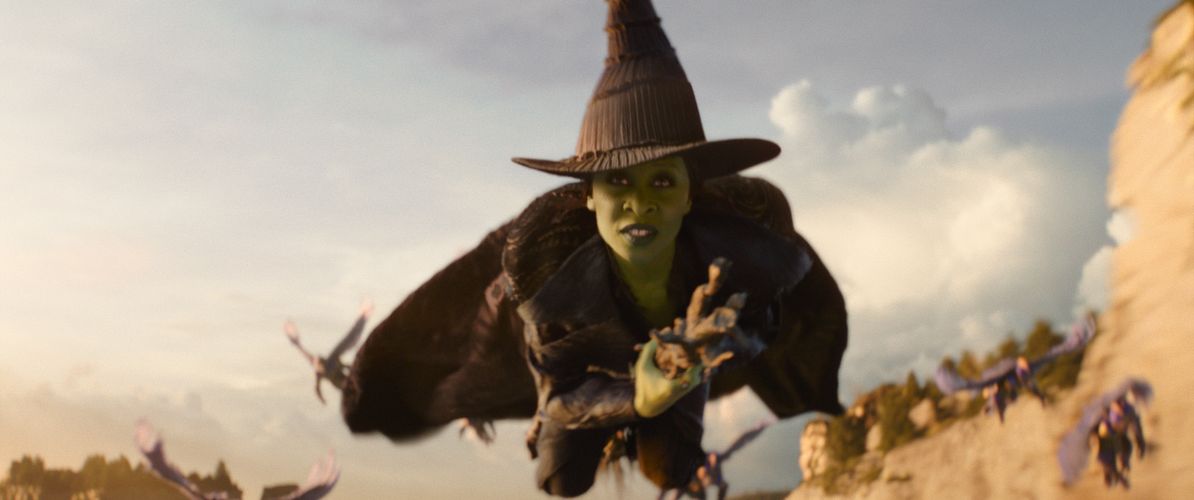
Elphaba is no longer just the misunderstood girl everyone whispered about. She has become a symbol, though not always one she has control over. To some, she is a threat. To others, she is the only person brave enough to question what is happening around them. Cynthia Erivo carries that change beautifully, giving Elphaba a real sense of purpose without losing the hurt underneath it.
Erivo’s performance is extraordinary. Her vocals are, of course, ridiculous in the best possible way, but it is the quieter choices that make her Elphaba so compelling. You can see the cost of everything she has been through. She is stronger now, but she is also lonelier, and Erivo lets both sides exist at once without making the performance feel too polished or untouchable.
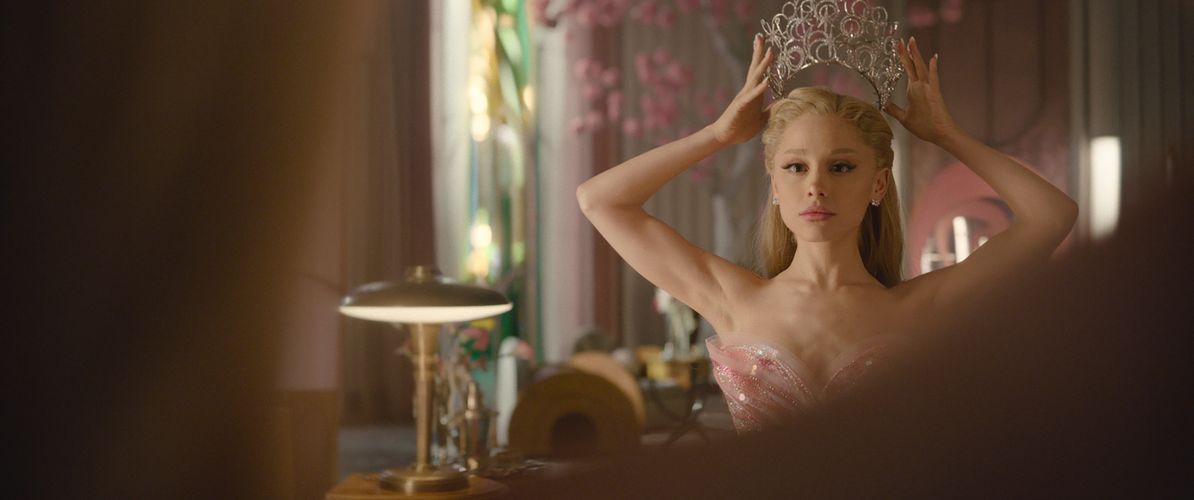
Ariana Grande’s Glinda is just as important to the film’s emotional pull. She is still funny, still bright, still capable of turning a room into her own personal stage, but there is more sadness behind it now. Glinda has become the public face of goodness in Oz, even while privately wrestling with the fact that the person she loves most has been turned into the enemy.
Grande plays that conflict beautifully. Her Glinda is trying so hard to be what everyone needs her to be, and there is something genuinely heartbreaking about watching her smile her way through a life that no longer feels fully honest. The comedy is still there, but it is used more carefully this time, and it makes the emotional moments hit harder.
Together, Erivo and Grande remain the heart of these films. Their chemistry is what holds everything together. Not because the story keeps telling us they matter to each other, but because every look and every silence makes it clear that they do.
Jonathan Bailey Gives Fiyero More Heart
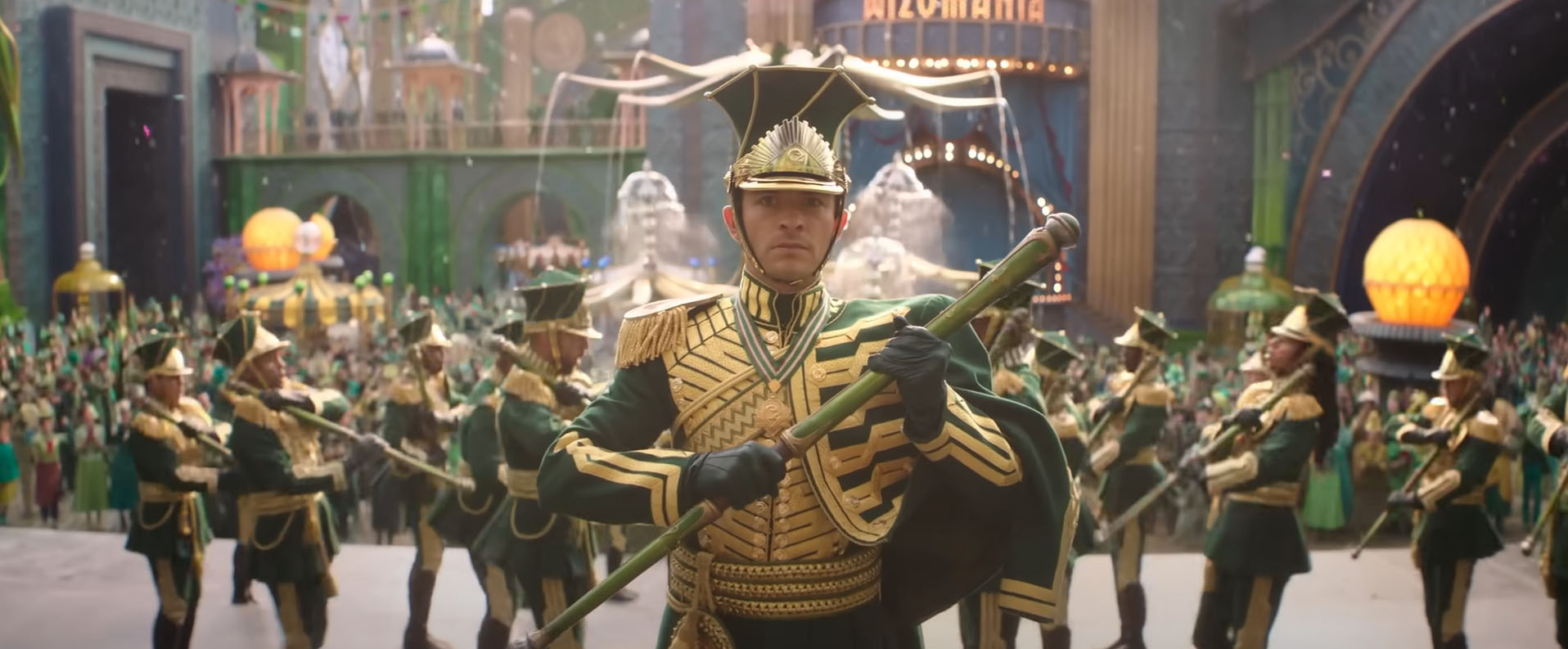
Jonathan Bailey’s Fiyero was one of the biggest joys of Part One, and Part Two gives him much more to play with. The easy charm is still there, but it no longer feels like the whole story. This version of Fiyero is caught between the life expected of him and the person he becomes around Elphaba, and Bailey makes that pull feel completely believable.
His scenes with Cynthia Erivo bring a real rush of emotion to the film, especially during “As Long as You’re Mine.” It is one of the most romantic sequences across both parts, not because it tries to be huge, but because it finally gives Elphaba and Fiyero space to be honest with each other. There is longing, guilt and relief in the scene, but it never feels overplayed.
Bailey also gives Fiyero a stronger place in the story than he often gets on stage. He is not just the charming love interest caught in the middle. He feels like someone making difficult choices of his own, and that gives the later turns in his story much more emotional weight. It is a performance that confirms what fans have always known. When Bailey yearns, he delivers cinema.
Oz Starts to Show Its True Colours
Jeff Goldblum’s Wizard also becomes more interesting in Part Two. He is not played as a simple villain, which makes him more unsettling in some ways. Goldblum leans into the Wizard’s need to be liked, his slipperiness and his talent for making terrible choices sound almost reasonable. He is charming until he is not, and by the time the truth starts catching up with him, the damage has already been done.
Michelle Yeoh’s Madame Morrible, meanwhile, steps further into the darkness. The elegance is still there, but now it comes with a colder sense of control. She knows exactly how to use fear, loyalty and public image to get what she wants, and Yeoh makes her quiet cruelty feel all the more dangerous because she rarely needs to raise her voice.
The wider ensemble helps make Oz feel like a world under pressure. The film is dealing with propaganda, power and public fear, but it never gets so wrapped up in the politics that it forgets the people at the centre of it. That balance matters, especially in a second half that has so much story to pull together.
CultureCues Standout Moment
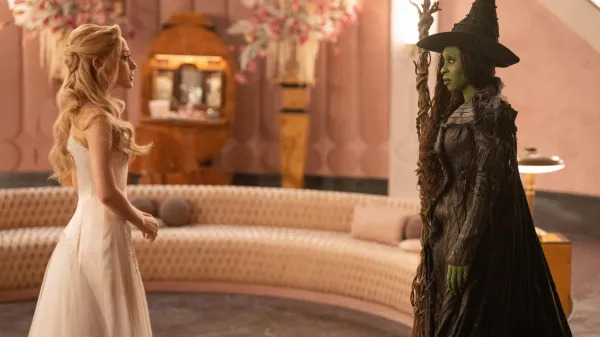
This is the moment many fans have been waiting for since the first film was announced, and Wicked: Part Two treats it with the care it deserves. There is no need to overcomplicate it. No need to drown it in spectacle. The power of the scene comes from letting Elphaba and Glinda finally face what they mean to each other.
Erivo and Grande are stunning here. Their voices work beautifully together, but it is the emotion behind them that makes the scene so affecting. Erivo brings the ache of someone who has spent so long being misunderstood, while Grande brings a gentleness that makes Glinda’s grief feel incredibly real.
When they reach “because I knew you, I have been changed for good,” it does exactly what it is meant to do. It hurts. It feels intimate, familiar and completely earned. For a song that so many people already know inside out, the film still finds a way to make it feel fresh again.
Their final embrace is one of the film’s most moving images. It is not just a goodbye between two friends. It is the end of the version of their lives where they could still imagine finding an easy way back to each other. That is what makes it so powerful.
A Finale That Gives Glinda Her Due
As the story moves towards its ending, Wicked: Part Two does a lovely job of bringing Glinda’s journey into focus. After Dorothy’s arrival and the events that follow, Glinda is left believing Elphaba is gone forever. Her grief is quiet, but it says so much. She has to stand in front of Oz as Glinda the Good while carrying the loss of the one person who knew her before all of it.
The truth, of course, is more hopeful. Elphaba survives and escapes with Fiyero, whose transformation into the Scarecrow is revealed as the result of Elphaba’s desperate attempt to save him. Their reunion gives the film a small but much-needed breath of relief, a reminder that even in a story full of sacrifice, there is still room for love to survive.
Back in Oz, the Wizard’s image finally falls apart. His connection to Elphaba comes to light, and the truth of what he has done forces him out of the Emerald City. Madame Morrible also faces a reckoning, with Glinda stepping into her power and removing her from influence.
And so Glinda rises, not as the glittering girl from Shiz or the public symbol Oz tried to shape, but as someone who has finally understood the cost of goodness. Her ending is bittersweet, but it feels right. She has lost so much, but she has also become the person Elphaba always believed she could be.
A Final Reflection, For Good
Wicked: Part Two completes the story with real heart. It gives Cynthia Erivo and Ariana Grande the room to deliver two deeply felt performances, and it understands that the emotional power of Wicked has never just been about magic. It is about friendship, loyalty, public image, impossible choices and the people who change us so completely that we are never quite the same again.
It may not top the pure thrill of Defying Gravity, but it does not need to. This half of the story is doing something different. It is quieter in places, sadder in others, and all the better for trusting the emotional weight of the ending. Together, the two Wicked films pull off something rare. They take a beloved stage musical and turn it into cinema without losing the heart of what people loved in the first place.
By the end, Wicked: Part Two feels rich, moving and genuinely satisfying. A final chapter full of love, loss and just enough magic to send us out of Oz with a lump in our throats.
For good, obviously.

Nikki Murray is a UK-based writer, screenwriter and founder & editor of CultureCues, covering film, television, music and pop culture. Her work focuses on storytelling and the moments shaping modern entertainment.