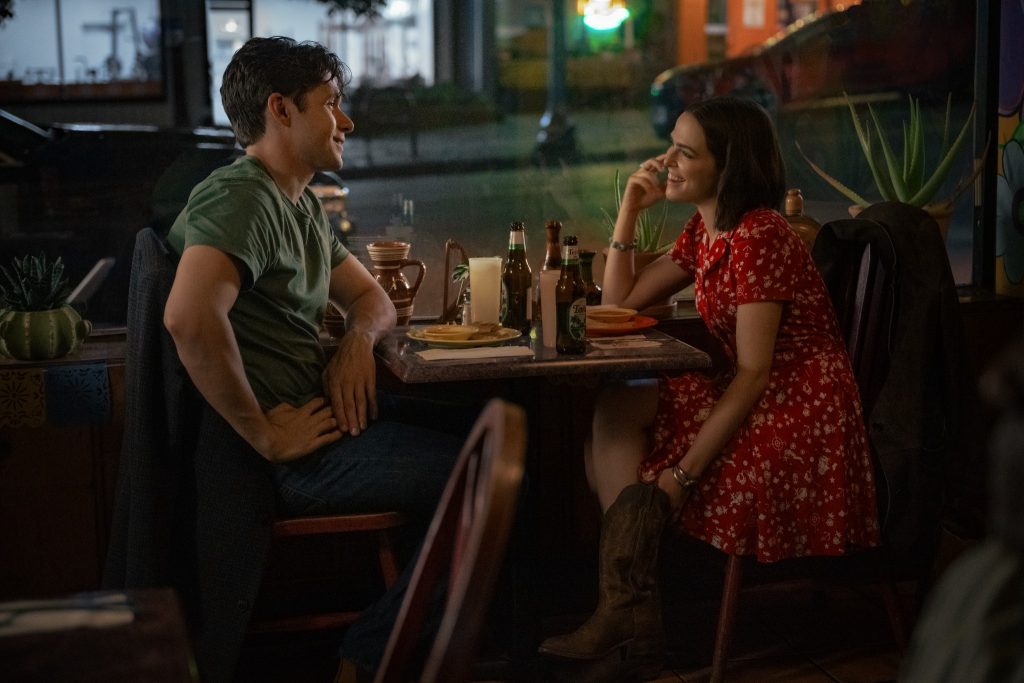
Netflix’s latest romantic comedy begins with grief, a reassigned phone number and one man making a decision that would be an enormous red flag outside the safety of a rom-com. Somehow, Voicemails for Isabelle still manages to turn that questionable beginning into a warm, funny story about allowing yourself to move forward without leaving the people you have lost behind.
Written and directed by Leah McKendrick, the film stars Zoey Deutch as Jill, an aspiring pastry chef living in San Francisco. Following the death of her sister Isabelle (Ciara Bravo), Jill continues calling the number and leaving rambling updates about work, disastrous dates and everything she wishes they could still discuss.
What Jill does not know is that Isabelle’s number has been reassigned to Wes (Nick Robinson), a successful real estate agent based in Austin. He begins listening to the messages, becomes invested in the life of the woman leaving them and eventually travels to San Francisco to meet her.
It is a set-up that requires viewers to accept a serious invasion of privacy as the beginning of a love story. Thankfully, Deutch and Robinson have enough charm and chemistry to carry the film through its more uncomfortable implications and keep the central romance believable.
A Rom-Com Built Around Grief
Despite its bright Netflix packaging, Voicemails for Isabelle opens with genuine sadness. Jill has built much of her life around sharing experiences with her younger sister, Isabelle, whose cystic fibrosis prevented her from having the carefree adolescence and adulthood Jill wanted for her. Jill dates recklessly, throws herself into her work and collects stories because she knows Isabelle wants to hear them. When that relationship is suddenly taken away, the voicemails become a way of continuing a conversation Jill is not ready to end.
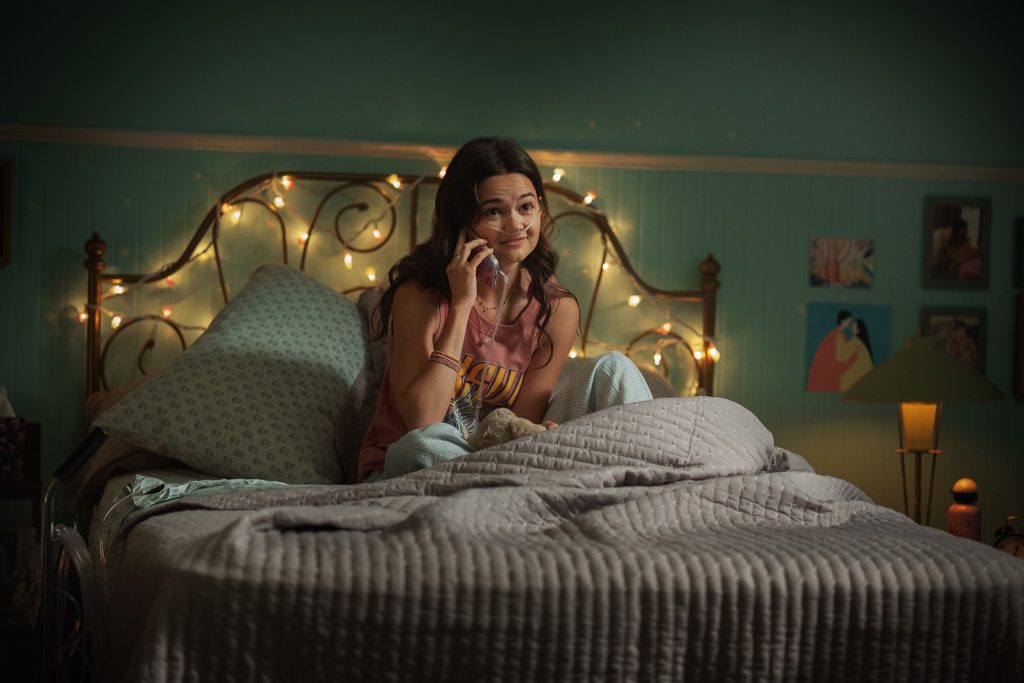
The film handles this with more care than its rom-com premise might suggest. Jill is not waiting for romance to rescue her from grief, and falling for Wes does not magically remove the pain. Isabelle remains part of her life throughout the film, shaping Jill’s choices and her understanding of what moving forward might look like.
Deutch is particularly strong during these quieter scenes. Her natural comic timing makes Jill’s long, unfiltered messages entertaining, but she also allows the exhaustion underneath them to surface. Jill can be awkward and overly impulsive, yet she never becomes a collection of rom-com quirks created solely to appear adorable.
The relationship between the sisters is established quickly, but it gives the rest of the story its emotional foundation. Their connection is genuinely sweet, and even after Isabelle is no longer physically present, the film never treats her as a plot device to push Jill towards a new man.
Zoey Deutch and Nick Robinson Make the Romance Work
The film’s greatest strength is the chemistry between Deutch and Robinson. They are perfectly cast as Jill and Wes, making their connection believable from the moment they meet.
Wes has an obvious advantage because he has already heard Jill at her most honest. He knows about her dating history, career frustrations and oddly specific romantic fantasies before she has even learned his surname. Robinson plays him with enough nervous sincerity to make it clear that he understands how strange the situation has become, although perhaps not quickly enough.
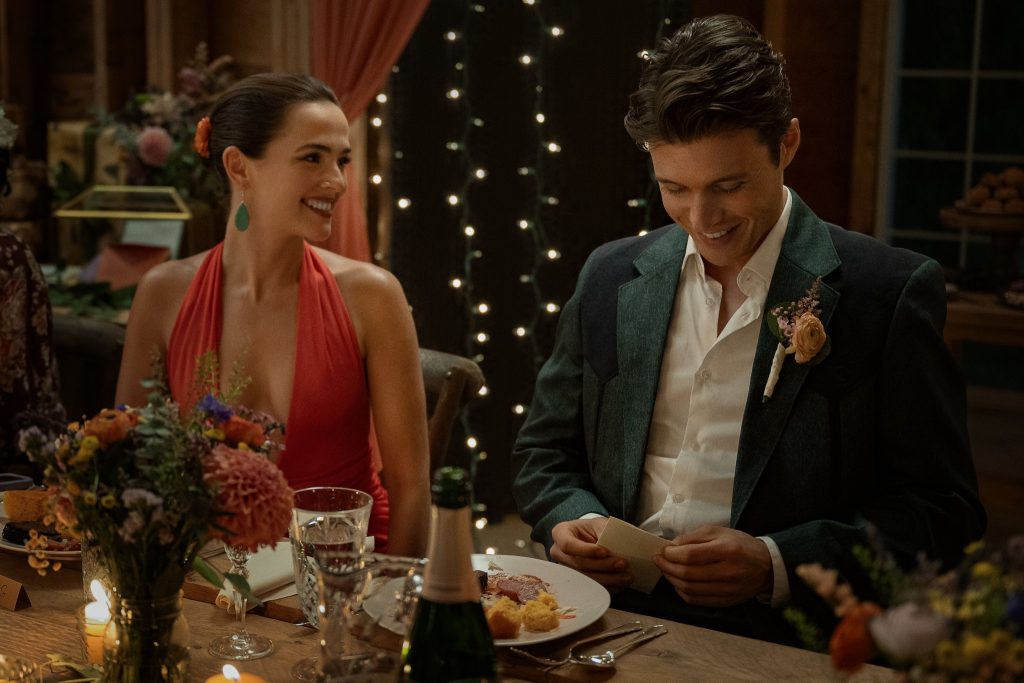
Their time exploring San Francisco brings some of the film’s most enjoyable rom-com moments, from tourist stops and shared food to a deliberately ridiculous bus tour. As they grow closer, their friendship naturally begins turning into something more. There are accidental confessions and grand romantic gestures, followed by the secret that inevitably threatens everything. The film even acknowledges the influence of You’ve Got Mail and Sleepless in Seattle, although Wes lacks the safe distance those stories gave their leads.
Audiences do not need a romantic comedy to surprise them. They simply need to care about the couple and believe in their journey towards the expected ending, which Deutch and Robinson make easy. Their first kiss has the spark the film needs, and their more intimate scenes bring a welcome physical chemistry to a genre that sometimes appears frightened of letting its leads genuinely desire each other.
The Voicemail Problem Is Difficult to Ignore
The central concept remains the film’s biggest weakness. Wes does not accidentally hear one message and immediately correct the mistake. He continues listening, searches for Jill online and uses what he has learned to create the kind of meeting she has previously described wanting. The film knows this is ethically questionable. Wes’s friends repeatedly tell him that his behaviour is inappropriate, and the eventual consequences are not brushed aside. Even so, the story still asks viewers to find his actions romantic.
Robinson’s natural charm helps considerably, but there are points where the film comes close to making Wes seem alarmingly calculated. A few moments of greater hesitation or an earlier attempt to contact Jill would have made the eventual romance easier to embrace without reservation.
It says a great deal about the central performances that the relationship survives this problem at all. Once Jill and Wes are together, their connection appears natural enough that viewers may find themselves temporarily putting aside how he reached her in the first place. Still, temporarily is doing some work there.
A Supporting Cast With Plenty to Do
The supporting cast adds another layer of humour without pulling attention away from Jill and Wes.
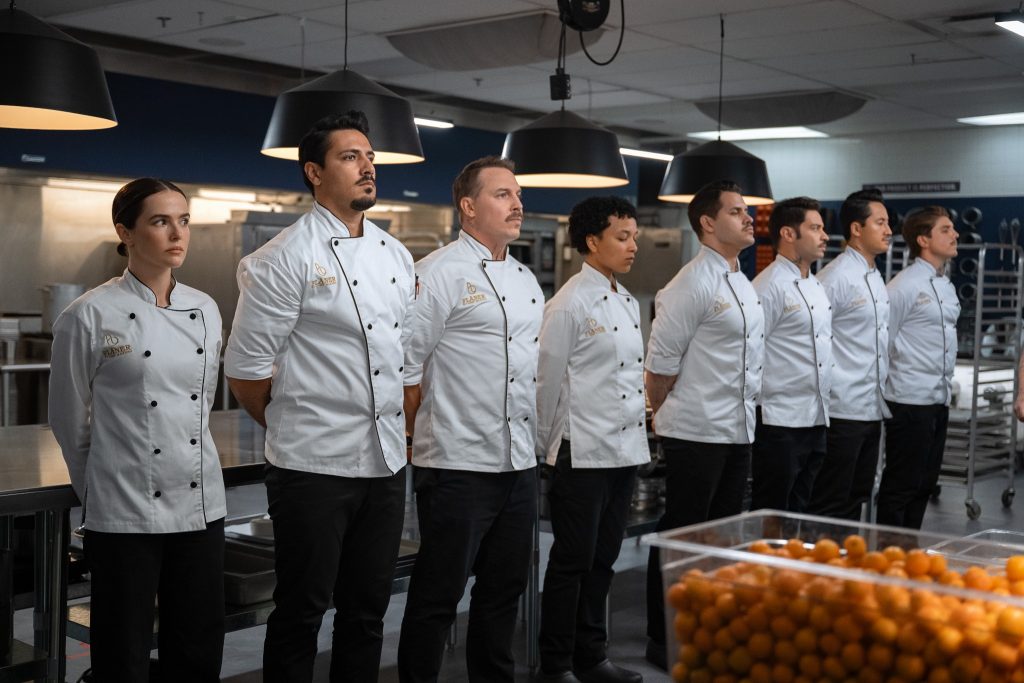
Nick Offerman plays Chef Bastien, Jill’s pretentious and thoroughly insufferable employer, complete with an accent almost as inflated as his ego. Lukas Gage appears as Arthur, one of the chefs helping maintain the misogynistic culture inside the kitchen. Their storyline gives the film space to explore Jill’s professional frustration and the barriers she faces as a woman trying to establish herself in the food industry. It also ensures her development is not limited to whether she ends up in a relationship.
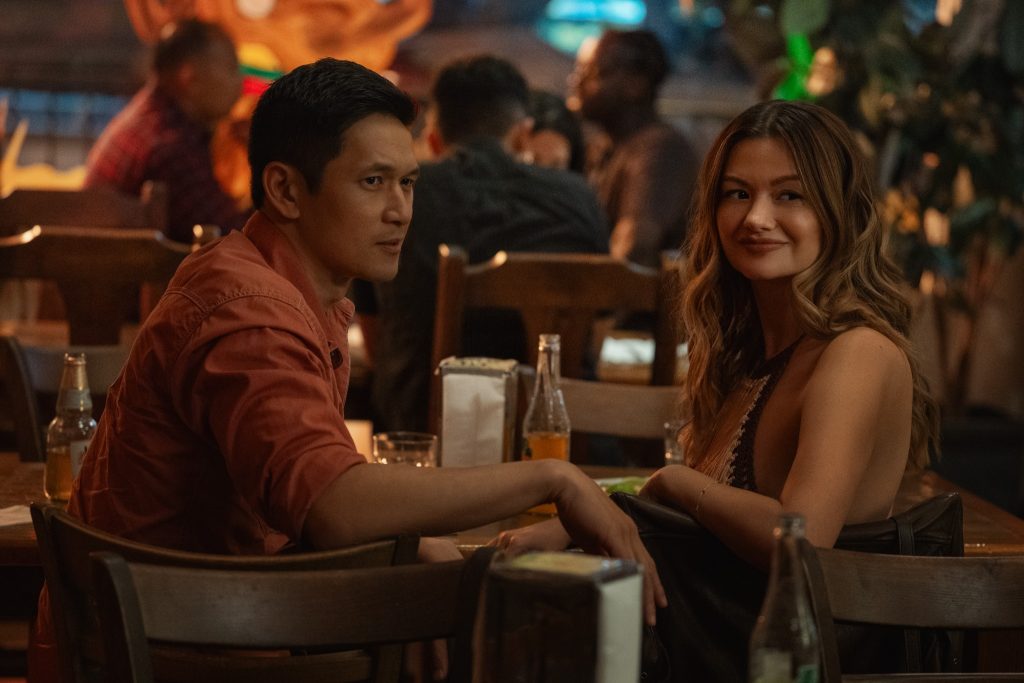
Harry Shum Jr. and Lean McKendrick are far more likeable as Andy and Breeda, Wes’s friends and the closest thing he has to a functioning moral compass. They recognise almost immediately that listening to Jill’s messages is a terrible idea, even when Wes insists that his intentions are sincere.
Their relationship provides a useful contrast to Jill and Wes, showing a couple already comfortable enough to challenge each other without turning every disagreement into a crisis.
Familiar Territory With Real Emotion
Voicemails for Isabelle follows the familiar romantic-comedy formula and fully embraces it, from the emotional music choices to a final act designed to make viewers forgive almost everything that came before. Some of the songs push a little too hard to tell the audience how to feel, but Robyn’s “Dancing on My Own” has real meaning within Jill and Isabelle’s relationship. What begins as a shared joke becomes a touching reminder that grief can hold onto happy memories as well as painful ones.
The film occasionally packs too much into Jill’s story, including family loss, workplace misogyny, dating disappointments and her ambitions as a pastry chef. At just under two hours, it has enough time to explore most of these threads, although the middle section could move more quickly.
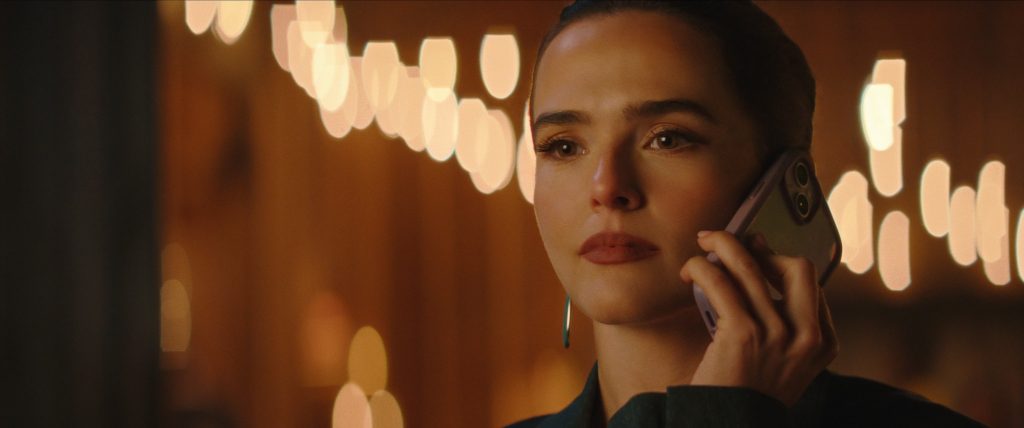
There are also moments when the humour appears written specifically to sound current, particularly around dating apps and social media. Deutch sells most of it through sheer commitment, but not every joke will age as gracefully as the romance surrounding it. Even so, the film remains funny and enjoyable throughout.
What ultimately carries the film is its sincerity. McKendrick believes in romantic comedies without pretending that love solves every problem. Jill still has to rebuild parts of her life for herself, and Wes must understand that a good intention does not automatically excuse a bad choice.
A Third Act That Brings the Secret Out
Spoilers ahead for the ending of Voicemails for Isabelle.
The film’s biggest obstacle is always going to be Wes’s secret. No matter how charming Robinson makes him, there is no escaping the fact that he built his relationship with Jill on information she never intended anyone else to hear. When the truth finally comes out during Andy and Breeda’s wedding in Austin, Jill ends their relationship immediately. The film gives her anger enough space.
The breakup arrives at an already vulnerable point for Jill. After finding out what Wes has been hiding, she also loses all the saved voicemails from Isabelle when a software update wipes them from her phone. It is a brutal double blow, forcing Jill to face the fear that moving forward might mean losing another piece of her sister.
After that, Jill begins making changes for herself. She leaves her job at Flâner, opens a food truck inspired by the dessert tacos she and Isabelle loved, and starts building a future that still keeps her sister close.
Wes eventually tries to make things right by recovering Jill’s lost voicemails and leaving her a message of his own. He tells her he has changed his work number and will keep Isabelle’s old line active so Jill can keep calling whenever she needs to. His New Year’s Eve attempt to win her back is a sentimental, rain-soaked run straight out of classic rom-com territory, but it works because the film has spent enough time showing what those messages mean to Jill.
The final scene keeps Isabelle at the centre of Jill’s life. When Jill and Wes call her for a kind of blessing and Robyn’s “Dancing on My Own” plays, Wes joins in the dance routine Jill once shared with her sister. It is sweet, a little cheesy and exactly the kind of ending the film has been building towards.
CultureCues Final Thoughts
Voicemails for Isabelle has a premise that becomes increasingly difficult to defend the longer you think about it, but Deutch and Robinson make an extremely convincing case for going along with it anyway.

Their chemistry gives the film the spark it needs, while Jill’s relationship with Isabelle adds an emotional depth that lifts the story beyond a standard Netflix romance. Deutch is funny and vulnerable without forcing either quality, and Robinson brings enough awkward sweetness to Wes to keep him on the correct side of the rom-com line, even when the character’s decisions test that boundary.
The film follows a familiar route and occasionally pushes too hard for an emotional response, but the important moments still connect. It made us laugh, brought a few tears and, crucially, left us rooting for its central couple.
We answered the call, and we are glad we did.
Rating: ★★★★☆ (4/5)
Voicemails for Isabelle is streaming now on Netflix.

Nikki Murray is a UK-based writer, screenwriter and founder & editor of CultureCues, covering film, television, music and pop culture. Her work focuses on storytelling and the moments shaping modern entertainment.