The last-ever episode of Good Omens arrived on Prime Video today, 13 May, giving Aziraphale and Crowley’s long-running story one final feature-length chapter, with a lot of Heaven, Hell and unresolved feeling packed into 90 minutes.
This review begins with a spoiler-free look at the finale, focusing on the performances, tone and overall ending without giving away the major twists. Further down, we move into a full spoiler recap and ending discussion, so consider that your friendly warning to stop scrolling if you have not watched it yet.
Season 3 is not a traditional run of episodes. Instead, the final chapter arrives as a single movie-length special, picking up after the emotional fallout of season 2, when Aziraphale accepted the offer to return to Heaven and Crowley was left behind in Soho. It was a brutal place to leave two characters whose bond has always been the beating heart of the series, and the finale wastes little time in returning to that wound.
Now the newly appointed Supreme Archangel, Aziraphale is tasked with overseeing the Second Coming, a responsibility that sits heavily on him and causes more than a little concern among the other angels. Crowley, meanwhile, is heartbroken and lost, drifting through Soho while trying to pretend he is absolutely fine, even when every part of him says otherwise.
As the universe edges towards another possible ending, the pair are forced back into each other’s orbit. There are Hellish threats, London gangsters, divine complications and the usual bureaucratic absurdity of Heaven, but the real pull of the episode comes from watching Aziraphale and Crowley confront the fracture between them.
“As the fate of the universe hangs in the balance, Aziraphale and Crowley must confront their relationship, heal old wounds and rediscover their bond.”
A finale with impossible expectations
There was always going to be a lot of pressure on this finale. Good Omens has built a fiercely loyal fanbase, and after the ending of season 2, viewers were waiting for more than just another apocalyptic adventure. They wanted emotional resolution. They wanted answers. They wanted some kind of healing for Aziraphale and Crowley. On that front, the finale knows what matters.
The story moves quickly, sometimes too quickly, with plot points arriving in a rush as the episode tries to cover material that may once have had more room to breathe. You can feel the shape of a fuller season underneath it at times. Certain characters are given less space than expected, and a few ideas seem to appear only long enough to push the story towards its conclusion.
Still, there is something genuinely worthwhile in the fact that Good Omens gets a proper ending at all. In a streaming era where so many shows vanish without resolution, this final episode feels like a gesture to the fans who have stayed with it. It may not have all the space it needs, but it does have a clear affection for the characters and the world they inhabit.
Michael Sheen and David Tennant carry the heart of it
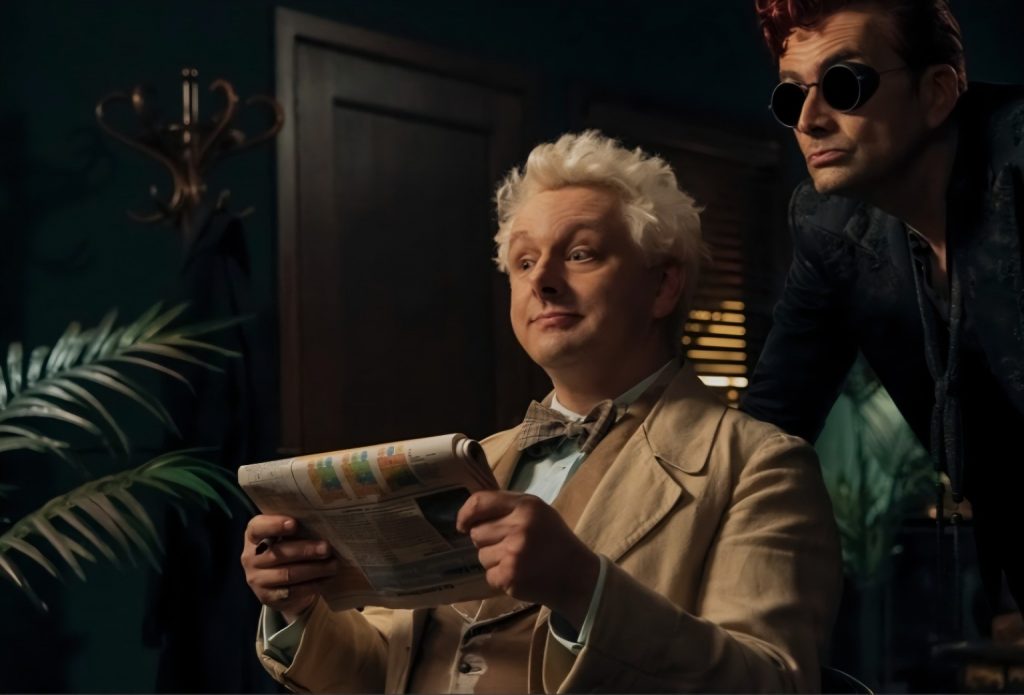
The finale works best when it keeps its focus on Michael Sheen and David Tennant. Sheen remains wonderful as Aziraphale, capturing his anxious politeness, moral stubbornness and desperate need to believe there is still a right thing to do. There is a real sadness in watching him carry the weight of Heaven’s expectations while slowly realising that power does not make the system any less broken.
Tennant is, as ever, brilliant as Crowley, leaning into the humour and irritation while making it clear that this is a character carrying real hurt. His swagger is still there, but the finale lets the heartbreak sit beneath the surface rather than turning it into melodrama.
Together, they remain the reason Good Omens has lasted in peoples hearts. Their chemistry still feels beautifully lived-in, with thousands of years of history carried in the smallest pauses and looks between them. Even when the wider story feels compressed, Sheen and Tennant give the finale its emotional weight.
The 90-minute format is both a blessing and a curse
The biggest issue with season 3 is also the most obvious one: 90 minutes is not a lot of time to wrap up a story this cosmic, this emotional and this beloved. The episode has momentum, which helps, but it also has to sprint through parts of the story that might have benefited from a slower build. The Second Coming, the politics of Heaven, Crowley’s isolation, Aziraphale’s guilt, personal betrayals and the fate of the world are all fighting for attention, with some parts given enough space and others left feeling slightly underfed.
That said, the finale rarely feels careless. It feels condensed. There is a difference.
You can sense the creative team trying to honour the relationship at the centre of the series while still delivering the wild, end-of-the-world energy expected from a Good Omens ending. Sometimes that balance works beautifully. Sometimes it feels strained. But the affection behind it is hard to miss.
Still unmistakably Good Omens
For all the pressure around the finale, Good Omens remains unmistakably itself. The episode is full of comic beats, divine misunderstandings, demonic irritation and the kind of heightened nonsense that has always made the series feel slightly outside normal television logic. Heaven is still deeply ridiculous. Hell is still a workplace nightmare with worse lighting. Earth remains the place everyone is supposedly fighting over, even though most celestial beings do not seem to understand humans at all.
There are also moments where the finale recaptures the show’s old magic: a dry Crowley line delivered with perfect timing, Aziraphale looking quietly scandalised by something absurd, or the two of them bickering while the universe is literally on fire around them. The story may be crowded, but the tone is familiar. It is warm, weird, theatrical and occasionally uneven, which, frankly, feels very Good Omens.
CultureCues Final thoughts
The best parts of the finale are the moments when Aziraphale and Crowley are allowed to simply be in the same emotional space again. Not every exchange needs a grand declaration. Some of the strongest moments come from the discomfort between them: the things they avoid saying, the hurt they try to dress up as sarcasm, and the sense that neither of them has really known what to do without the other.
For a show filled with apocalypses, prophecies and divine machinery, Good Omens has always been at its best when it remembers that its central relationship is oddly human. That remains true here.
Good Omens season 3 is not the seamless final season some fans may have imagined, and there are places where the one-episode format clearly limits what the story can do. But as a final outing for Aziraphale and Crowley, it has enough charm and feeling to make the journey worthwhile. For longtime fans, it should satisfy more than it frustrates. For anyone who has loved this odd little universe, it is hard not to feel grateful that Good Omens was allowed to bow out on its own terms.
Spoiler Warning: Stop Here If You Have Not Watched The Finale
From this point onwards, we are getting into the actual ending of Good Omens, including the mystery, the Second Coming, the Book of Life and what happens to Aziraphale and Crowley.
Good Omens Season 3 Spoiler Recap And Ending Explained
The finale opens with a glimpse of Lucifer’s fall, immediately placing the story back in the long, complicated history between Heaven, Hell and everyone caught somewhere in the middle. In the aftermath, Aziraphale finds himself alone with Crowley, who steals his sword and demands answers. Crowley is wounded, Aziraphale tends to him, and even this early on, the episode reminds us what Good Omens has always understood about these two: they can be furious with each other and still instinctively care.
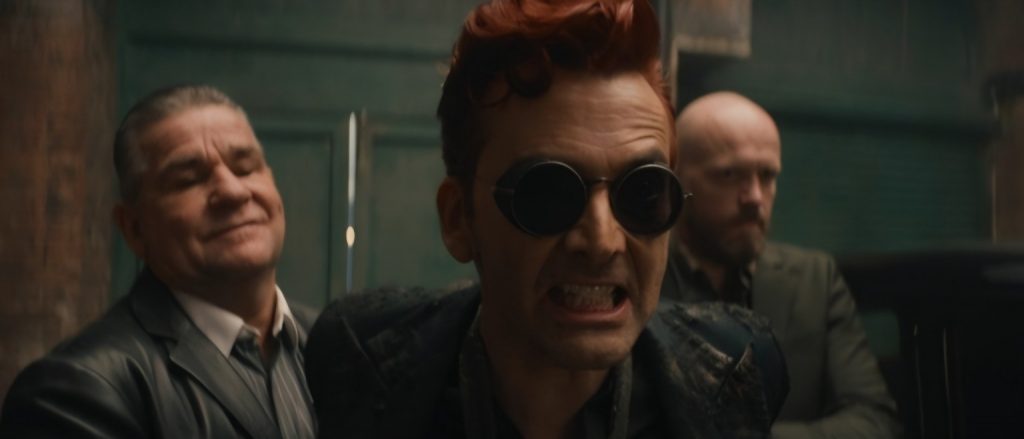
In the present day, things are far messier. Crowley is sleeping rough in an alley on Whickber Street, getting drunk, keeping one bitter eye on the bookshop and doing a fairly terrible job of pretending he is fine. His beloved Bentley is also gone, after a new local kingpin called Brian tricks him during a game and takes the car. Naturally, because this is Good Omens, the situation somehow involves Monopoly, a card trick and a level of petty chaos only Whickber Street could provide.
Meanwhile, in Heaven, Aziraphale has been trying to reshape the Second Coming into something less apocalyptic. Instead of another end-of-the-world event, he has turned it into a peaceful second chance for humanity, beginning with Jesus addressing the United Nations. It is a very Aziraphale solution: deeply sincere, quietly ambitious and absolutely convinced that if he can just make the system kinder from the inside, everything might work out.
Of course, it does not.
Jesus has returned, but he does not seem particularly interested in divine spectacle. What he wants is a familiar face, and that familiar face turns out to be Crowley, who once showed him the world before the crucifixion. When the Metatron is murdered and the Book of Life is stolen, panic breaks out in Heaven. Jesus slips away to Earth, Muriel is placed on the Book of Life investigation, and Aziraphale is sent to find the missing Messiah before everything unravels completely.
On Earth, Jesus eventually finds his way back to Crowley, though not in the grand celestial fashion anyone might have expected. Someone offers him food, he is touched by the kindness, and then he is led to the demon currently spiralling in an alley. Crowley, drunk and wounded in every possible sense, starts rambling about Find The Lady. Jesus takes this as something meaningful and sets off to find “the lady”, because apparently even divine beings are not immune to misinterpreting Crowley at his most sarcastic.
Aziraphale, realising he needs help, finally returns to Whickber Street. Muriel has already let slip that Crowley is not doing well, which rattles him more than he wants to admit. When he arrives, he is shocked by how much the street has changed. Mrs Sandwich, one of the few familiar faces still there, does not exactly let him off lightly either, calling him out for leaving both the street and Crowley behind.
The reunion between Aziraphale and Crowley is not instantly easy, which is exactly why it works. Aziraphale tries to be playful, as if they can step back into their old rhythm without touching the wound between them. Crowley does not let him. He is hurt, angry and passive-aggressive in that very Crowley way where every line sounds like a joke until it very much does not. Aziraphale apologises, but Crowley is not ready to accept it, so they do the next most familiar thing available to them: they team up to stop reality collapsing.
First, though, there is the urgent matter of the Bentley. After a flashback reveals that Brian threatened the bookshop to get Crowley to gamble away the car, Aziraphale steps in and challenges Brian to a competitive crossword. Obviously, he wins. Obviously, this is ridiculous. Obviously, it is exactly the kind of nonsense Good Omens does better than almost anyone.
The mystery around Heaven deepens when Sandalphon claims to have information, only to be murdered before he can reveal it. Uriel begins to look suspicious, Michael is behaving badly even by archangel standards, and Muriel slowly starts to realise she has been given the investigation because someone assumed she would be too naïve to uncover anything. Unfortunately for Michael, underestimating Muriel is a very silly thing to do.
Aziraphale and Muriel pretend to be high-ranking demons and question Dagon, learning that Hell somehow knew about both the missing Book of Life and the murdered archangels. The trail begins to point back to Michael, who has been orchestrating things from inside Heaven.
Aziraphale and Crowley’s own conversation circles back to the same idea. Aziraphale tries to explain why he accepted the Metatron’s offer. He believed he could make a difference. He believed he could change the system enough to save everyone, including the two of them. Crowley, still wounded by what happened between them, finally starts to see what Aziraphale was trying to do, even if it does not erase the hurt.
After murdering Uriel, Michael reaches the Centre of the Universe and uses the Eternal Flame to burn pages from the Book of Life. Reality begins to unravel. Aziraphale and Crowley race to stop her, crossing paths with Jesus and Harry as Jesus finally finds his purpose in comforting the people around him.
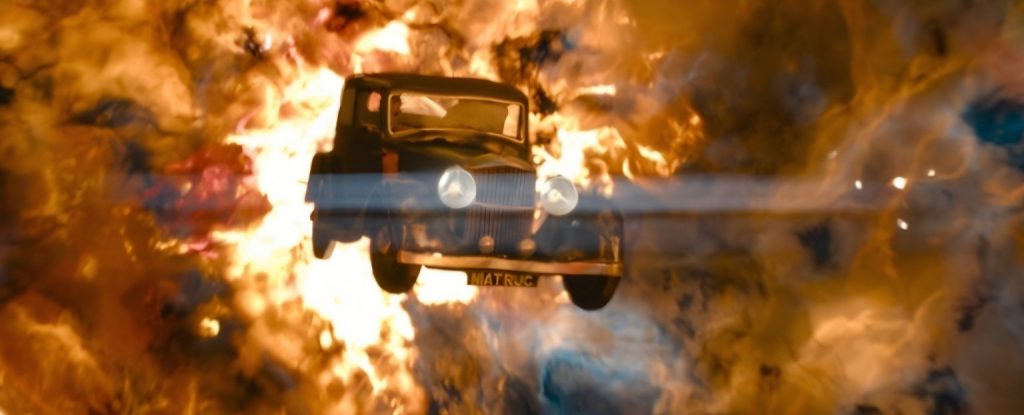
With the help of the Bentley, because naturally the Bentley gets a heroic moment, Aziraphale and Crowley reach Michael. By this point, the Book has driven her into a kind of cosmic breakdown. She rages about being unappreciated and insists she only wanted to fix things, before destroying the whole thing. Crowley manages to save the bookshop’s page and clings to Aziraphale as everything else disappears.
For a moment, the only things left are Aziraphale, Crowley and the bookshop.
It is here that the emotional heart of the finale properly lands. Aziraphale asks for Crowley’s forgiveness, and Crowley gives it. Not with a grand speech, not with melodrama, but with the exhausted honesty of someone who has been hurt and loves him anyway.
Then Satan appears, and Crowley has absolutely had enough. Nothing makes sense, the rules keep shifting, and the whole grand design is beginning to look less like a plan and more like a story being dragged towards an ending. Aziraphale and Crowley manage to draw God out, demanding answers, and what they get is deeply unsettling. God has been treating the universe as a story, one that needs shape, conflict and a satisfying final confrontation. Even Satan’s survival is part of that narrative tidiness.
Worse still, they realise their own relationship has not been entirely free from divine interference. Their romance, their connection, even the long road that brought them together, has been nudged along because it pleased God. Aziraphale still tells Crowley he loves him, and that he was the best angel, but the revelation cuts right to the centre of what the series has always asked: can love mean anything if it was written for you?
Crowley is given the chance to write the ending himself. His choice is simple, radical and very Crowley. He wants a real universe. One with free will. One where humans actually get a chance. No angels, no demons, no God, no Satan, no Great Plan and no one meddling from above or below. Aziraphale agrees, and the two of them hold hands as everything disappears.
But Good Omens does give them an ending.
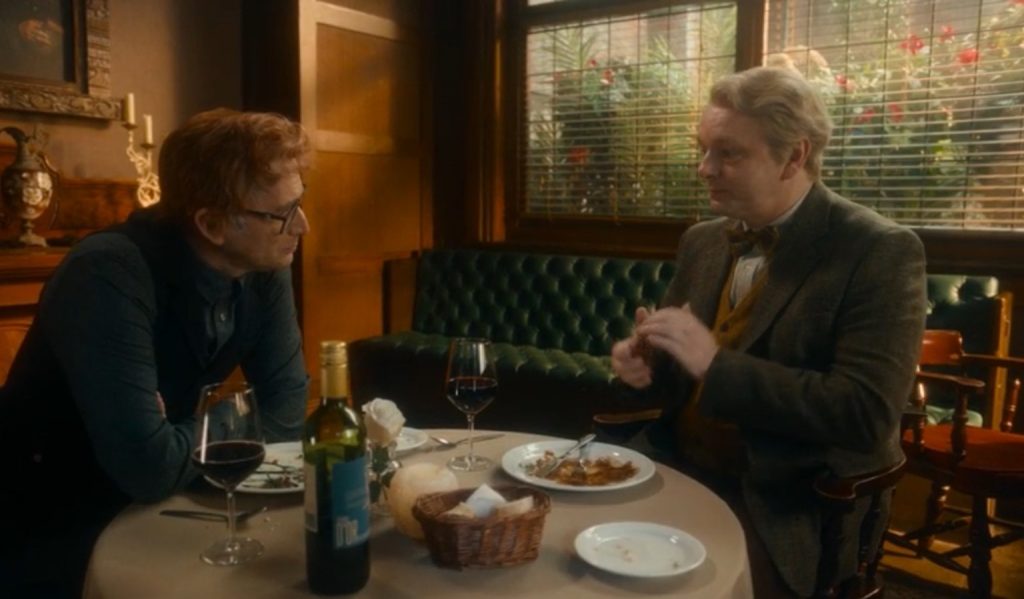
In the new universe, every supernatural being has been made human. Aziraphale is now Asa Fell, running the bookshop with Derek, formerly the Metatron. Crowley is Professor Anthony Crowley, who walks in one day looking for a book on astrophysics. They meet again, not as angel and demon, not as pieces on a cosmic chessboard, but as people. They flirt. They go on a date. Around them, familiar faces appear in ordinary human lives, from Michael and Dagon behind the bar to Muriel, Eric, Uriel and Jesus nearby. There is also a lovely tribute to Terry Pratchett, with a painting of the Good Omens co-author appearing on the wall.
Twenty years later, Asa and Crowley are married. They are stargazing when they hear a nightingale, finally giving long-time fans the symbol they have been waiting for. After all the almosts, arguments, endings and rewrites, they get a love that belongs to them.
Spoiler Thoughts: Does The Finale Work?
As a final chapter, the Good Omens finale gives fans a lot of what they came for. There is Aziraphale and Crowley forced back into partnership, Heaven making a complete mess of things, Hell being useless in its own special way, the Bentley treated with the seriousness usually reserved for sacred relics, and enough absurdity to stop the emotional beats from becoming too heavy.
The mystery around the Book of Life gives the episode a clear engine, while the Jesus storyline brings a gentler strand about purpose, kindness and choice. It is strange, yes, but Good Omens has always been at its best when it takes the biggest theological ideas imaginable and runs them through something daft but human.
The strongest material, unsurprisingly, belongs to Aziraphale and Crowley. Their “breakup phase” gives the finale a different charge. Crowley is not just sniping for the fun of it, and Aziraphale cannot simply smile his way through the damage. Their scenes carry the weight of what happened between them, which makes the eventual forgiveness feel earned rather than easy.
That said, you can feel the squeeze. A story that was once expected to unfold across a full season has been packed into one feature-length finale, and the pacing does suffer in places. Some ideas arrive quickly, some characters get less room than they deserve, and there are moments where you can almost see the larger version of the season hiding behind the edit.
Even so, it is hard not to feel relieved that Good Omens gets an ending at all. More importantly, Aziraphale and Crowley get one too. Not as angel and demon, not as pawns in anyone’s divine plan, but as two people meeting again by choice and building a life that finally belongs to them.
That final garden scene quietly says everything. They are stargazing together, slipping into one last bit of familiar bickering when Crowley points out that it is technically not a shooting star. Aziraphale, naturally, decides he is calling it one anyway because he wants to make a wish. Then comes the line that does the real damage, as Aziraphale asks, “Do you ever wonder if there’s anything more than this?” Crowley’s answer is simple and devastating: he has the universe out there, and he has Aziraphale. Taking his hand, wedding band visible, he tells him, “I have everything I’ve ever wanted.”
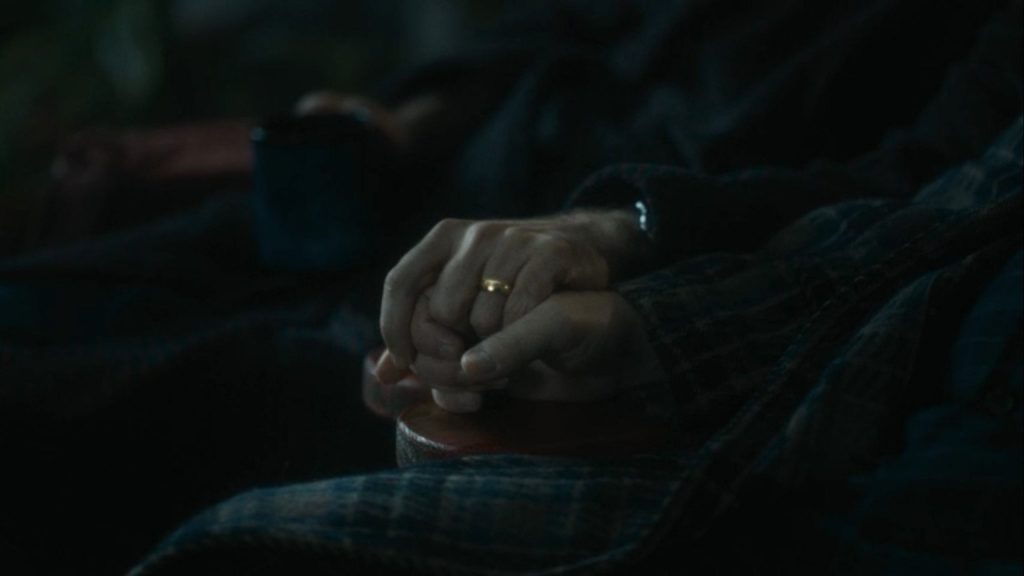
And yes, there is a nightingale, a pointed little nod to one of the show’s most painful romantic callbacks. Because after “no nightingales,” there really had to be one.
Good Omens season 3 is streaming now on Prime Video.

Nikki Murray is a UK-based writer, screenwriter and founder & editor of CultureCues, covering film, television, music and pop culture. Her work focuses on storytelling and the moments shaping modern entertainment.