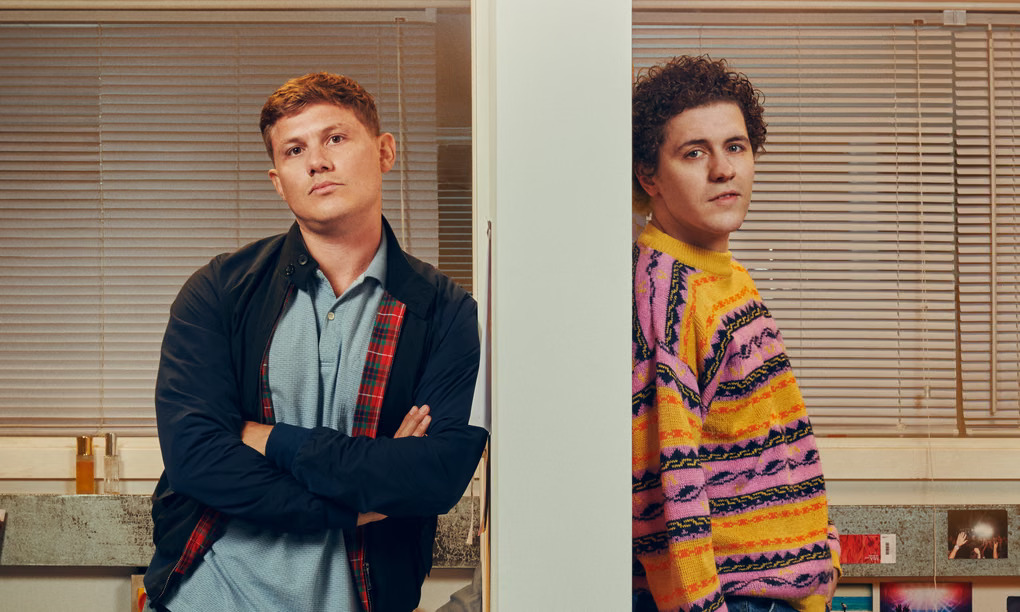
Big Boys has always had a rare gift for making you laugh at the stupidest, most specific things, then quietly taking your heart apart before you have even had time to recover. Across its first two series, Jack Rooke’s semi-fictionalised account of university life became one of British television’s most tender comedies, balancing jokes about gay sex, Tesco meal deals and the horrors of student performance poetry with a story about grief, friendship, masculinity and the strange emotional chaos of growing up.
Now, with its third and final series, Big Boys returns to Brent University for one last stretch, and it does so with all the warmth, silliness and emotional honesty that made the show so beloved in the first place. It is funny, obviously. Sometimes very funny. But it is also more reflective and bittersweet this time around, carrying the weight of everything the show has been gently moving towards since the beginning. This is not just a sitcom saying goodbye. It is a show asking how we remember the people who changed us, how we carry the ones we lost, and how friendship can be both the funniest and most life-saving thing in the world.
Final year, big feelings and a lot of 2015 nostalgia
Series three takes us back to the summer of 2015. Jack, played with dozy sweetness by Dylan Llewellyn, is now in his final year at university and still facing one rather pressing personal question: how does he have a contactless debit card and still not have much experience in the bedroom department?
That combination of coming-of-age anxiety and very British absurdity is where Big Boys remains strongest. Jack is working on his dissertation, which naturally finds a way to turn his personal gay panic into academic enquiry, while Danny, played by Jon Pointing, seems happier than ever and loved-up with Corinne, played by Izuka Hoyle. Yemi, brought to life with brilliant comic timing by Olisa Odele, is still one of the show’s most reliable sources of chaos, while Jack’s family remain a glorious storm of love, noise and oversharing.
The opening episodes have fun with the everyday weirdness of student life and mid-2010s Britain, from the cultural importance of The X Factor to the kind of reality TV references that already feel weirdly historic. That is one of Rooke’s greatest strengths as a writer: he understands that life is often made up of tiny, ridiculous details, from bingo to meal deals, bad shapewear, family holidays, cheap drinks and dissertation panic. Big Boys never looks down on those details. It treats them as part of the emotional texture of life, which is exactly why the show feels nostalgic without ever becoming too polished or sentimental.
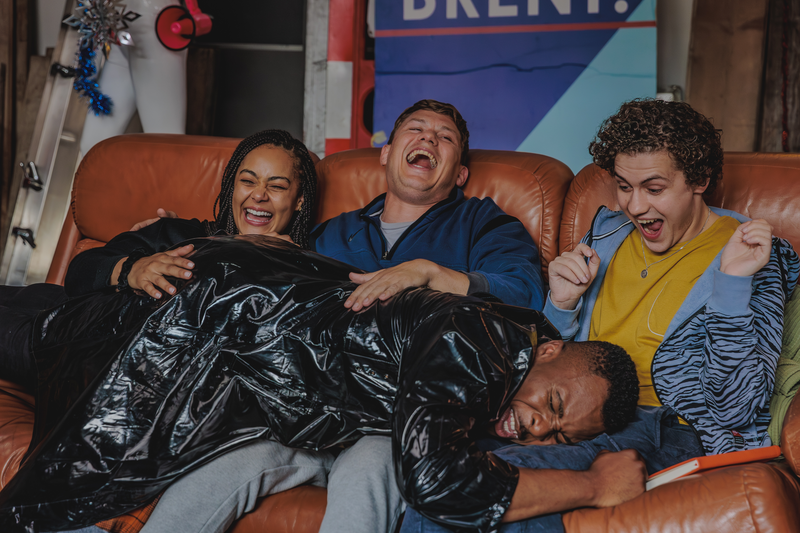
Still hilarious, but never just a comedy
There are moments in series three that lean into familiar sitcom territory, from awkward holiday mishaps to Jack entering a mortifying spoken-word poetry era, complete with exactly the level of pretension you would fear. But even when the storylines feel broad, the show gets away with it because the world is so affectionate and the performances are so strong. Also, some clichés are clichés because people really do embarrass themselves on holiday, wear regrettable outfits and become unbearable when they discover poetry.
Harriet Webb remains an absolute scene-stealer as Shannon, who has become one of the show’s great comic weapons. She has the kind of chaotic energy that makes every reference, complaint and overshare feel like it has come directly from a real cousin at a family gathering who has had two wines and no filter. Camille Coduri brings so much warmth and comic bite as Peggy, while Annette Badland continues to make Jack’s Nan feel like one of the series’ secret emotional anchors.
What makes this final run especially lovely is the wider ensemble. Although Jack and Danny remain the heart of the show, series three feels more generous with Corinne, Yemi, Shannon and the rest of Jack’s family. Everyone is moving towards an ending of some sort, and Rooke seems determined to honour the whole world he has built, not just the central friendship. Still, underneath all the laughs, there is dread. Not in a manipulative way, but because anyone who has watched Big Boys from the start knows the show has always been told from a place of memory. Older Jack’s narration is not just a cute device. It has always carried the ache of someone looking back, trying to make sense of a time, a friendship and a loss that still matters.
Jack, Danny and the pain underneath the punchlines
From the beginning, Big Boys has existed in the shadow of grief. Jack’s father, Laurie, died when he was younger, and that loss has shaped so much of his university experience, even when the show is busy making jokes about club nights, crushes and awkward sex. The final episode of series two brought that grief to the surface in devastating fashion, cutting between Shannon giving birth and flashbacks to Laurie’s final days, capturing exactly what the show does best: finding the sacred and the stupid in the same breath.
Series three has the difficult job of following that up, but wisely avoids repeating the same emotional shape, turning its attention more fully towards Danny and the mental health struggles that have always sat quietly beneath the surface. Pointing is extraordinary here, giving a performance that shows how depression can look from the outside and how impossible it can feel from within. He never overplays it. He does not turn Danny into a lesson or a symbol. He lets him remain funny, charming, messy and loved, while also showing the parts of him that even the people closest to him cannot always reach.
That is what makes Big Boys so valuable. It does not treat pain and humour as opposites. It understands that people make jokes in hospital corridors, quote reality TV while falling apart, and laugh at the worst possible times because sometimes laughing is the only way to keep going. The show’s emotional power comes from that honesty. It never asks its characters to become polished versions of grief. It lets them be human.
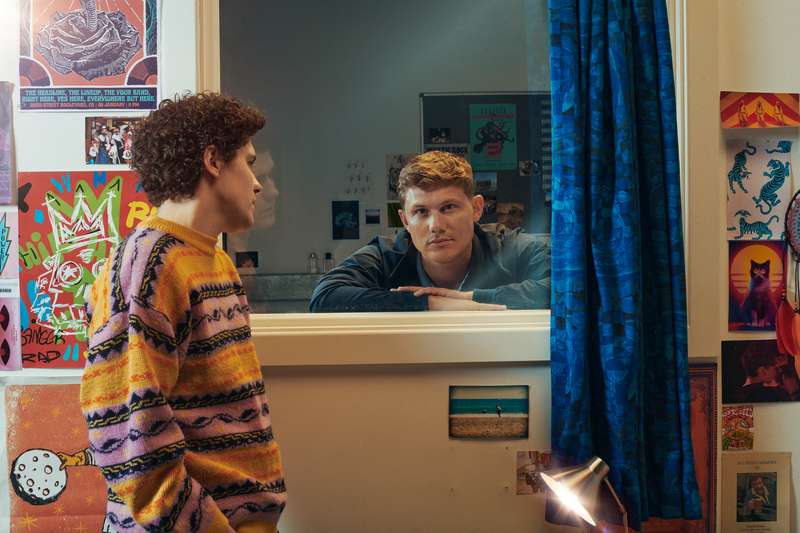
A bold final episode
Without spoiling where the finale goes, it is fair to say that Big Boys takes a risk. After series two ended on such a beautifully painful note, it would have been easy for the show to play things safe, giving viewers a tidy goodbye with a few tears and a final group hug. Instead, Rooke pushes further into the show’s self-aware framing, using the gap between memory, fiction and real life to make the ending feel even more personal.
The split between the fictional Jack on screen and Rooke’s voiceover as an older, reflective version of himself has never been a gimmick. In this final series, that device becomes even more important, creating a sense of conversation between past and present, fiction and real memory, comedy and mourning. The result is a finale that feels both surprising and completely true to the show’s spirit. It is the sort of ending that will have fans wanting to talk about it immediately, partly because it answers the questions the series has been quietly carrying, and partly because it refuses to flatten complicated emotions into something neat. Big Boys knows that growing up does not always give you closure in the way television likes to imagine. Sometimes what you get is understanding. Sometimes what you get is the chance to look back with love.
CultureCues Final thoughts
Big Boys series three may be its most bittersweet chapter. It remains one of the best British comedies of recent years because it understands that friendship can be as life-changing as romance, that grief can shape you in many ways, and that the most ordinary parts of life are often the ones you remember most.
What makes it so moving is that the show never abandons its own humour to earn seriousness. Even in its most emotional moments, Big Boys remains recognisably itself: funny, specific, slightly ridiculous and full of love. That balance is incredibly hard to get right, and Rooke manages it with a level of care that makes the final goodbye feel less like an ending and more like a thank you. It is rare for a sitcom to feel this personal without becoming self-indulgent, and rare for a show about youth to look back with this much clarity and compassion. Big Boys has always been about Jack and Danny, but it has also been about anyone who has loved a friend so much that they became part of who you are.
Brilliantly funny, tender and heart-wrenching in all the right ways, Big Boys leaves as a phenomenal piece of British television, and easily one of the best British comedies of the decade, full of humour, heart and emotional truth. And honestly, what are we meant to do without Jack, Danny and the gang now?
Big Boys series three is available on Channel 4 in the UK.

Nikki Murray is a UK-based writer, screenwriter and founder & editor of CultureCues, covering film, television, music and pop culture. Her work focuses on storytelling and the moments shaping modern entertainment.