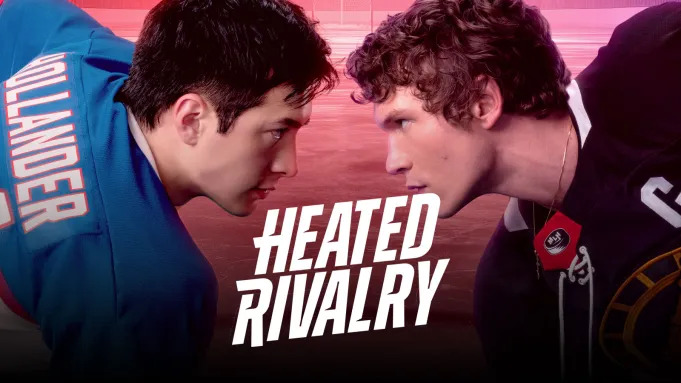
There is something almost delightfully improbable about Heated Rivalry becoming one of the most passionately adored shows around right now. On paper, it sounds niche in a way that should have kept it firmly in cult territory: a Canadian adaptation of Rachel Reid’s queer hockey romance novels, made for Crave, centred on two closeted ice hockey stars sneaking around, falling for each other, and trying not to implode under the pressure of a sport that still does not leave much room for softness. And yet here it is, growing into a genuine word-of-mouth phenomenon, drawing in viewers far beyond its expected audience and proving that television does not have to be loud, cynical or backed by a massive budget to hit hard.
What starts as a hook-up story between rivals quickly reveals itself to be something richer, sadder, sexier and much more carefully made than the premise alone might suggest. Yes, the show is steamy. Yes, the chemistry is ridiculous. Yes, it absolutely knows the appeal of putting two beautiful men in close proximity and letting the tension do the rest. But Heated Rivalry also has real emotional depth, proper character work, and an unusual amount of patience for a six-episode season. It trusts that audiences will stay with the quieter beats, the small looks, the hesitations, the silences, and that trust pays off.
A love story that goes deeper than the premise
Starring Hudson Williams as Shane Hollander and Connor Storrie as Ilya Rozanov, the series follows the pair across several years as a secret relationship begins in lust, deepens into something far more complicated, and keeps colliding with the demands of professional hockey and the culture around it. Their public personas are all rivalry, swagger and competition, while in private they are building something intimate, unstable and increasingly impossible to contain.
The beauty of Heated Rivalry is that it never treats that tension as a gimmick. It understands the fantasy of the set-up, but it also understands the cost of it. Shane and Ilya are not just archetypes filling positions in a romance. They are specific, wounded, funny, frustrating people, both trying to work out what they can admit to each other and what they still cannot say out loud, even to themselves. That specificity is what makes the show so addictive. You may arrive for the secrecy, the angst and the sex, but you stay because the relationship feels lived in, layered and real.
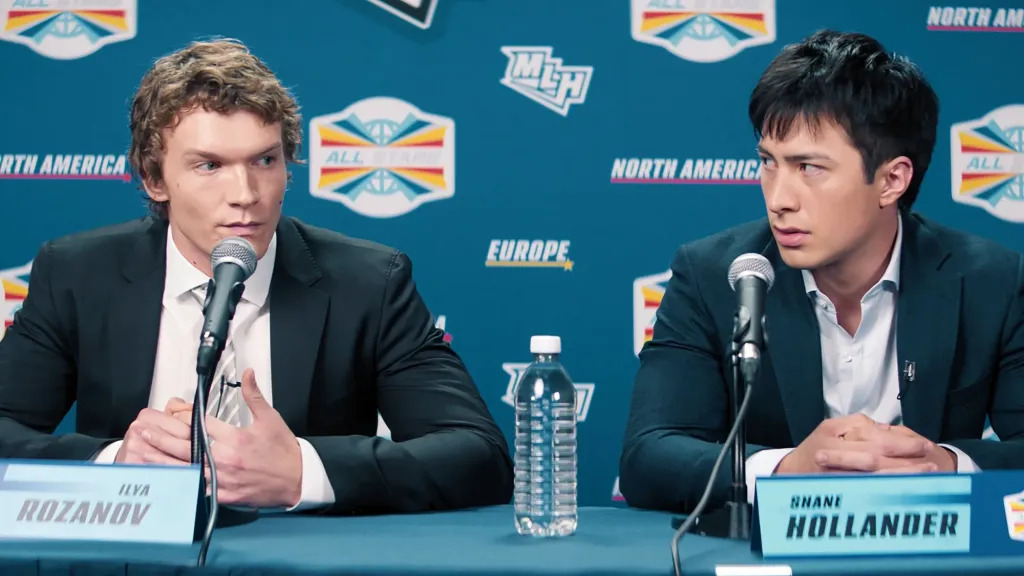
Hudson Williams and Connor Storrie are phenomenal
A huge part of why the show works this well comes down to its two leads, who are doing far more than simply looking good on screen together, though to be fair they do that too. Williams gives Shane a beautifully restrained presence, one that could easily have been flattened into coldness in less careful hands. Instead, his performance is full of detail. The avoidance of eye contact, the flatness in certain social exchanges, the fixations, the discomfort with emotional expression, all of it builds a character who feels thoughtful and distinct rather than explained to death. There is something especially impressive about how much Williams communicates through the tiniest shifts in expression. A jaw clench or a slight mouth twitch tells you more than a long speech ever could.
The show hints at Shane’s neurodivergence without turning it into a giant signpost, and that lightness of touch is part of what makes the performance land so strongly. At the same time, Shane’s identity as a mixed-race Canadian player with Japanese and European heritage adds another layer to the character, particularly in the sense of pressure he carries within a very white sporting world. The series touches on the representational weight placed on him and how much he is expected to embody progress simply by existing in that space, and that helps stop Shane from reading as just another perfectionist athlete pushing himself too hard.
That said, this is one area where the show feels slightly less probing than it could be. There is room for a more searching exploration of how Shane’s cultural identity and sexual identity intersect, especially in an environment as traditionally masculine and exclusionary as elite hockey. Heated Rivalry gestures towards that dynamic, but never really sits in it for long. Perhaps that is a deliberate choice, perhaps even a relief, but it does leave the sense that there is another layer still waiting to be properly explored.
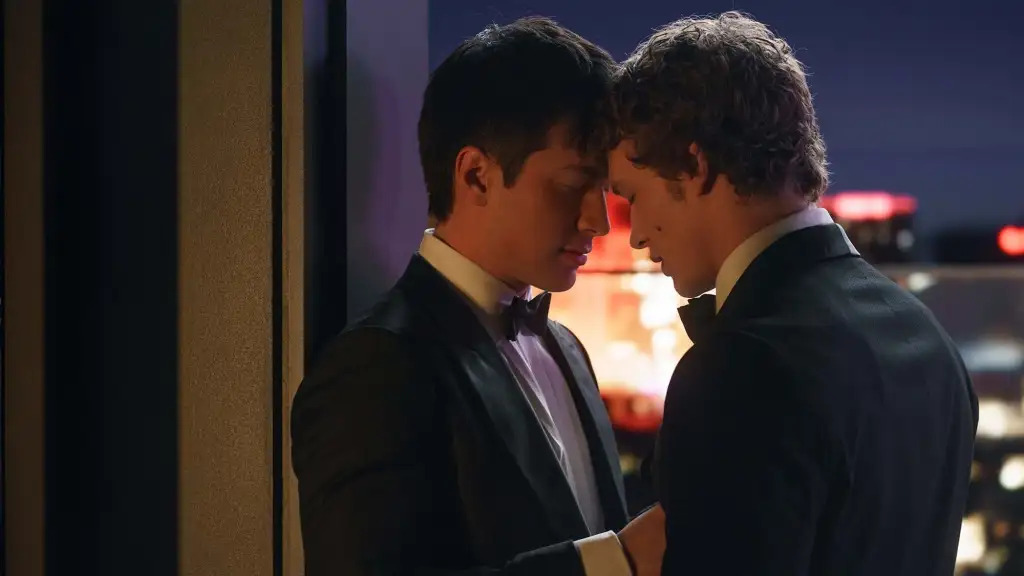
Storrie, meanwhile, is doing astonishing work as Ilya. It would have been easy to let the character become all swagger and sex appeal, especially since the show is very aware of how charismatic he is, but Storrie keeps adding depth to every scene. His Ilya is seductive, arrogant, wounded, funny, deeply repressed and often far sadder than he first appears. There is a looseness and confidence to him in some moments, then a completely different stillness in others, especially when family, trauma or fear begin to creep in. It is a performance full of movement, not just physically but emotionally.
His command of the Russian dialogue is hugely impressive, and there are scenes where the language itself becomes part of the emotional architecture of the character. One phone monologue in particular is devastating, not because the show overplays it, but because Storrie lets the weight of it build naturally. He also has this tiny eye movement, a sort of bounce when Ilya is processing something difficult or trying to respond, and once you notice it, it becomes one of the most fascinating details in the whole performance. Alongside Williams, he turns Heated Rivalry into a genuine actor’s showcase.
It is sexy, but that is not all it is
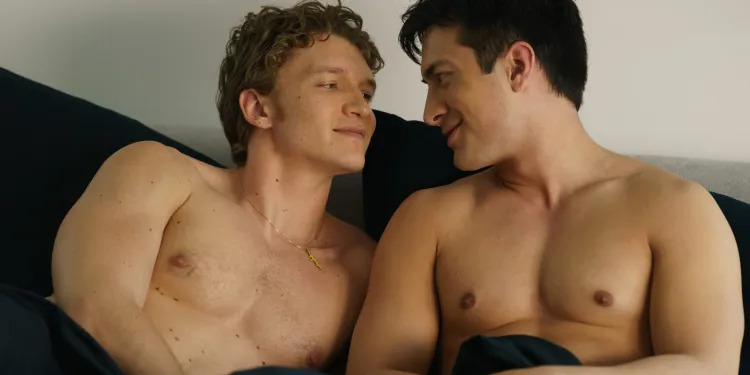
There has been a lot of conversation around the show’s love scenes, and understandably so, because they are some of the best-shot and best-handled intimate scenes on television in recent memory. They are hot without feeling cheap, explicit without feeling exploitative, and there is a level of care to them that many much bigger productions still somehow fail to manage. They reveal character, they shift power, they deepen emotional stakes. They are not just there to make the trailer more exciting.
What also makes them stand out is the way consent is built into the storytelling. The dynamic between Shane and Ilya may lean into dominance and submission, but it is always framed through mutual trust, checking in, and enthusiastic consent. That matters, and it is one of the reasons the show has connected so strongly with women and queer audiences. Heated Rivalry understands that intimacy can be erotic and safe at the same time, and that treating those things as opposites is lazy writing.
It also deserves saying that intimacy coordinators matter, and Heated Rivalry is one of the clearest recent examples of why. The care around these scenes is visible on screen. Nothing feels careless, and nothing feels thrown in simply for shock value. That attention has helped the series build a romance that feels genuinely grown-up rather than merely provocative.
Smart direction, rich visuals, and a real sense of craft
Jacob Tierney deserves enormous credit here, because Heated Rivalry does not feel tossed together to chase a trend. It feels considered. It feels tender. It feels like a show made by people who understand both the romance genre and the grammar of television, which should not be rare, but sometimes is. The writing gives the story room to breathe, and the direction understands when to let the audience sit with a look, a pause or an unresolved feeling rather than rushing ahead.
Jackson Parrell’s cinematography is another huge asset. The series is beautifully shot in a way that never screams for attention but constantly enriches what is on screen. There is an elegance to the visual storytelling that makes the whole thing feel more cinematic than a lot of streaming television with three times the budget. The soundtrack helps too, weaving in Canadian artists and giving the series a strong sonic identity of its own.
Part of the reason the show rewards rewatching is that it is doing so much visually and emotionally at once. This is not background television. It asks you to pay attention, and it rewards that attention generously. There are details in performances, camera choices, music cues and recurring emotional patterns that make the whole thing feel unusually complete for such a short season.
CultureCues Standout Moment
The club scene at the end of episode four is the moment Heated Rivalry fully tips over from great to unforgettable. Shane and Ilya are both there with other people, both trying to go through the motions, both pretending they can keep a lid on what is very obviously still burning underneath, and the whole sequence turns that emotional misery into something almost hypnotic. Bathed in pinks, blues and purples, the scene traps them in the same space while making it painfully clear that the only people they can really see are each other.
And then there is the music. The use of t.A.T.u.’s “All the Things She Said” is inspired in exactly the right overdramatic, emotionally devastating way, the kind of needle drop that probably had every millennial and queer viewer nearly falling off the couch. It is not there as a wink or a gimmick either. It works because it taps straight into the ache of the scene, before morphing into the Harrison dance cover and pushing the whole thing into an even more heightened, anxious place.
What makes the sequence land so hard is how little anyone says. The eye contact does the work, the music does the work, and the miserable performance of desire with other partners only makes their connection feel stronger and sadder. As the episode moves away from the club, that same emotional desolation bleeds into the scenes that follow, turning lust into something colder, heavier and much more painful. It is stylish, loaded, and so sharply done that it instantly becomes one of the show’s defining moments.
Final thoughts
What Heated Rivalry really proves is that romance on television does not need to be treated as lesser, and queer romance especially does not need to come wrapped in tragedy to be taken seriously. The show is sexy, yes, but it is also tender, emotionally intelligent, sharply performed and made with an unusual amount of care. It understands the pull of fantasy, while also grounding that fantasy in character and consequence.
There are places where it could dig even deeper, particularly around Shane’s racial identity and how that shapes his place in the sport and the world around him, but even with that reservation, this is still one of the most compelling and beautifully made new shows I have seen in a while. It is heartfelt without becoming saccharine, explicit without becoming gratuitous, and romantic without losing sight of the real pressure surrounding these characters.
You hear about Heated Rivalry at first and assume it is just a horny little secret-hook-up drama about hockey players. And to be fair, it absolutely is that. But it is also far more than that, which is exactly why people have fallen so hard for it. Tender, layered, sharply directed and led by two excellent performances, Heated Rivalry is not just worth the hype. It is the rare show that makes the hype feel too small.
The first season of Heated Rivalry premiered on 28 November 2025 on Crave in Canada and HBO Max in the US, before arriving in the UK on Sky Atlantic on 10 January 2026.

Nikki Murray is a UK-based writer, screenwriter and founder & editor of CultureCues, covering film, television, music and pop culture. Her work focuses on storytelling and the moments shaping modern entertainment.