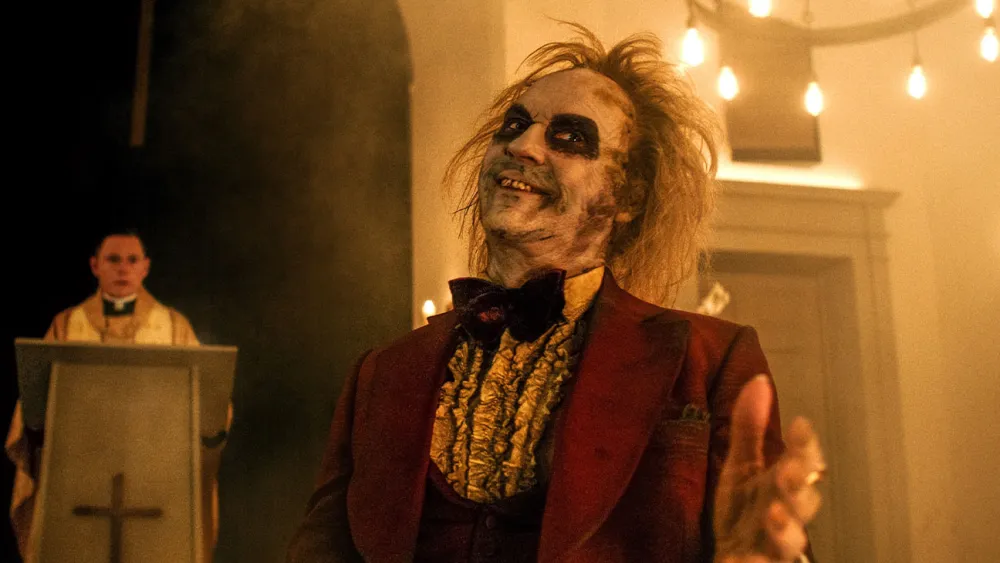
Bringing a film like Beetlejuice back after decades is always going to be a risk, but if anyone was going to do it, it was Tim Burton. Beetlejuice Beetlejuice doesn’t try to reinvent the original so much as lean into what made it work in the first place, embracing its oddness, its rough edges, and its very specific sense of humour. Crucially, Michael Keaton returns to the title role, still as manic and unpredictable as ever, darting through scenes with that same chaotic energy that made the character iconic.
A Story That Picks Up the Pieces
Set loosely in the present day, the film finds Lydia Deetz (Winona Ryder) all grown up, though not necessarily more at ease with the world. Now a TV personality hosting a paranormal series, she feels worn down in a way that contrasts with the sharp, rebellious teen she once was. That edge hasn’t disappeared entirely, but it’s been passed on to her daughter Astrid (Jenna Ortega), who carries that same scepticism and attitude into a very different world. A family tragedy pulls them back to the house where it all began, opening the door, quite literally, for Beetlejuice to re-enter their lives. From there, the film weaves together old threads and new ideas, some of which land better than others, but all of which feel in keeping with Burton’s offbeat tone.
The Burton Touch, Still Intact
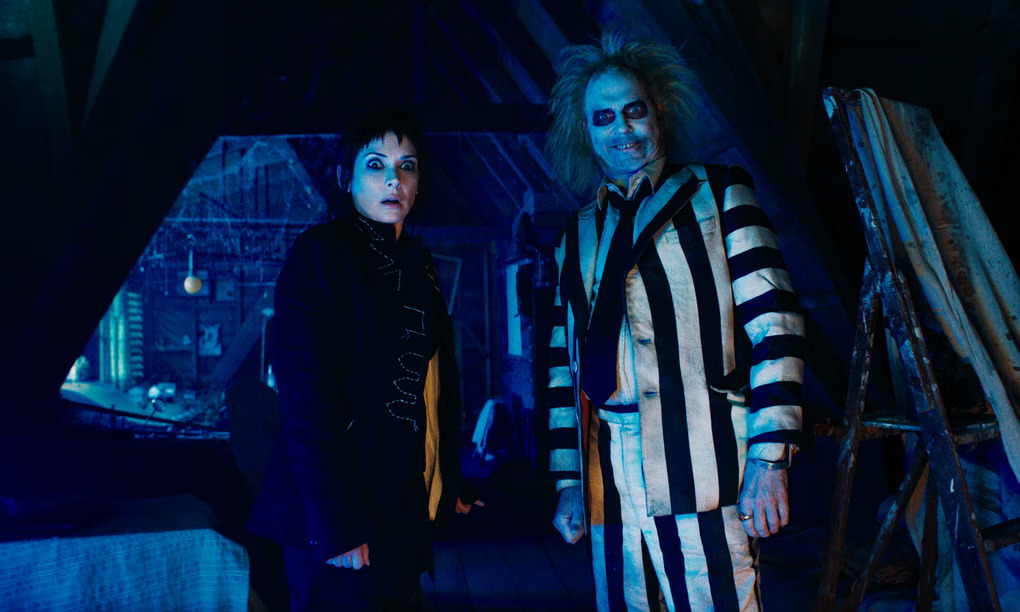
Visually, the film is unmistakably Burton, with every frame filled with exaggerated textures, gothic detail, and that slightly handmade quality that keeps things from feeling too polished. There’s a sense that the film is actively resisting modern slickness, instead embracing practical effects, stylised sets, and even a knowingly scrappy claymation sequence that solves a casting absence in a way that is inventive and unmistakably on-brand.
Danny Elfman’s score returns as well, as lively and off-kilter as ever, weaving through the film with that instantly recognisable gothic playfulness and giving everything a familiar rhythm, even when the story itself starts to wander a little.
New Faces, Same Strange World
Alongside the returning cast, there are some welcome additions and returning favourites who still bring plenty to the table. Catherine O’Hara is back as Delia, and she’s just as brilliantly unhinged as ever, leaning fully into the character’s theatrical, self-absorbed chaos that still feels genuinely funny. Willem Dafoe clearly understands the assignment, playing a dead actor turned afterlife detective with a level of commitment that fits perfectly within the film’s heightened reality. Monica Bellucci adds a strange, slightly chaotic subplot as Beetlejuice’s ex-wife, which feels less essential but still contributes to the film’s overall sense of playful excess. Not every element works equally well, and at times the film leans a little too heavily on ideas that feel familiar rather than fresh, but there’s enough personality here to keep it engaging.
Chaos, Comedy, and Just Enough Nostalgia
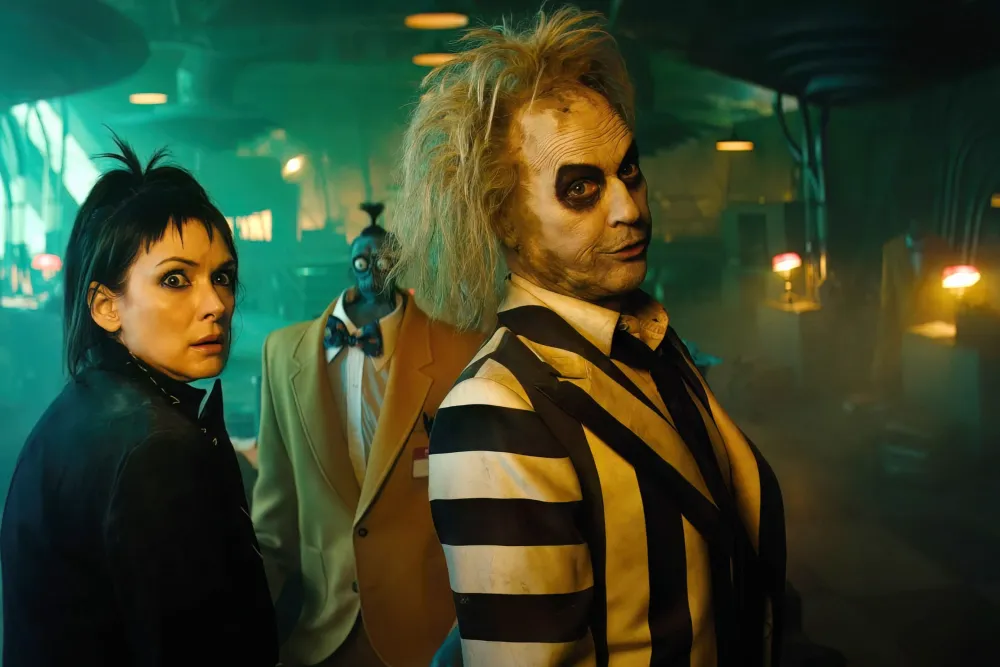
The humour comes thick and fast, and like the original, it’s very much a case of quantity as much as precision. Not every joke lands, but there’s always another one just around the corner, whether it’s visual gags playing out in the background or moments of complete surreal absurdity that feel like they’ve wandered in from a different film entirely. A musical sequence set to “MacArthur Park” stands out as one of the film’s more inspired choices, leaning fully into the ridiculousness in a way that feels true to the spirit of the original, even if it never quite reaches the same lightning-in-a-bottle magic.
CultureCues Final Thoughts
Beetlejuice Beetlejuice was never going to recapture exactly what made the original such a phenomenon, and it doesn’t really try to. Instead, it offers something looser, stranger, and a little uneven, but still undeniably fun, especially when it leans into its more chaotic instincts. It’s a film that knows its audience, knows its tone, and is happy to exist as a playful extension of a world people already love.
Beetlejuice Beetlejuice was released in UK cinemas on Friday, 6 September 2024.

Nikki Murray is a UK-based writer, screenwriter and founder & editor of CultureCues, covering film, television, music and pop culture. Her work focuses on storytelling and the moments shaping modern entertainment.