
After years working within franchise worlds, Ryan Coogler returns to original storytelling with Sinners, and you can feel that freedom in every frame. This is a film bursting with ideas, confidence, and a clear sense of voice, blending period drama, horror, and musical storytelling into something that feels both ambitious and deeply personal. Set in 1930s Mississippi during the height of Jim Crow and Prohibition, it opens with a striking image of a bloodied young guitarist fleeing to a church, already setting the tone for a story that will wrestle with faith, identity, and the cost of expression.
From there, the film rewinds to a day earlier, introducing Samuel (Miles Caton), a gifted young musician caught between the strict expectations of his preacher father and the pull of a more chaotic, vibrant world, as he reconnects with his cousins, the Smokestack Twins, both played with effortless charisma by Michael B. Jordan. Smoke and Stack arrive with ambition and danger in equal measure, opening a juke joint that quickly becomes the heart of the film, a space built for music, connection, and fleeting freedom.
A Story That Breathes Before It Bites
What’s striking is how long Sinners resists becoming what you expect, choosing instead to spend time in its world and its characters before anything more overtly dramatic takes hold. For much of its first half, it plays as a richly detailed period piece, taking time to explore its community, its relationships, and the quiet tensions simmering beneath the surface, with Coogler allowing scenes to unfold at a natural pace that makes everything feel lived-in rather than constructed. The juke joint becomes a kind of sanctuary, filled with musicians, drifters, lovers, and outsiders, all drawn together by sound, survival, and the promise of something fleeting but meaningful.
Delroy Lindo’s Delta Slim brings humour that feels effortless and well-placed, never tipping into caricature, Wunmi Mosaku carries a quiet emotional strength that grounds the film’s more intimate moments, and Hailee Steinfeld adds another layer through Mary, whose presence introduces a different kind of tension, shaped by longing, history, and the complicated realities of the world these characters are trying to navigate. Even in its quieter stretches, the film feels alive, shifting between warmth, unease, and a sense that something darker is waiting just out of view.
When the Horror Hits, It Hits Hard
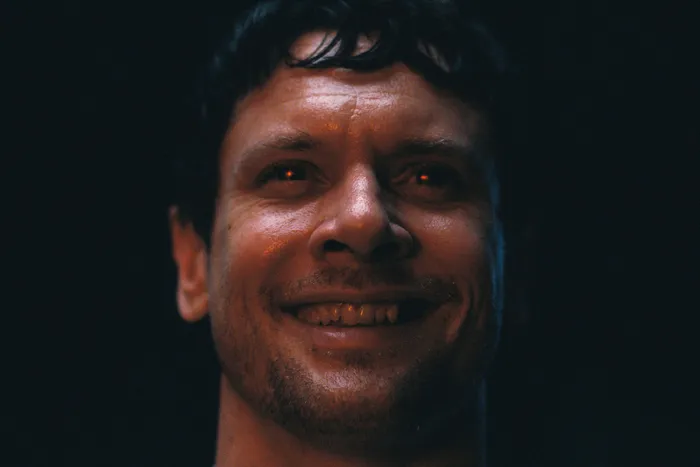
Eventually, the film reveals its other side, and when it does, it goes all in. The arrival of Remmick, played with eerie charm by Jack O’Connell, marks a turning point as the film leans into its vampire horror, but this is never horror for the sake of spectacle alone. The violence is visceral, the tone more chaotic, and the pace quickens, but it all ties back to the themes established earlier. The vampires here are not just monsters, they are symbolic, tapping into ideas around cultural theft, exploitation, and the long history of Black artistry being consumed, reshaped, and stripped from its origins. The metaphor is clear without feeling heavy-handed, with one line cutting straight through it all: white audiences may love the blues, but not the people who create it.
Music as Power, Ritual and Resistance
Music sits at the centre of everything in Sinners, not just as background, but as something almost supernatural. Ludwig Göransson’s score begins with grounded blues before gradually evolving, layering in unexpected textures that mirror the film’s shift in tone, while the performances themselves feel raw, immediate, and full of life. The film suggests that music can heal, connect, and liberate, but also that it carries risk, drawing attention, awakening something deeper, and exposing those who create it to forces beyond their control. It’s a powerful idea, and one that runs through every part of the film, from its quiet character moments to its most explosive sequences.
CultureCues Standout Moment
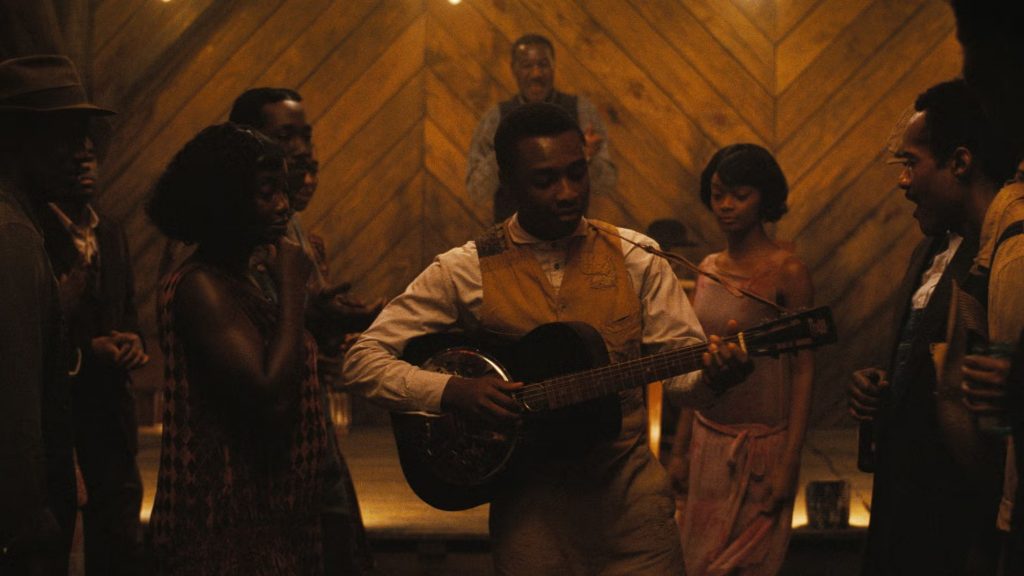
The standout sequence arrives around the midpoint, and it’s nothing short of extraordinary. As Samuel begins to play in the juke joint, the energy in the room shifts, and what starts as a performance becomes something far bigger. The camera moves through the space in a fluid, almost hypnotic motion, as figures from different eras begin to appear, musicians from the past, the present, and even the future, all drawn together by the power of the music. It’s a bold, inventive moment that breaks away from realism entirely, showing how music can connect people across time and experience, and it lands with a kind of emotional clarity that stays with you long after. In a film filled with violence and chaos, this sequence stands out as something almost transcendent, a reminder of why these stories, and these sounds, matter.
Final Thoughts
Sinners does a lot, and occasionally you can feel the weight of everything it’s trying to say, particularly as it stretches into its final act and beyond. But even when it edges towards excess, it never loses its sense of purpose or its energy. This is a film that is alive, messy in places, but thrilling in its ambition and execution. More than anything, it feels like a statement, a filmmaker pushing against expectation and delivering something that is as entertaining as it is thoughtful. It’s bold, it’s stylish, it’s emotional, and yes, it’s absolutely one of the most exciting films of the year.
Sinners isn’t just a genre film, it’s a layered, visually striking, and deeply felt piece of storytelling that proves how powerful a mainstream film can be when it has something real to say. It’s rare to see something this ambitious hit on so many levels, and even rarer for it to feel this alive while doing it.
Sinners arrived in UK cinemas on 18 April 2025.

Nikki Murray is a UK-based writer, screenwriter and founder & editor of CultureCues, covering film, television, music and pop culture. Her work focuses on storytelling and the moments shaping modern entertainment.