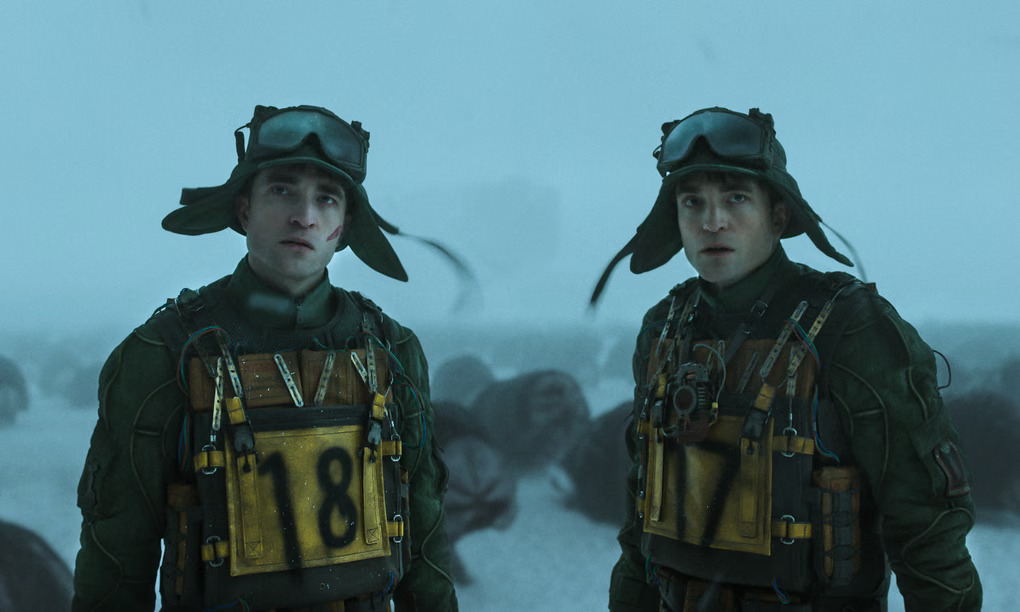
After Parasite, there was always going to be a certain level of expectation hanging over Bong Joon-ho’s next move. Instead of trying to make another sleek awards giant, he has gone in a far weirder direction with Mickey 17, a slippery, messy, visually rich sci-fi satire that feels part existential comedy, part creature feature, part anti-capitalist fever dream.
It is the kind of film that could only really come from Bong. It is playful, angry, thoughtful, and a little all over the place. Sometimes that works brilliantly. Sometimes it leaves the film feeling baggier than it needs to be. But even when it wobbles, Mickey 17 is rarely boring.
Robert Pattinson: A perfectly peculiar performance
Robert Pattinson plays Mickey Barnes, a man so down on his luck he signs up to become an “expendable” on a space mission. In practice, that means he is sent off to do every horrific, life-threatening task nobody else wants to do, dies in the process, then gets printed back out again with his memories largely intact. It is a grim set-up, but Bong finds both absurd comedy and real sadness in it.
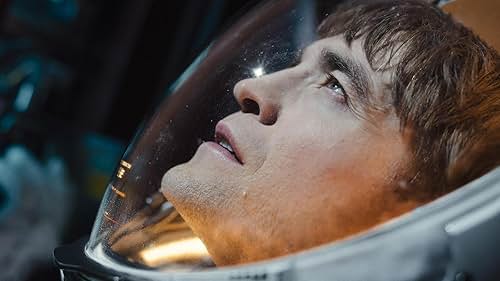
Pattinson is an inspired bit of casting here. Mickey is meek, bruised by life, and so used to being treated as disposable that he barely seems surprised by any of it. Pattinson leans into that pathetic quality without making Mickey irritating. He is funny, strangely sweet, and just offbeat enough to make the whole thing work. Once the film starts playing with different versions of Mickey, Pattinson gets even more room to have fun, and those shifts in performance become one of the film’s best tricks. There is something genuinely affecting about the way he plays a man who has died so many times that even other people start treating that as admin. The horror of the idea never fully disappears, even when Bong is mining it for laughs.
A satire with its teeth out
If Mickey 17 has a main target, it is fairly obvious. Bong is once again poking at systems built on greed, power and the casual dehumanising of ordinary people, only this time he launches those ideas into space. The film’s world is driven by men who talk about the future like it belongs to them, while treating workers, planets and alien life as things to be used up.
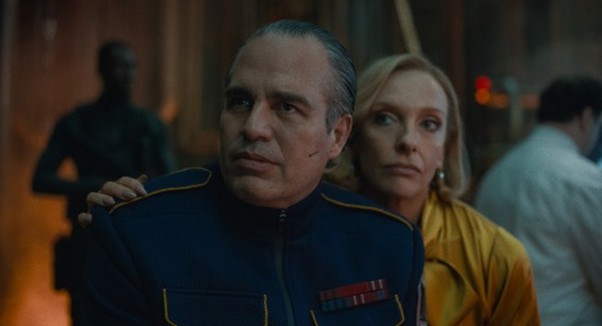
Mark Ruffalo’s Kenneth Marshall is the clearest embodiment of that. He is a failed political strongman with a giant ego, a hunger for control and all the subtlety of a man shouting through a megaphone in a gold bathroom. Ruffalo plays him broadly, almost ridiculously so, and whether that works will probably depend on your tolerance for satire that comes at you with a frying pan rather than a wink. Toni Collette, as his equally unhinged wife Ylfa, is operating in a similarly heightened register. At times, their scenes are very funny. At others, they feel slightly too close to pantomime, as if the film is nudging you a bit too hard in the ribs to make sure you get the point. Bong has never exactly been shy, but Mickey 17 does occasionally mistake volume for sharpness.
Big ideas, strange creatures and a lot going on
The strongest thing about the film is how much it has rattling around inside it. It is about class. It is about labour. It is about colonisation, exploitation and the casual cruelty of systems that decide some lives matter less than others. It is also about identity, self-worth and the unnerving fact that Mickey himself has become so numb to his own suffering.
Then there are the creatures. Bong has always had a gift for turning strange beings into something memorable, and the inhabitants of this frozen alien world are no exception. They are weird, slightly grotesque, and far more emotionally interesting than you might expect. In many ways, the film becomes most alive when it focuses on the question of who gets labelled expendable and who gets to do the labelling. Visually, the whole thing is terrific. The ship interiors have a grimy, lived-in feel, while the planet itself has that uncanny Bong quality where everything looks unreal and believable at the same time. There is a real sense of design and texture here, even when the storytelling starts to sprawl.
Where it loses a bit of momentum
For all its imagination, Mickey 17 is undeniably loose around the edges. At over two hours, it feels stretched in places, and there are moments when the film seems to be juggling so many tones and themes that it slightly loses its grip on all of them. It can move from bleak social satire to romantic oddball comedy to creature chaos so quickly that the whole thing starts to feel a little lopsided. That does not make it a failure. Far from it. But it does make it a less satisfying film than it might have been with a tighter shape. There is a sharper, leaner version of Mickey 17 somewhere in here, one that might have landed with even greater force. Still, even in its more overstuffed moments, there is enough invention, humour and visual confidence to keep you on side. Bong may be wandering, but he is never wandering blandly.
Naomi Ackie gives the film some much-needed heart
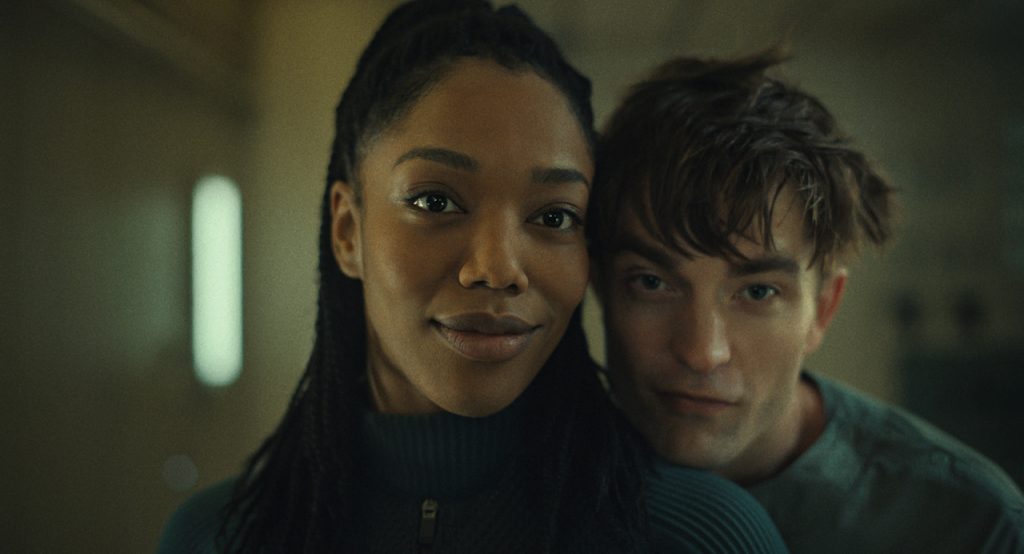
Among all the cloning, scheming and space-age absurdity, Naomi Ackie brings warmth and force as Nasha, Mickey’s partner. She cuts through the noise with a performance that feels direct and alive, grounding the film whenever it threatens to drift too far into chaos. Her chemistry with Pattinson gives Mickey 17 some emotional weight, and the film is better whenever it lets their relationship breathe. That matters, because for all its wild ideas and comic grotesquery, this is still a story about a man learning to see value in himself. Without that human centre, the satire would not hit nearly as hard.
CultureCues Standout Moment
The film’s standout stretch comes when Mickey is forced to confront another version of himself, and Pattinson suddenly turns the story into something stranger, funnier and much more emotionally loaded. What could have been a simple sci-fi gimmick becomes a sharp little identity crisis with teeth. It is in those scenes that Mickey 17 feels most alive, balancing absurdity, tension and a surprisingly tender sadness all at once.
Final Verdict
Mickey 17 is not Bong Joon-ho’s tightest film, nor his most devastating. It is too long, occasionally too broad, and sometimes feels like it is trying to cram three films’ worth of ideas into one. But it is also bold, inventive and unmistakably his. In a blockbuster landscape full of films that feel sanded down by committee, there is something refreshing about a sci-fi epic this odd, this specific, and this willing to get a little ugly.
It may not be as razor-sharp as Parasite, but it has plenty to chew on. Strange, striking and often very funny, Mickey 17 is the kind of ambitious swing that feels worth taking, even when it does not land every beat cleanly.

Nikki Murray is a UK-based writer, screenwriter and founder & editor of CultureCues, covering film, television, music and pop culture. Her work focuses on storytelling and the moments shaping modern entertainment.