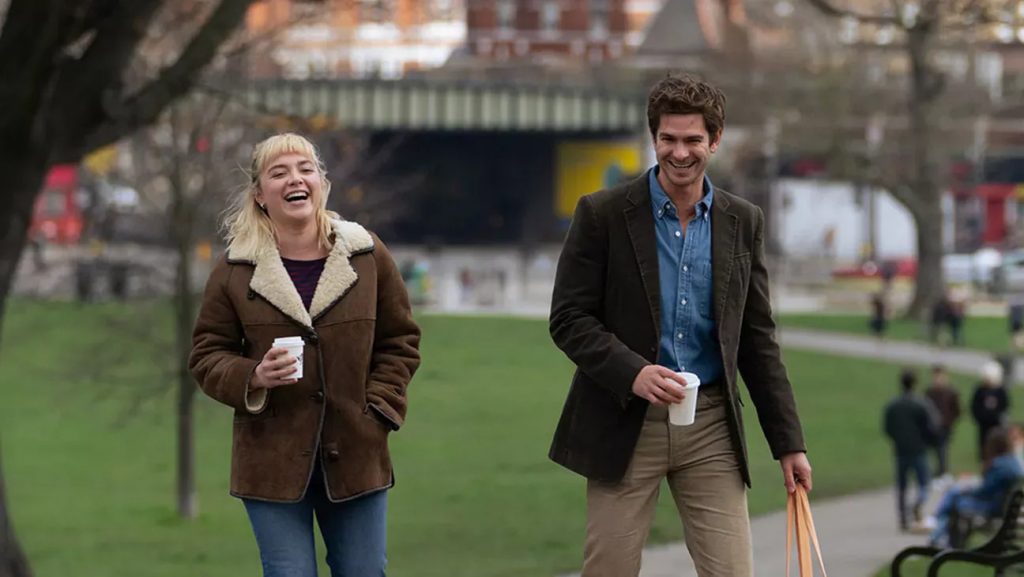
In an era where romance on the big screen often feels either overly polished or quietly sidelined, We Live in Time arrives as something refreshingly sincere. It is a film that leans fully into emotion without apology, telling a love story that feels both familiar and deeply personal.
Led by Florence Pugh and Andrew Garfield, this is a story about time, memory, and the messy, unpredictable nature of relationships. It does not reinvent the genre, but it does remind us why it works.
A Love Story Told Out of Time
At its core, We Live in Time follows Almut and Tobias, whose relationship unfolds across years rather than in a straight line. Their story begins with an unexpected and slightly chaotic meet-cute, when Almut quite literally knocks Tobias off his feet, and from there, the film jumps back and forth through key moments in their lives together.
We see the early excitement of falling in love, the quiet comfort of domestic life, the uncertainty around starting a family, and eventually, the devastating reality of illness. The non-linear structure could easily feel like a gimmick, but here it works. It mirrors the way memory functions, where moments of joy and pain exist side by side rather than neatly in order. The film trusts its audience to keep up, and for the most part, it pays off. You are never lost, just gently moved between the highs and lows of a relationship that feels lived in.
Florence Pugh and Andrew Garfield Are the Film’s Heart
The success of We Live in Time rests heavily on its two leads, and thankfully, they more than deliver.
Florence Pugh is exceptional as Almut, a chef determined to define herself on her own terms. She brings warmth, humour, and a quiet intensity to the role, capturing both the joy of her character’s life and the weight of what she is facing. There is a real sense of someone trying to hold onto ambition and identity, even as time begins to feel limited.
Andrew Garfield, meanwhile, is equally strong as Tobias, a man who initially seems ordinary but slowly reveals deeper layers of vulnerability and resilience. He balances lightness and heartbreak with ease, making Tobias feel grounded and real.
Together, their chemistry carries the film. Their relationship feels natural, sometimes messy, often funny, and always believable. It is easy to invest in them, which makes the emotional moments hit all the harder.
Love, Legacy, and the Fear of Being Forgotten
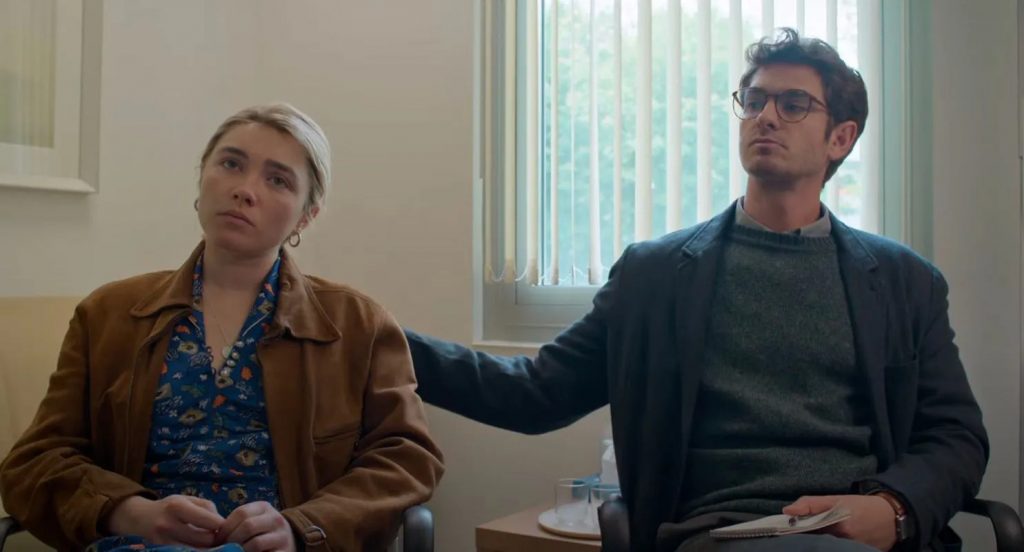
While the film touches on familiar territory, particularly with its focus on illness, it finds something more interesting in the idea of legacy.
Almut’s desire to be remembered as more than just a partner or a mother adds a layer of complexity to the story. Her determination to succeed in her career, even as her health declines, is one of the film’s most compelling threads. It gives the story a sharper edge and avoids reducing her character to a purely tragic figure. The script allows its characters to make difficult, sometimes imperfect decisions. It does not judge them, and that honesty makes the film feel more grounded. Conversations about the future, about children, about what matters most, are handled with a quiet realism that elevates the material.
A Familiar Story That Still Works
There is no denying that We Live in Time follows a well-worn path. This is a romantic drama that deals with love, loss, and the passage of time in ways we have seen before.
At times, the structure slightly undercuts the emotional build. By placing heavier moments throughout the film rather than saving them for a final crescendo, it softens what could have been a more cathartic ending. There is also a sense that the film occasionally leans too heavily on its emotional beats, spelling things out rather than letting them sit.
Still, these are minor flaws in a film that understands exactly what it wants to be. It is sincere, heartfelt, and unafraid to wear its emotions openly.
CultureCues Standout Moment
The film’s most powerful moment comes during Almut’s final cooking competition.
Now visibly unwell, she continues to push forward, determined to be remembered for her talent and ambition, not just her illness. But after completing her dish, something shifts. Instead of waiting for the result, she quietly removes her chef’s hat and walks away.
It is a small, simple action, but it carries so much weight.
She finds Tobias and their daughter in the crowd, and rather than staying, they leave together. What follows is one of the film’s most quietly devastating sequences, as the family go ice skating instead. It is playful, gentle, and filled with love, a moment of normality in the middle of everything they are facing. As Almut skates, there is a growing sense of goodbye. She drifts further away from them, smiling, peaceful, almost weightless. There are no dramatic speeches, no overwhelming emotion, just a quiet acceptance of what is coming.
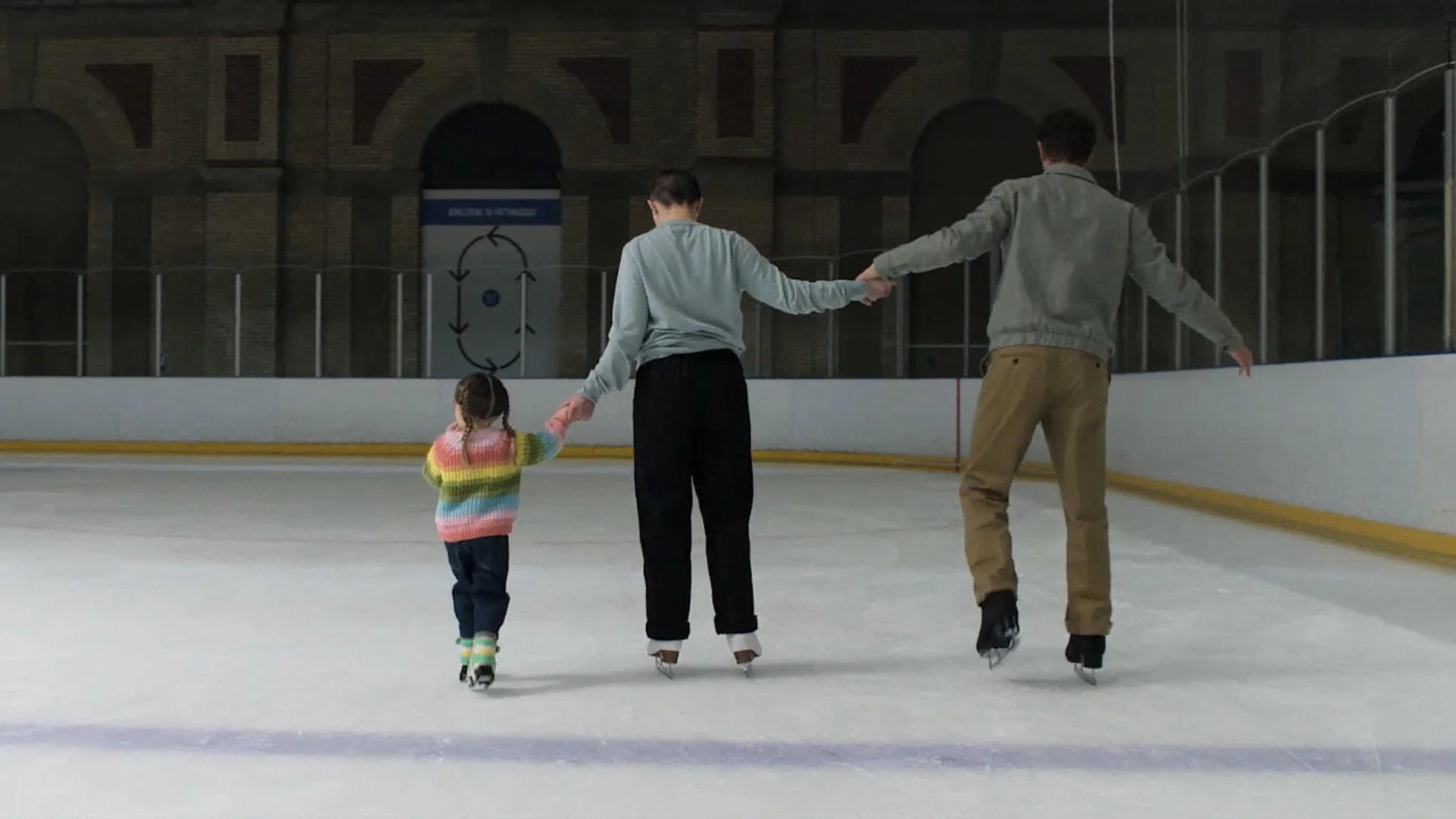
It is a beautifully handled scene that captures everything the film is trying to say. That life is not defined by the big moments alone, but by the small ones we choose to hold onto.
Final Thoughts
We Live in Time is not a groundbreaking film, but it does not need to be.
What it offers instead is a thoughtful, emotionally rich love story brought to life by two outstanding performances. Florence Pugh and Andrew Garfield elevate the material at every turn, turning familiar moments into something that feels fresh and deeply felt. In a cinematic landscape that often leans towards spectacle, this is a reminder of the power of simple, character-driven storytelling. It is warm, sad, funny in places, and ultimately very moving.
A love story about time, memory, and the moments that stay with us long after they have passed.

Nikki Murray is a UK-based writer, screenwriter and founder & editor of CultureCues, covering film, television, music and pop culture. Her work focuses on storytelling and the moments shaping modern entertainment.