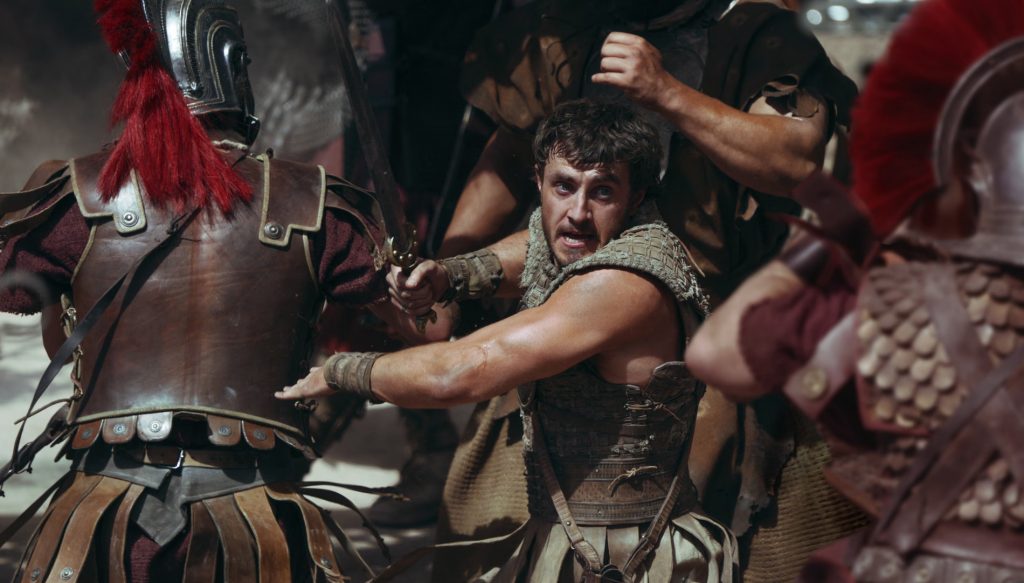
More than two decades after Gladiator became one of the defining historical epics of modern cinema, director Ridley Scott returns to Ancient Rome with Gladiator II. The sequel revisits the brutal world of the Colosseum while introducing a new generation of characters, led by Paul Mescal as Lucius, the young boy who witnessed Maximus’ legendary final stand in the original film. This time, Lucius finds himself drawn directly into the same ruthless struggle for power that once defined Rome’s arena.
The legacy of the first Gladiator still looms large. Scott’s 2000 film, led by Russell Crowe as Maximus, combined sweeping spectacle with an unexpectedly emotional story about honour, revenge and the corruption of empire. Gladiator II inevitably arrives with enormous expectations, and while the sequel never quite escapes the shadow of its predecessor, it still delivers a visually striking return to the arena.
Alongside Mescal, the film also features Pedro Pascal in a key supporting role, bringing a commanding presence to the political tension that runs through the story. At its best, the film captures the same sense of scale and intensity that made the original such a landmark epic.
A New Hero Steps into the Arena
The story centres on Lucius, now grown and played by Paul Mescal, who finds himself drawn into the brutal world of gladiatorial combat as Rome descends further into political chaos. Once a young boy who witnessed Maximus’ final stand, Lucius now faces a similar struggle against a corrupt empire that has lost sight of the ideals it once claimed to uphold.
The film leans heavily on the legacy of the original story, with echoes of Maximus appearing throughout Lucius’ journey. While this connection helps anchor the sequel emotionally, it also highlights how difficult it is to recreate the impact of the original character. Still, the narrative gives its new protagonist plenty of room to grow, positioning him as a reluctant fighter caught between survival and a larger cause.
Spectacle on a Grand Scale
If there is one area where Ridley Scott remains unmatched, it is visual scale. The director once again transforms ancient Rome into a world of towering architecture, roaring crowds and brutal combat.
The gladiatorial sequences inside the Colosseum are among the film’s most impressive moments. Battles unfold with a sense of chaos and intensity that reflects the sheer spectacle of Roman entertainment. The arena feels both thrilling and horrifying, capturing the disturbing reality of a society that treated violence as public spectacle.
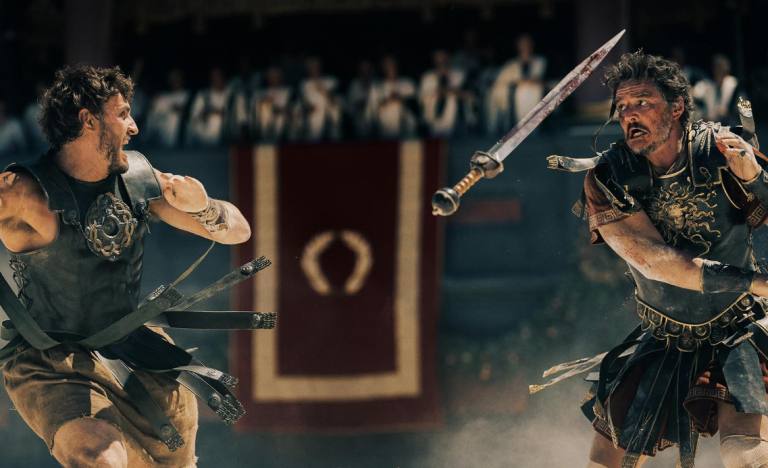
These sequences remind viewers why Scott remains one of cinema’s most accomplished visual storytellers. Even when the narrative slows, the world itself remains fascinating to watch.
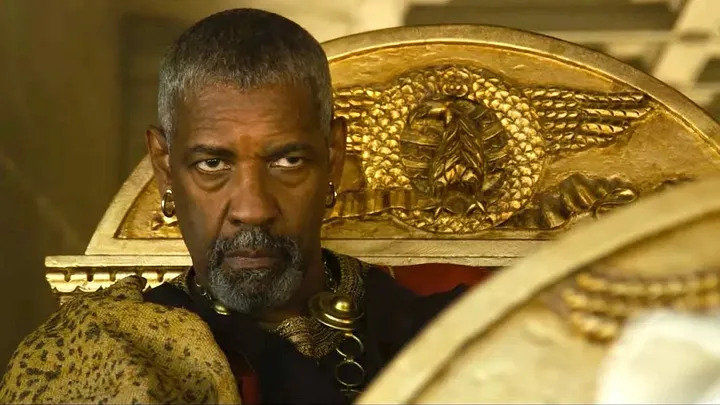
The film’s supporting cast also adds weight to the story’s political tensions. Pedro Pascal brings a commanding presence to the film’s world of military power and imperial intrigue, while Denzel Washington delivers one of the sequel’s most magnetic performances as the ambitious power broker Macrinus. Connie Nielsen also returns as Lucilla, reconnecting the story directly to the emotional legacy of the original film and reminding audiences how deeply the events of Gladiator continue to shape Rome’s future.
Caught Between Legacy and Reinvention
One of the challenges facing Gladiator II is balancing nostalgia with the need to tell a new story. The film frequently references the events and themes of the original, sometimes successfully and sometimes to its own detriment.
At times the sequel feels like a natural continuation of the world Scott created. At other moments, the story appears overly aware of the legacy it is trying to honour. The result is a film that occasionally struggles to define its own identity while standing beside one of the most beloved historical epics ever made.
Yet there are still moments when the sequel finds its footing, particularly when it focuses on the political intrigue and personal rivalries that once made Rome such a compelling backdrop.
CultureCues Standout Moment
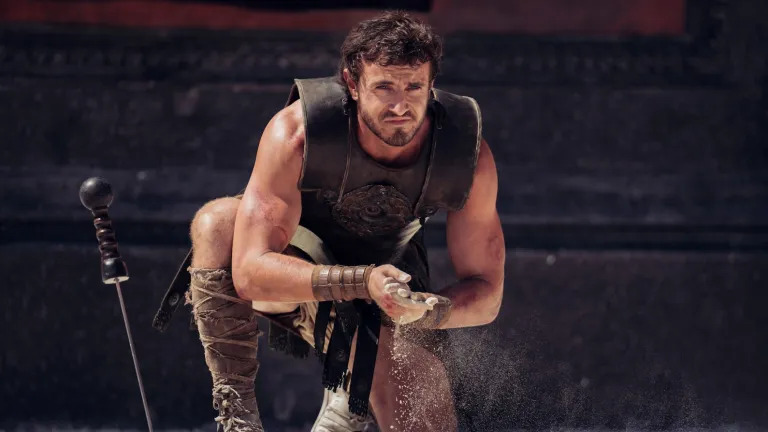
One of the film’s most powerful moments arrives during Lucius’ first major appearance in the arena. As the gates open and the roar of the crowd fills the Colosseum, the scene captures the overwhelming scale of the world he has been thrown into.
The moment mirrors the iconic gladiator introductions from the original film, yet it also marks the beginning of Lucius’ own journey. The camera lingers on the tension between fear and determination as he prepares to fight, creating a scene that feels both grand and deeply personal. For a brief moment, the sequel captures the same emotional intensity that made Gladiator so memorable.
A Return to Rome That Still Has Power
Gladiator II may never fully escape comparison to its predecessor, but Ridley Scott’s return to the world of ancient Rome still carries undeniable cinematic weight. The film’s sweeping visuals and brutal arena sequences ensure that the spectacle remains intact, even when the story occasionally struggles to match the emotional depth of the original.
For audiences willing to revisit the Colosseum, the sequel offers a reminder of why the world of Gladiator continues to hold such powerful appeal. More than twenty years later, the arena still commands attention.

Nikki Murray is a UK-based writer, screenwriter and founder & editor of CultureCues, covering film, television, music and pop culture. Her work focuses on storytelling and the moments shaping modern entertainment.